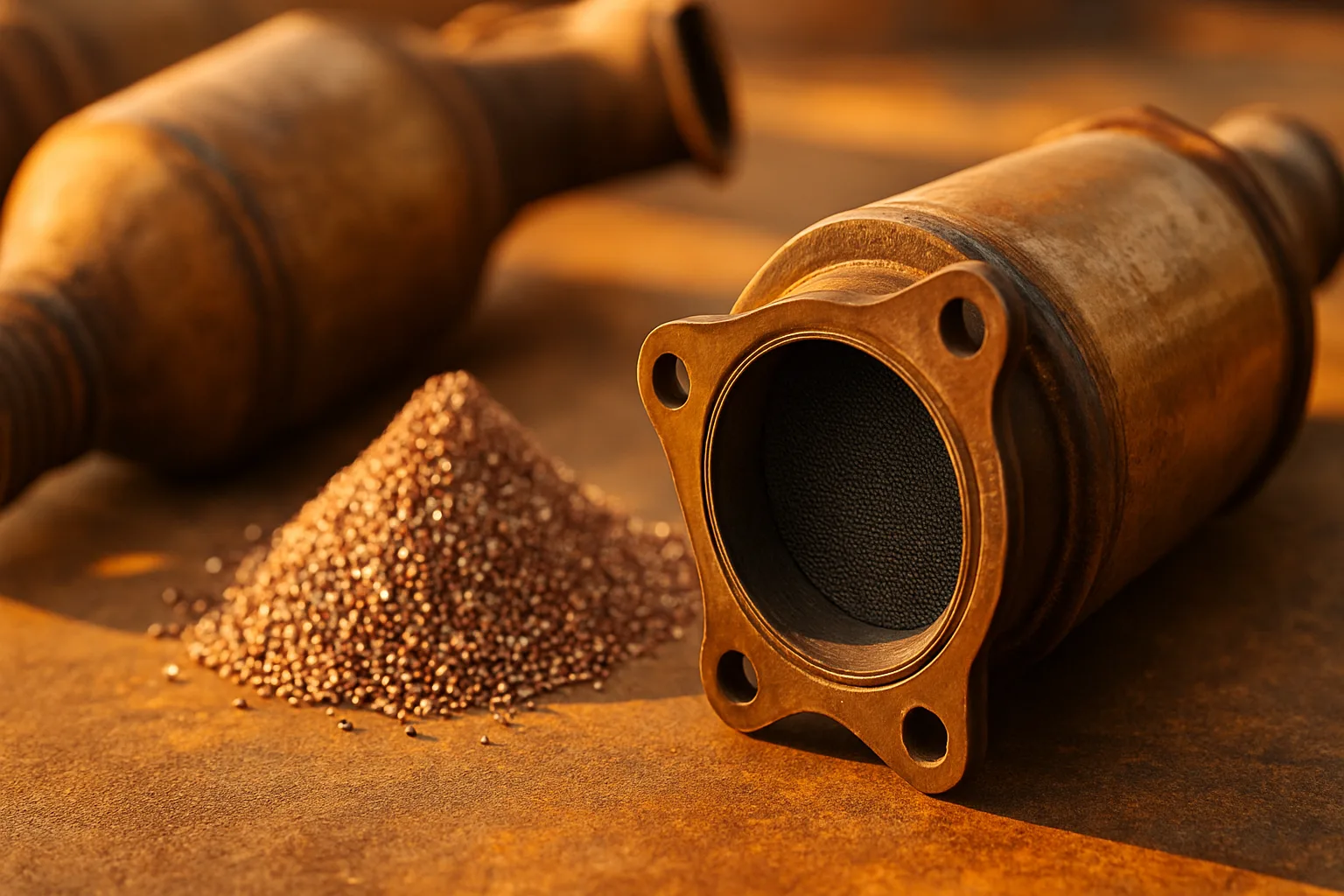
Here's something that surprises a lot of scrap sellers: two catalytic converters pulled from the same make and model vehicle can fetch completely different prices at the yard. Same car. Same year. Wildly different payouts. The reason almost always comes down to one question — is it OEM or aftermarket? If you're trying to sell catalytic converters online and you don't understand this distinction, you're leaving real money on the table.
This isn't a minor pricing gap. The difference between an OEM converter and a cheap aftermarket replacement can range from a few dollars to several hundred dollars per unit. For recyclers and dismantlers working through volume — like many operations in Flint and across Michigan — that gap adds up fast. Understanding what drives scrap cat value is the first step toward getting paid what your material is actually worth.
---What Makes OEM Catalytic Converters More Valuable for Scrap
OEM stands for Original Equipment Manufacturer. These are the converters that come installed on a vehicle directly from the factory — built to meet the exact emissions specifications required for that platform. To meet those specs, manufacturers load OEM cats with meaningful quantities of platinum group metals (PGMs): platinum, palladium, and rhodium.
These three metals are the reason scrap cats have value at all. Refiners recover them from the ceramic substrate inside the converter, and those metals feed into industrial, medical, and automotive supply chains. OEM converters are engineered to maximize catalytic efficiency over a vehicle's full service life, so they contain higher PGM loadings than the law technically requires. That translates directly into higher scrap cat value at the refinery — and higher payouts to you.
Key characteristics of OEM catalytic converters:
- Built to factory emissions specifications with full PGM loadings
- Typically heavier ceramic substrate with denser washcoat
- Branded with OEM part numbers (stamped or laser-etched)
- More consistent PGM content across units from the same vehicle platform
- Higher refinery assay results, which drive higher buyer bids
When buyers at the SMASH scrap metal auction marketplace compete on a load of verified OEM cats, they're bidding with confidence because documented OEM units have a predictable PGM profile. That predictability is worth something — and it shows up in the final price.
---Why Aftermarket Cats Kill Your Scrap Cat Price
Aftermarket catalytic converters are replacement parts manufactured by third parties to meet minimum legal emissions requirements — not to replicate the full PGM content of the OEM unit. They're sold as cheaper alternatives when a vehicle's original converter fails. For the vehicle owner, they work fine. For the scrap seller, they're often worth a fraction of what an OEM unit brings.
The core issue is simple: aftermarket manufacturers use the minimum PGM loading required to pass emissions testing. Some use alternative washcoat formulations. Some use different substrate materials. The result is a converter that looks similar on the outside but contains significantly less recoverable platinum, palladium, and rhodium. Refiners know this. Buyers know this. That knowledge directly reduces what anyone will pay for them.
Common signs you're dealing with an aftermarket converter:
- Generic or universal part numbers (no OEM stamp)
- Lighter overall weight compared to an OEM unit for the same application
- Welded pipes in positions inconsistent with factory fitment
- Brands like MagnaFlow, Walker, or Eastern Catalytic stamped on the shell
- Lower substrate density when you shake it
This isn't a knock on aftermarket parts — they serve a legitimate purpose in vehicle repair. But when you're trying to get a fair price for your scrap catalytic converters, knowing what you actually have determines your negotiating position. Showing up to a buyer with a load you think is OEM, only to find out half of it is aftermarket, is a fast way to get a lower number than you expected.
---How Platinum Price Today Affects Both OEM and Aftermarket Scrap Values
PGM market prices fluctuate daily — sometimes sharply. When people search for platinum price today, they're checking the spot market, which directly influences what refiners will pay and what buyers will bid on your loads. But here's the important detail: price volatility affects OEM and aftermarket converters differently.
OEM units have enough PGM content that even moderate price swings produce meaningful dollar changes per unit. If palladium moves significantly in a week, an OEM cat from a late-model truck can swing by $50 or more per unit. Aftermarket units, because they start with lower PGM loadings, see smaller absolute dollar moves — but the percentage impact can be similar. The practical result is that OEM cats benefit more from strong PGM markets, and they also hold a higher floor value when markets soften.
This is exactly why documentation matters. Buyers in a competitive auction environment want to know whether they're bidding on OEM or aftermarket material before they submit a number. Documented, photographed, properly identified loads attract more confident buyers — and more competition means better price discovery for the seller. That's not a theory. That's how auctions work.
Disclaimer: Catalytic converter scrap prices fluctuate based on daily PGM spot markets and other factors. Always check current rates before selling. Nothing in this article constitutes a price guarantee.
---The Flint and Michigan Angle: Why Identification Matters in High-Volume Markets
Flint, Michigan has one of the most active automotive recycling ecosystems in the country. That's not an accident — Flint's history is built on auto manufacturing, and the region generates significant volumes of end-of-life vehicles and salvage parts. For dismantlers and recyclers operating in Flint and across Michigan, catalytic converters move through the shop constantly.
In high-volume environments, the temptation is to process everything as a mixed load and take whatever the buyer offers. That approach costs money. A single mixed truckload of OEM and aftermarket converters, sold without documentation, typically gets priced to the aftermarket floor because buyers can't verify what's inside. Separate them, document them, and the OEM material can command a completely different price tier.
Michigan recyclers also face a competitive buyer landscape. There are multiple catalytic converter buyers near me in the region, but not all of them have the same access to refining relationships or auction competition. Working with a B2B scrap metal marketplace that brings multiple vetted buyers to your load — rather than calling one contact who sets the price — fundamentally changes your outcome. You can find the best scrap cat prices today by putting your documented loads in front of actual competition, not a single buyer with every incentive to pay less.
---How SMASH Helps Sellers Get the Right Price for Documented Loads
Here's where process matters as much as knowledge. You can understand the OEM vs aftermarket difference perfectly and still leave money behind if you sell through the wrong channel. Single-buyer transactions — one phone call, one quote, take it or leave it — don't reflect the actual market. They reflect what one buyer wants to pay that day.
SMASH runs a competitive auction format specifically designed for B2B scrap sellers. When you bring a documented load to the platform, vetted buyers compete. That competition is the mechanism that moves price toward actual market value. The platform supports photo documentation and serial tracking, so OEM units get identified and presented accurately to buyers — not lumped in with aftermarket material and priced accordingly.
For sellers who have previously relied on local catalytic converter scrap yards near me for pricing, the auction model can be a genuine shift in outcome. It doesn't guarantee higher prices — no platform does — but it does guarantee that your documented OEM material gets in front of buyers who will bid on it competitively. There are no subscription fees with SMASH. The model only works when sellers win.
If you want to understand what a competitive process looks like for your cat inventory, start with SMASH. Read scrap catalytic converter guides to sharpen your knowledge before your next load moves.
---Practical Steps to Maximize Scrap Cat Value Before You Sell
Whether you're in Flint processing a few units a week or running a larger dismantling operation anywhere in Michigan, these steps apply every time you move cat inventory:
- Identify OEM vs aftermarket before pricing conversations begin. Check for OEM stamps, part numbers, and weight. Don't guess.
- Photograph every unit. Front, back, and any identifying stamps. This documentation matters to buyers and justifies your ask.
- Separate your material by type. OEM in one group, aftermarket in another. Never sell them as a single undifferentiated load if you can avoid it.
- Track the PGM market before you move volume. Timing a large OEM load during a strong palladium period can make a real difference.
- Use a competitive channel. A single buyer quote is not a market price. Put your documented loads in front of multiple buyers through a platform like SMASH.
- Understand your vehicle sources. OEM content varies by platform. Late-model trucks and SUVs from domestic manufacturers typically carry heavier cats than small economy cars.
The difference between a seller who gets top-tier scrap cat prices and one who consistently underperforms isn't luck — it's process. Documentation, separation, and competitive selling are learnable habits that pay back every single load.
If you're ready to stop guessing and start selling with real market competition behind your loads, it's worth taking a few minutes to find the best scrap cat prices today through a process that actually reflects what your OEM material is worth.
---Frequently Asked Questions
Q: How can I tell if my catalytic converter is OEM or aftermarket before I sell it?
Look for an OEM part number stamped or etched directly onto the converter shell — these typically match the vehicle manufacturer's part numbering system. Aftermarket units often display brand names like Walker, Eastern Catalytic, or MagnaFlow. OEM units also tend to be heavier for the same application, and the pipe fitment usually matches factory routing exactly without custom welds.
Q: Does it make sense to sell catalytic converters online rather than to a local yard in Flint?
Selling to a single local buyer gives you one price from one perspective — that buyer's margin goals. Selling through a competitive online marketplace like SMASH puts your documented load in front of multiple vetted buyers who bid against each other. For OEM material especially, competition tends to produce better price discovery than a single quote. Local yards are convenient, but convenience often costs money.
Q: Why do aftermarket catalytic converters have so much less scrap value?
Aftermarket converters are built to minimum legal emissions standards, which requires less platinum, palladium, and rhodium in the washcoat than OEM specifications call for. Since PGM content drives scrap value, lower loadings mean lower refinery returns — and buyers price accordingly. The converter may function fine on the vehicle, but it carries less recoverable precious metal.
Q: How does the platinum price today affect what I get for my scrap cats?
PGM spot prices — platinum, palladium, and rhodium — are the foundation of scrap cat pricing. When those markets are strong, OEM units in particular see meaningful price increases per unit. Buyers in competitive auctions adjust their bids based on current spot prices, so checking the market before you move large OEM loads can genuinely affect your outcome. Prices are volatile, so timing matters.
Q: Are there specific catalytic converter buyers near me in Michigan who pay more for OEM units?
Yes — buyers who work directly with refiners and understand PGM assay data will differentiate OEM from aftermarket and price accordingly. The challenge is finding those buyers and getting competitive quotes from more than one of them. A B2B scrap metal marketplace like SMASH connects documented loads with vetted buyers across the country, which means your Michigan inventory isn't limited to what local options are willing to pay on a given day.
---Ready to put your OEM cats in front of buyers who actually compete for them? Find the best scrap cat prices — get a free quote at best-scrap-cat-prices.com.
Stay sharp on scrap metal market movements and industry insights by following SMASH on LinkedIn.