Why That Serial Number on Your Cat Is Worth More Than You Think
Most scrap yards glance at your catalytic converter and quote you a number. But the sellers getting the best payouts? They walk in knowing exactly what they have — because they read the serial number first. If you're in Milwaukee sitting on a pile of cats and guessing at their value, you're leaving money on the table.
Serial numbers are the fingerprint of every catalytic converter. They tell buyers what precious metals are inside — platinum, palladium, rhodium — and in what concentrations. That data drives price. Understanding how to decode those numbers isn't just useful; it's the difference between a fair payout and a lowball one. Whether you're a shop pulling converters off end-of-life vehicles or a yard operator building inventory, this skill pays.
Ready to find the best scrap cat prices today? Start by understanding what you're holding.
Where to Find the Serial Number on a Catalytic Converter
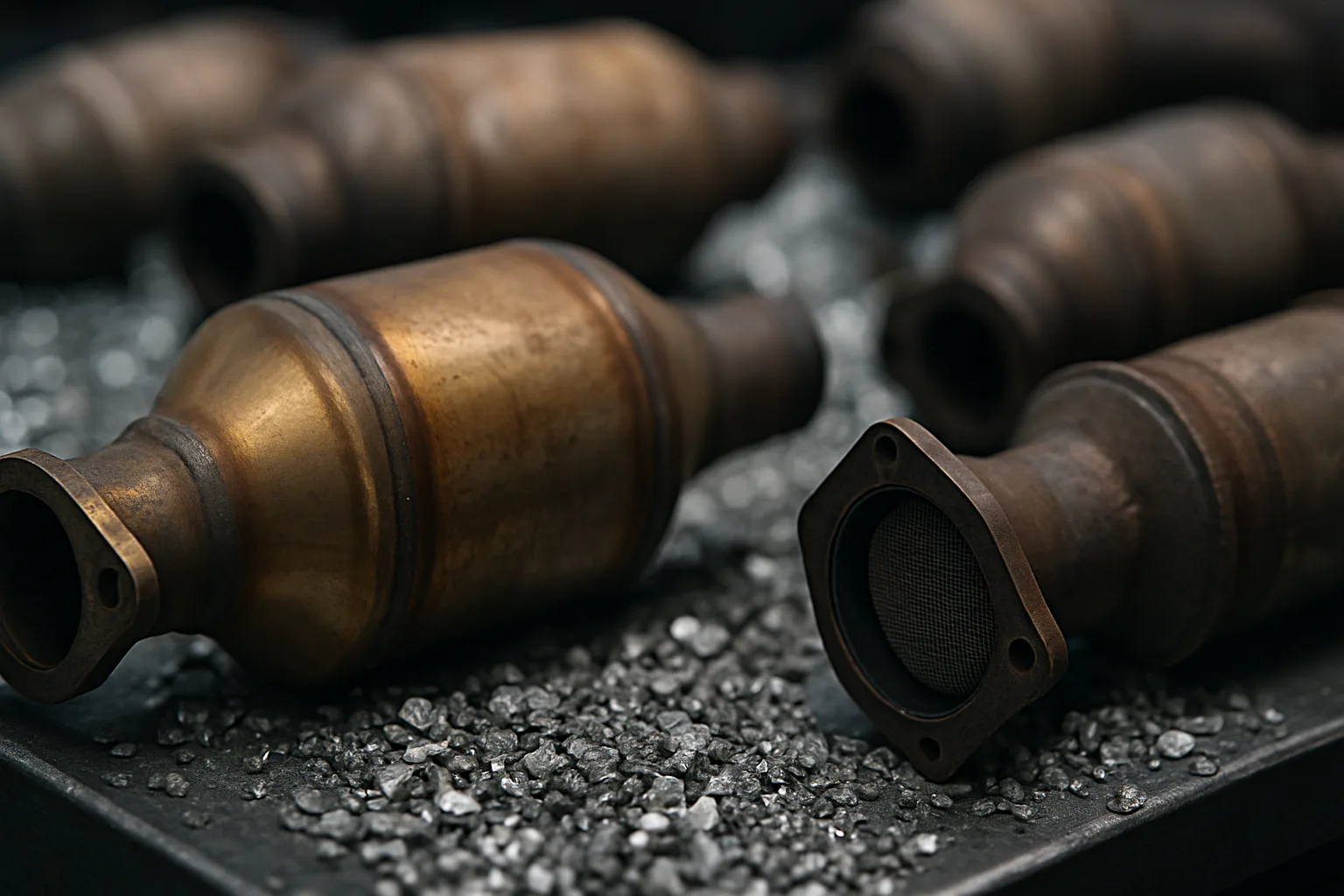
Before you can read a serial number, you need to find it. Cats come in all shapes — honeycomb ceramic bricks, metallic substrate units, small "direct-fit" converters, and large universal units. The serial number location varies depending on manufacturer and vehicle origin.
Here's where to look:
- Stamped directly on the shell: Most OEM converters have the serial number stamped or etched into the outer metal casing. Check both the top and bottom of the shell, near the inlet or outlet flanges.
- On a welded tag or plate: Some manufacturers attach a separate metal tag. These can corrode or get ground off — so inspect carefully before assuming a cat is unidentifiable.
- Laser-etched near the substrate end: Higher-end OEM units, particularly from European vehicles, sometimes carry etched codes near the brick end of the converter.
- On the heat shield (not always reliable): Occasionally you'll find a code on the heat shield, but this isn't part of the converter itself — it can be swapped, so don't rely on it alone.
If the serial number is dirty, wire-brush it. If it's corroded past reading, a VIN lookup on the donor vehicle can sometimes help identify the converter type. Platforms like SMASH use VIN lookup tools precisely for this — to match vehicles to known converter specs when the serial is unreadable.
How to Read and Decode a Catalytic Converter Serial Number
Not all serial numbers follow the same format. That's the first thing to accept. There's no universal industry standard — each OEM uses its own coding system. But there are patterns, and once you recognize them, identification gets faster.
Here's how most serial numbers break down:
- Manufacturer prefix: The first few characters typically identify the converter manufacturer or the vehicle brand. For example, Toyota, Honda, and GM all have recognizable prefix patterns that experienced buyers recognize immediately.
- Part number segment: This middle section identifies the specific converter part. It's what buyers cross-reference against their price databases to determine precious metal content.
- Suffix or variant code: Some converters have suffix characters that indicate a production variant — substrate loading, a revised formulation, or a regional emissions spec. These matter because two converters with nearly identical part numbers can have meaningfully different PGM (platinum group metal) content.
Common formats you'll see in the field:
- Pure numeric strings (e.g., 1234567): Common on domestic GM and Ford units. Usually 7-10 digits.
- Alphanumeric with dashes (e.g., AB-12345-C): Common on Japanese OEM converters. The letter segments often denote body style or engine family.
- OBD part numbers: Some newer converters carry OBD-style part codes that reference emissions standards — useful for cross-referencing, but require a current database to price accurately.
The honest truth: you need a reliable reference database or a buyer who uses one. Memorizing codes only gets you so far. What matters is connecting the number to a real-time precious metal valuation. That's exactly why smashscrap.com uses documented inventory tools and serial tracking — so buyers bid on verified units, not guesses.
Scrap Catalytic Converter Prices in Milwaukee: Why Serial Numbers Drive Value
In the Milwaukee scrap market — and across Wisconsin more broadly — converter prices can vary dramatically from one buyer to the next. A single-buyer transaction almost always favors the buyer. They know what's in your cat. Often, you don't. That information gap is where money walks out the door.
Serial numbers close that gap. When you identify your converter accurately, you know:
- The approximate PGM (platinum, palladium, rhodium) content by weight
- Whether your unit is high-grade, mid-grade, or low-grade
- How the unit is likely to be grouped or sorted by buyers
- What competitive market pricing looks like for that specific converter type
Scrap catalytic converter prices in Milwaukee follow the same PGM spot price movements as anywhere in North America — but local buyer competition (or the lack of it) affects what you actually get paid. A vetted auction environment — where multiple catalytic converter buyers in Wisconsin compete for your load — creates real price discovery. More buyers means better price discovery. That's not a marketing line; it's how competitive markets work.
If you want to get a fair price for your scrap catalytic converters, you need both: accurate identification and real buyer competition.
High-Grade vs. Low-Grade Cats: What the Serial Tells You
Not every cat is created equal. Serial number research helps you sort your inventory before you sell — and sorting correctly can significantly change your payout, especially on larger loads.
High-grade converters typically come from late-model domestic trucks and SUVs, luxury imports, and vehicles that ran longer OEM emissions programs. They carry higher PGM loads. Common examples include large GM truck converters, Toyota Tundra and Sequoia units, and certain European imports. If your serial lookup confirms a high-grade unit, don't let it get lumped into a mixed lot at a lower average price.
Mid-grade converters are the bread and butter of most loads — typical passenger car units from mainstream Japanese and domestic brands. Solid value, consistent market.
Low-grade or "aftermarket" converters contain significantly less PGM content and price accordingly. Aftermarket cats are often identified by thinner shells, lighter weight, and serial numbers that don't appear in OEM databases. Some buyers won't take them at all. Others offer minimal pricing. Knowing which units in your inventory fall into this category lets you set realistic expectations — and separate them from your OEM material.
Milwaukee Milwaukee scrap metal services buyers and Wisconsin yards generally sort by grade. Walking in with pre-sorted, identified inventory gives you negotiating leverage you simply don't have otherwise.
Using Photo Documentation and Serial Tracking to Get Better Prices at Auction
Once you've identified your converters, document everything. This sounds like extra work. It pays off.
Here's why documentation matters in a catalytic converter auction context:
- Buyers bid higher on verified inventory. When a buyer can see a clear photo of the serial number alongside the converter shell, there's less uncertainty — and less risk discount built into their bid.
- Serial tracking protects you from disputes. If a buyer later claims a unit wasn't what you represented, documented photos with serials visible create a clear record.
- Auction platforms reward accuracy. SMASH's inventory tool lets sellers upload photos and serial data, which vetted buyers then bid against competitively. Documented inventory gets more buyer attention than mystery lots.
Your process should be simple: photograph the serial number in good light, note the count and approximate grade of each unit, and keep that record with your load. If you're selling through a platform like SMASH, this information goes directly into your auction listing. Cat converter prices in Milwaukee — or anywhere — respond to information quality. Give buyers what they need to compete, and they will.
Want to sharpen your knowledge before your next sale? Read scrap catalytic converter guides for practical breakdowns on grading, pricing, and selling strategy.
How Much Is My Catalytic Converter Worth? Start With the Serial
The most common question from first-time sellers — and plenty of experienced ones — is some version of "how much is my catalytic converter worth?" There's no universal calculator that spits out a reliable number without input data. But your serial number is that input data.
Here's a practical approach:
- Locate and photograph the serial number. Make sure it's legible. Wire brush if needed.
- Cross-reference it with a buyer database or price guide. Some buyers and platforms offer lookup tools. Use them.
- Check current PGM spot prices. Rhodium, palladium, and platinum move constantly. The serial tells you what's in your cat; the spot price tells you what that's worth today.
- Get multiple offers. One quote is not a market price. A competitive auction format — where multiple catalytic converter buyers near you place real bids — is the only way to know what your load is actually worth in today's market.
No calculator replaces live buyer competition. But the serial number is your starting point — without it, you're guessing, and guessing almost always costs you money.
Disclaimer: Catalytic converter prices fluctuate based on PGM spot markets, load composition, and buyer demand. Always check current rates before selling. Information in this article reflects general market conditions as of July 2026 and is not a price guarantee.
Frequently Asked Questions
Q: How do I find the serial number on my catalytic converter in Milwaukee?
Check the outer metal shell of the converter — usually stamped near the inlet or outlet flange. Clean the area with a wire brush if it's corroded. Some units carry a welded identification tag instead of a direct stamp. If the serial is completely unreadable, a VIN lookup on the donor vehicle can sometimes help identify the converter type.
Q: How do scrap catalytic converter prices in Milwaukee compare to national rates?
Milwaukee cat converter prices track the same PGM spot markets as the rest of North America. What varies locally is buyer competition — fewer buyers in your immediate area can mean lower offers. Using a platform with vetted buyers across Wisconsin and beyond helps ensure your load gets real market exposure, not just a single local quote.
Q: Does the serial number affect how much my catalytic converter is worth?
Directly, yes. The serial number is how buyers determine what precious metals — platinum, palladium, rhodium — are inside your converter and in what quantities. A converter with an identified serial gets priced on its actual content. An unidentified unit often gets grouped into a lower-grade category or priced conservatively to account for buyer risk.
Q: What's the best way to sell catalytic converters in Wisconsin to get competitive prices?
Document your inventory with photos and serial numbers, sort by grade, and sell through a format that brings multiple buyers to the table. Single-buyer phone transactions rarely produce the best outcome — competitive auction platforms like SMASH create real price discovery by letting vetted buyers bid against each other on your documented load.
Q: Are aftermarket catalytic converters worth scrapping?
Yes, but at significantly lower values than OEM units. Aftermarket cats contain less PGM content by design, which is reflected in scrap pricing. They're generally lighter, thinner, and won't appear in OEM serial databases. Separate them from your OEM inventory before selling — mixing them into an OEM lot can drag down your average price.
---If you're in Milwaukee or anywhere in Wisconsin and you're done guessing what your cats are worth, the answer starts with the serial number — and ends with real buyer competition. Find the best scrap cat prices — get a free quote at best-scrap-cat-prices.com.
Follow SMASH on LinkedIn for weekly scrap metal market updates, PGM price movement, and industry insights that keep you ahead of the market: SMASH on LinkedIn.
```