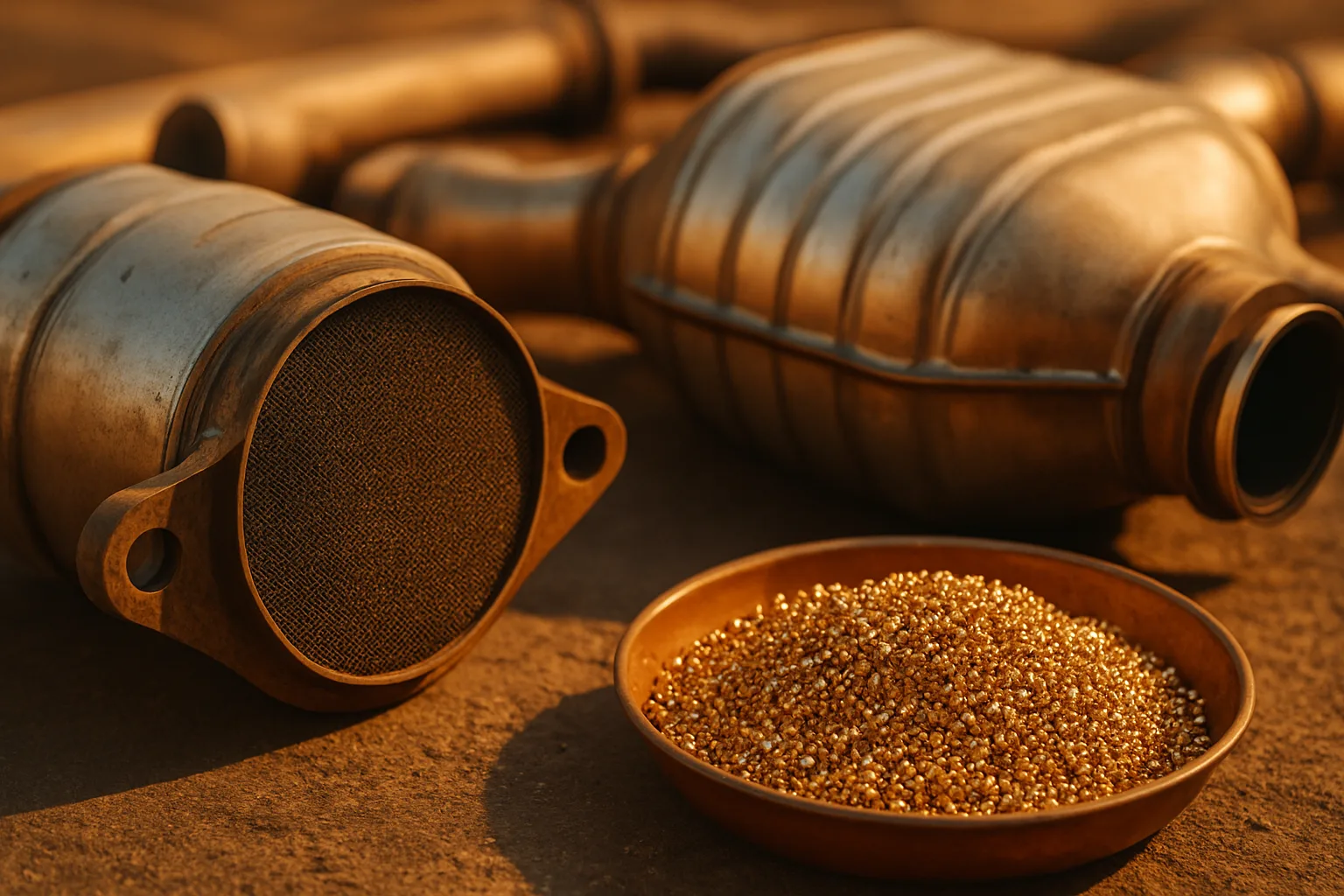
What's Inside Your Catalytic Converter Is Worth Real Money — If You Remove It Right
Most people don't realize the converter bolted under their car contains platinum, palladium, and rhodium — three of the most valuable metals on the planet. In Oakland and across California, scrap yards and recyclers deal in thousands of these units every month. But the difference between getting top dollar and getting lowballed often comes down to one thing: how you handled the part before you sold it.
This guide walks you through how to safely remove a catalytic converter for recycling. Whether you're pulling one off a vehicle you own, processing end-of-life units at your shop, or cleaning out a parts inventory, doing this correctly protects your safety, protects the part's value, and keeps you on the right side of the law.
If you're already ready to sell and want to find the best scrap cat prices today, knowing your converter's condition and origin makes every conversation with a buyer faster and more profitable.
Before You Touch a Wrench: Safety and Legal Requirements in California
Removing a catalytic converter is a straightforward mechanical job — but cutting corners on safety can put you in the hospital or in legal trouble. California has some of the strictest vehicle and emissions laws in the country, and that extends to how converters change hands. In Oakland specifically, local law enforcement and recyclers have increased documentation requirements over the past few years in response to converter theft activity statewide.
Here's what you need before you start:
- Proof of ownership: A title, registration, or bill of sale for the vehicle the converter came from. California law requires recyclers to verify this before purchasing.
- Personal protective equipment (PPE): Safety glasses, heat-resistant gloves, and steel-toed boots. Exhaust systems run extremely hot and hold heat long after the engine shuts off.
- A proper work surface: A vehicle lift, quality floor jack with jack stands, or a commercial pit. Never work under a vehicle supported only by a floor jack.
- Fire extinguisher nearby: Hot exhaust components plus exhaust residue can be a fire risk, especially on older vehicles.
- Ventilation: Work outdoors or in a well-ventilated garage. Exhaust residue inside the converter contains trace particulates you don't want to breathe.
If you're operating a shop or recycling yard in Oakland or anywhere in California, make sure your documentation process is airtight. Buyers — especially serious ones using platforms like SMASH — will ask for it. Documented inventory moves faster and for better prices.
How to Remove a Catalytic Converter Safely: Step-by-Step
This process assumes you're working on a vehicle you own or have authorization to dismantle. The steps apply to most passenger cars, light trucks, and SUVs.
- Let the vehicle cool completely. Wait at least two hours after the engine was last running. The catalytic converter sits in the exhaust stream and holds heat far longer than the engine block.
- Safely raise and support the vehicle. Use a floor jack to lift the vehicle and place it securely on rated jack stands at the proper lift points. Never skip the jack stands. Confirm the vehicle is stable before sliding underneath.
- Locate the converter. On most vehicles, the catalytic converter sits between the exhaust manifold and the muffler. Some vehicles have two converters — a pre-cat (primary) and a main cat. Both have scrap value.
- Spray penetrating oil on the bolts and flanges. Exhaust hardware corrodes aggressively. Apply penetrating oil (like PB Blaster) to all nuts, bolts, and flange connections. Let it soak for 15–30 minutes minimum.
- Use the right tools. A breaker bar or impact wrench, a set of oxygen sensor sockets, and pipe cutters or an angle grinder for welded connections. Forcing rusted bolts without the right tools breaks them off and complicates removal.
- Remove oxygen sensors before cutting. If the converter has upstream or downstream O2 sensors attached, remove them first. O2 sensors have independent scrap or resale value, and damaging them unnecessarily costs you money.
- Cut or unbolt the converter. If the converter is flanged (bolted on both ends), remove the flange bolts. If it's welded in, use a reciprocating saw or angle grinder to cut cleanly at the weld points, leaving as much pipe attached as the buyer requires. Most buyers want clean cuts — not jagged torch cuts that damage the housing.
- Lower the vehicle and inspect the part. Check the converter casing for cracks, holes, or physical damage. Document the condition with photos. Note the make, model, year, and engine size of the vehicle it came from — this information directly affects scrap cat value.
A clean removal with intact casing and full vehicle information is worth more than a converter that looks like it was yanked off in a parking lot. Buyers using competitive auction platforms can see the difference, and they bid accordingly.
What Affects Your Catalytic Converter's Scrap Value
Not all converters are created equal. The precious metal content — platinum, palladium, and rhodium — varies significantly by manufacturer, engine type, and model year. Rhodium price today is one of the most volatile inputs in scrap cat pricing, and it swings dramatically based on industrial demand, particularly from the automotive sector itself.
Here's what determines what your converter is actually worth:
- Vehicle make and model: Certain manufacturers load their converters with higher concentrations of precious metals. Luxury brands and some Japanese manufacturers are known for higher-value cats.
- Engine size: Larger engines with higher displacement typically require more catalyst material to meet emissions standards.
- Converter type: Pre-cats, primary cats, and diesel oxidation catalysts (DOCs) have different precious metal profiles and different market values.
- Physical condition: Cracked substrates, damaged housings, or heat-damaged cores reduce recoverable metal content and lower bids.
- Current precious metal spot prices: Scrap metal prices today move with the commodity market. A converter worth a certain amount one week may be worth more or less the following week depending on palladium and rhodium movement.
This is why selling to a single buyer without comparing is a losing strategy. To get a fair price for your scrap catalytic converters, you need more than one number. You need competition.
Why Oakland Sellers Should Use a Competitive Auction Platform
Oakland has a dense network of scrap yards, auto dismantlers, and recycling operations. That should mean more competition for your converters — and it does, if you know how to use it. The problem is most sellers still default to calling one buyer, accepting their number, and moving on. That approach leaves money on the table every single time.
Platforms like SMASH change the equation. SMASH scrap metal auction connects sellers with vetted buyers across North America, creating actual price competition on documented loads. Instead of one yard's phone quote, you get real bids from multiple buyers who can see your inventory, your photos, and your vehicle documentation.
For Oakland sellers moving any volume of catalytic converters — even a handful of units — the difference between one quote and several competing bids can be significant. More buyers means better price discovery. That's not a marketing line. It's how commodity markets work.
You can compare scrap metal bids from verified buyers without a subscription fee. SMASH only earns when the seller earns. That alignment matters.
Want to go deeper on how the process works? Read scrap catalytic converter guides covering everything from pricing mechanics to documentation best practices.
Documenting Your Converters Before You Sell
This step gets skipped constantly, and it costs sellers real money. Proper documentation does three things: it protects you legally in California, it builds buyer confidence, and it supports higher bids from serious purchasers who verify what they're buying.
For each converter you're selling, capture the following:
- Clear photos of the entire unit — top, bottom, both ends, and the serial number or stamping if visible
- Vehicle year, make, model, and engine size the converter came from
- VIN of the source vehicle (many buyers now require this)
- Condition notes — intact substrate, any physical damage, casing integrity
- Any identifying marks from the converter manufacturer stamped on the housing
Buyers on competitive platforms bid higher on documented inventory. It's that direct. A converter with photos, vehicle data, and a VIN gets more attention than a mystery unit in a box. In a market where scrap cat prices are driven by precious metal recovery estimates, anything that reduces a buyer's uncertainty increases their willingness to bid.
California's documentation requirements for converter sales exist for good reason, and meeting them fully positions you as a professional seller — not someone a buyer needs to vet carefully before engaging.
Frequently Asked Questions
Q: What is the best way to get the highest catalytic converter price in Oakland?
The most effective approach is to document your converters thoroughly — photos, vehicle VIN, make/model/year — and sell through a platform that creates buyer competition. Single-buyer quotes rarely reflect true market value. Platforms like SMASH let vetted buyers bid against each other, which supports better price discovery on every load.
Q: How do I know if my catalytic converter has high scrap value?
Vehicle make, model, and engine size are the biggest indicators. Some foreign and luxury brands carry significantly more precious metal content than domestic economy vehicles. The physical condition of the substrate matters too — cracked or heat-damaged internals reduce recoverable metal. When in doubt, document the unit fully and let buyers assess it competitively.
Q: Do I need documentation to sell a scrap catalytic converter in California?
Yes. California law requires sellers to provide proof of vehicle ownership (title, registration, or bill of sale) when selling catalytic converters to recyclers. Oakland and other Bay Area jurisdictions have increased enforcement in recent years. Proper documentation protects you legally and makes the sale process faster with serious buyers.
Q: How does rhodium price affect what I get for my scrap cat?
Rhodium is one of the three primary precious metals extracted from catalytic converter substrates, alongside platinum and palladium. Because rhodium price today can be extremely volatile — spiking and dropping based on industrial demand — it directly influences what buyers are willing to pay. Checking current spot prices before you sell helps you time the market and negotiate from a position of knowledge.
Q: Can I sell just one catalytic converter, or do I need a full load?
You can absolutely sell individual converters. Competitive platforms and many serious buyers handle single units and small lots. The key is documentation — even for one converter, having the vehicle information and photos ready makes the transaction smoother and supports a stronger offer from the buyer.
You've done the work to remove the converter safely and document it properly. Now make sure the sale reflects that effort. If you're in Oakland or anywhere in California, the market for scrap cats is active — but only competitive selling unlocks what your inventory is actually worth. Find the best scrap cat prices — get a free quote at best-scrap-cat-prices.com.
Disclaimer: Catalytic converter prices fluctuate based on precious metal spot prices, converter type, and market conditions. Always check current rates before selling.
Follow SMASH on LinkedIn for ongoing scrap metal market updates, pricing insights, and industry news that helps you sell smarter.