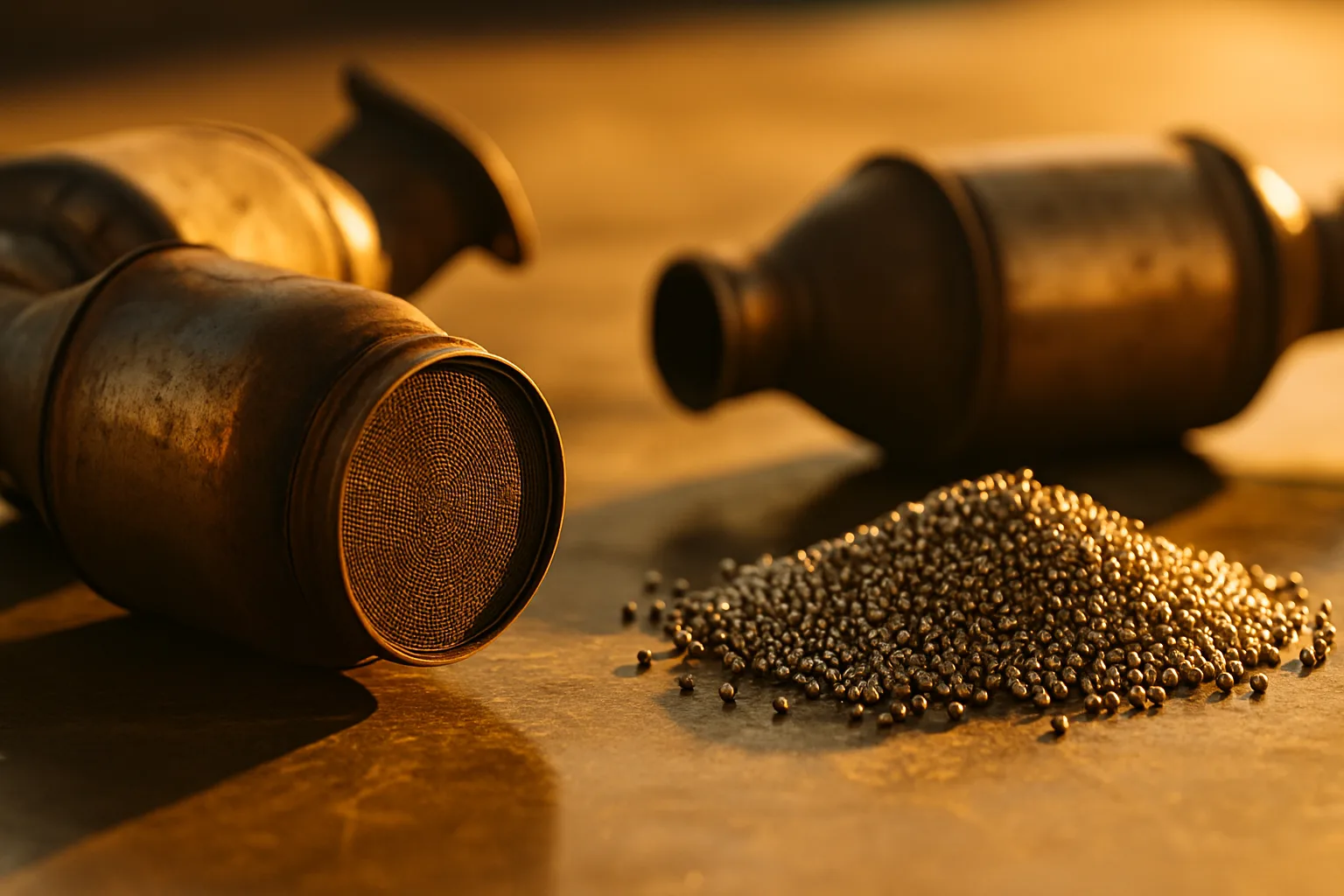
Foil vs. Bead Catalytic Converters: What Baltimore Sellers Need to Know About Scrap Cat Value in 2026
Most scrap cat sellers focus on the serial number and the brand name stamped on the shell. But what's inside the converter matters just as much — sometimes more. The internal substrate type — foil or bead — directly affects how much platinum group metals (PGMs) a converter carries, how it gets processed, and ultimately what a buyer will pay. If you're sitting on a pile of mixed cats in Baltimore and wondering why two similar-looking converters are fetching wildly different prices, the substrate is often the answer.
With the platinum price today remaining a live and moving target driven by global mining output, automotive sector demand, and industrial purchasing — understanding what's inside your cats isn't optional. It's the difference between leaving money on the table and getting what your inventory is actually worth.
What Is a Foil-Style Catalytic Converter?
Foil-style catalytic converters use a metallic substrate — thin corrugated sheets of stainless steel foil arranged in a honeycomb pattern inside the converter body. This construction style became common in higher-performance and European-market vehicles, where engineers needed a substrate that could withstand extreme heat and rapid temperature cycling without cracking.
The foil design allows for very thin cell walls, which means a higher cell-per-square-inch (CPSI) count. More surface area means more contact between exhaust gases and the PGM washcoat — platinum, palladium, and rhodium — that's applied to the foil surface. That's the good news for recyclers. But here's the catch: the PGM loading per unit of substrate weight in foil converters can vary significantly depending on the vehicle make, model, and production era.
Key characteristics of foil-style converters:
- Metallic substrate — stainless steel foil, not ceramic
- Higher melt value from the steel shell and substrate combined
- European and performance vehicle applications dominate (BMW, Mercedes, older Volvo, some Ford motorsport applications)
- Processing requires different smelting techniques than ceramic — most refiners handle them separately
- Generally command a premium over standard ceramic converters when PGM loading is confirmed
For Baltimore yards pulling converters off German imports or high-mileage European fleet vehicles, foil cats are worth identifying and separating. Lumping them in with generic ceramic stock is a mistake that costs real money at settlement.
What Is a Bead-Style Catalytic Converter?
Bead-style converters — sometimes called pellet-bed or loose-fill catalysts — use small ceramic beads coated with PGMs as the active catalyst material. Instead of a rigid honeycomb structure, the converter body is packed with thousands of individual beads that exhaust gas passes through. This design was common in older North American vehicles, particularly from the late 1970s through the 1980s and into the early 1990s.
You'll find bead converters most often on older domestic trucks, fleet vehicles, and industrial equipment. They're less common on modern passenger cars, but Maryland's working-vehicle market — construction equipment, commercial trucks, older American pickups — still surfaces them regularly. The beads themselves can be removed, weighed, and sampled separately from the shell, which makes assay straightforward for experienced buyers.
What makes bead cats distinct from a pricing standpoint:
- Loose-fill substrate — beads can settle, compact, or partially escape through cracks in aged units
- Weight matters more — bead volume and bead condition directly affect the PGM content available for recovery
- Easier to assess visually — an experienced buyer can estimate bead fill level quickly
- Older vehicles — GM, Ford, Chrysler trucks and full-size cars from the pre-OBD era are the primary source
- Potential for bead loss — damaged units with missing beads are worth significantly less; document condition with photos
One thing that catches sellers off guard: a bead converter that looks complete on the outside may have cracked internally or lost significant bead volume through a broken weld or end cap. Photo documentation at the time of removal is essential — and any serious compare scrap metal bids from verified buyers platform will expect it.
How the Platinum Price Today Affects Foil and Bead Cat Values
The platinum price today sits at the center of every scrap cat transaction, whether you're dealing in foil, bead, or standard ceramic honeycomb converters. Platinum, palladium, and rhodium prices are quoted in troy ounces and move daily based on futures markets, mining output from South Africa and Russia, and industrial demand from the automotive and hydrogen sectors.
In 2026, PGM pricing has been shaped by several converging forces: continued tightness in South African platinum supply, ongoing demand from hydrogen fuel cell manufacturing, and the recycled-content mandates that are pushing automotive OEMs to source more PGMs from the secondary market. That last point matters directly for scrap cat sellers — refiners are paying closer attention to secondary feed quality, which means documented, properly sorted inventory commands better pricing.
How foil and bead cats track against PGM spot prices:
- Foil cats track closely with platinum and palladium spot, adjusted for PGM loading specific to the vehicle application — European cars often carry heavier platinum loadings
- Bead cats tend to carry older PGM formulations with higher platinum ratios relative to palladium — relevant when platinum is strong relative to palladium on the market
- Rhodium content in both types is generally lower than in modern ceramic three-way converters — don't overbid or oversell on rhodium value in these units
- Assay risk is real — both foil and bead lots can vary more unit-to-unit than a consistent OEM ceramic run, so buyers price in some uncertainty unless you have strong documentation
Disclaimer: PGM prices fluctuate daily. The information here reflects general market conditions as of July 2026. Always check current rates before finalizing any transaction.
Getting the Best Scrap Cat Price in Baltimore for Foil and Bead Inventory
Baltimore's scrap market is active. The port, the industrial corridor along the Patapsco, and the density of automotive dismantlers across the Baltimore metro mean there's real volume moving through the region. But volume doesn't automatically mean competition — and without competition, you're at the mercy of whoever picks up the phone first.
That's the core problem with the old way of selling specialty cats like foil and bead units. You call your regular buyer, they quote you a number, and you have no idea if that number reflects the actual platinum price today or just what that buyer feels like paying this week. Platforms like SMASH change that dynamic entirely. Instead of one buyer with one number, you get vetted buyers competing for your inventory — which is exactly how price discovery is supposed to work.
If you're handling Baltimore scrap metal services and you're regularly pulling foil or bead cats from your operation, here's what you should be doing to protect your margins:
- Sort by type before listing. Foil and bead cats should never be mixed into a general ceramic lot. Buyers who specialize in these units will pay more when they know exactly what they're getting.
- Document condition with photos. End caps intact? Beads full? Shell undamaged? Every photo you take removes uncertainty — and uncertainty costs you money at settlement.
- Know the vehicle source. VIN lookup and vehicle application data help buyers confirm PGM loading ranges before they bid. The more information you provide, the tighter the bids will be.
- Don't lump foils with ferrous scrap. The metallic substrate in foil cats has value beyond the PGMs — but only if it's processed correctly. A ferrous recycler won't capture that value.
- Use a platform that gets you multiple bids. One quote is not a market. Find the best scrap cat prices today by creating real competition among qualified buyers.
Maryland sellers who take these steps consistently report tighter bid spreads and faster settlement times — not because the market got better, but because better documentation removes the excuses buyers use to shade their offers downward.
Why Scrap Metal Auction Platforms Are the Right Tool for Specialty Cat Inventory
Foil and bead cats are specialty material. They require buyers who understand substrate differences, PGM recovery methods, and the processing economics that separate a good refiner from a mediocre one. A general scrap metal auction platform isn't enough — you need one with vetted buyers who actually process PGM-bearing material, not just middlemen who flip your load to someone else and clip a margin on the way through.
SMASH operates as exactly that kind of platform — a scrap metal auction platform built for serious scrap operations, not casual sellers. The buyer network is vetted. The auction format creates real competition. And because there are no subscription fees, you're not paying to access the market before you've sold a single cat. SMASH only wins when you win — straightforward and worth understanding before your next foil or bead lot is ready to move.
For catalytic converter buyers in Maryland and the broader Mid-Atlantic region, the ability to bid on documented, sorted inventory through a structured process is a significant upgrade over cold calls and guesswork. And for sellers in Baltimore, it means your specialty inventory finally gets priced like specialty inventory — not lumped in with whatever the lowest-effort buyer wants to pay.
If you want to get a fair price for your scrap catalytic converters, the answer isn't hoping your regular buyer is having a generous week. It's building a process that puts multiple qualified buyers in competition for every load you move. Read scrap catalytic converter guides to sharpen your knowledge before your next sale — the more you know about what you're holding, the harder it is for a buyer to low-ball you.
Your foil and bead inventory has real value. The platinum price today supports that. The question is whether you're capturing it — or leaving it with the buyer.
Frequently Asked Questions
Q: How do I know if I have a foil-style or bead-style catalytic converter?
Cut or shake the converter gently — bead units will produce a rattling sound from loose pellets, while foil units have a solid metallic substrate that won't shift. Foil cats also feel noticeably heavier per unit than comparable ceramic honeycomb types. If you're unsure, a photo submission to a qualified buyer or platform like SMASH can get you a substrate identification quickly.
Q: Does the platinum price today directly affect what I get paid for my scrap cats?
Yes, but not on a one-to-one basis. Buyers factor in PGM loading estimates specific to the converter type, processing and refining costs, and their margin requirements. A rising platinum price improves your leverage, but the settlement price will always reflect net recoverable PGM value — not raw spot price. This is why competing bids matter: they reveal what the market is actually willing to pay, not just what one buyer tells you it's worth.
Q: Are there catalytic converter buyers in Baltimore who specialize in foil and bead units?
Yes — the Baltimore and broader Maryland market has buyers with PGM processing capabilities, though not every yard or buyer handles specialty substrate types. Using a platform that connects you with vetted, specialized buyers gives you access to the right market for your specific inventory type, rather than defaulting to whoever is closest or most familiar.
Q: What condition issues reduce the value of bead-style catalytic converters?
Bead loss is the biggest value killer — if the beads have partially escaped through a cracked shell or broken end cap, you're missing recoverable PGM material and buyers will discount accordingly. Moisture contamination and heavily corroded shells can also reduce processing efficiency. Document the condition of every unit with photos before transport — this protects you if a buyer attempts a post-inspection price reduction.
Q: Is it worth separating foil cats from the rest of my cat inventory before selling?
Absolutely. Selling mixed loads almost always results in the entire lot being priced at the lowest common denominator. Foil cats, especially those sourced from European vehicles, can command a meaningful premium when sold to buyers who specifically process metallic substrate material. Sort your inventory, document it properly, and let buyers bid on what they're actually getting.
Ready to find out what your foil and bead cats are worth? The market is live, PGM prices are moving, and the only way to know you're getting the best number is to let buyers compete for your inventory. Get a free quote at best-scrap-cat-prices.com and see what real price discovery looks like.
Stay current on scrap metal markets and catalytic converter pricing — follow SMASH on LinkedIn for industry updates and PGM market insights.
```