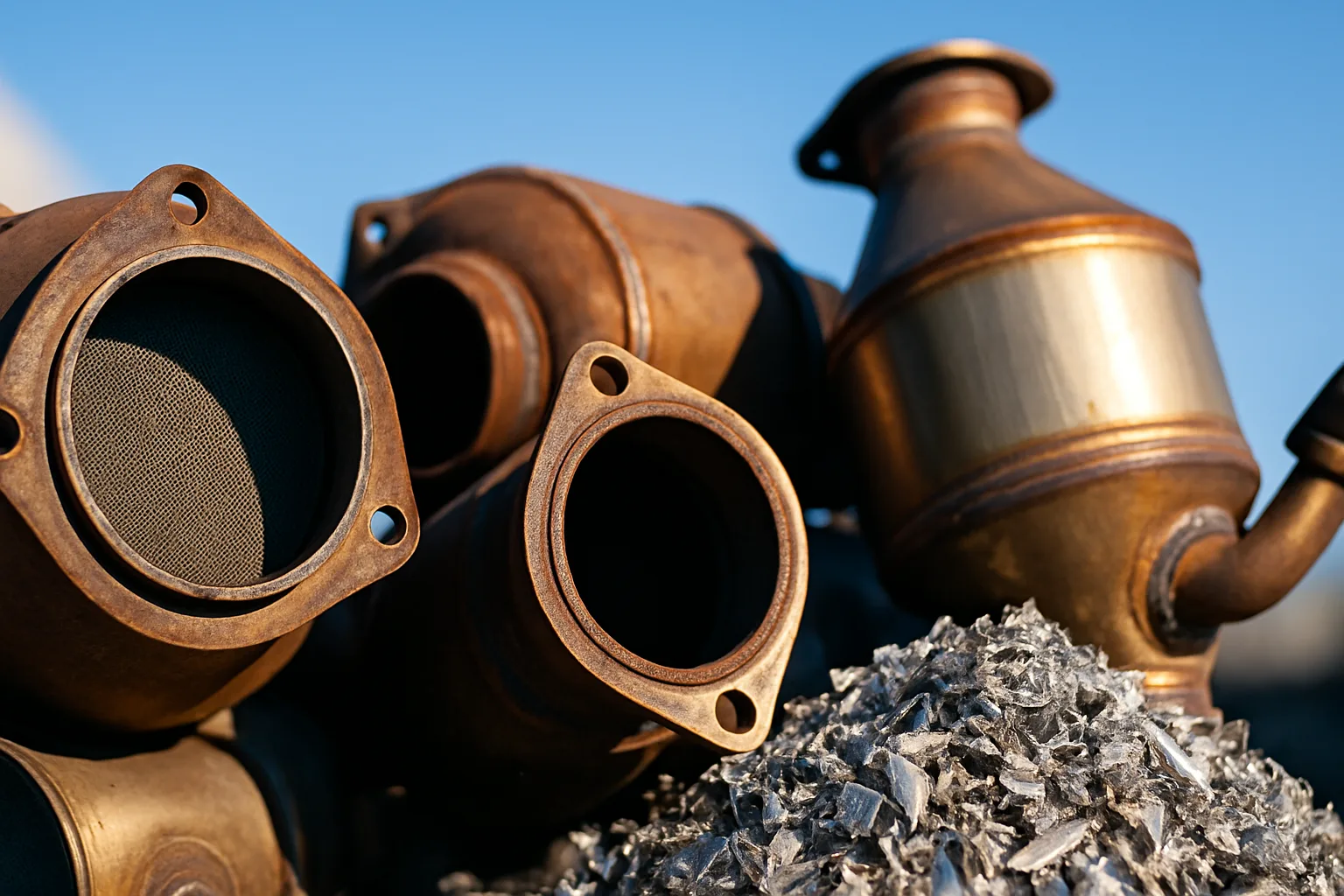
Which Catalytic Converters Are Actually Worth the Most Right Now?
Not all scrap cats are created equal. The difference between a $40 payout and a $400 payout often comes down to one thing: which vehicle that converter came off of. With the platinum price today sitting in a volatile range driven by mining supply pressures and shifting industrial demand in 2026, knowing your converter's precious metal profile before you sell is no longer optional — it's how you avoid leaving serious money on the table.
This week's roundup breaks down the most valuable catalytic converters by vehicle make and model, what makes them worth more, and how sellers in Milwaukee and across Wisconsin can stop guessing and start getting competitive prices for their cats.
Why Precious Metal Content Drives Scrap Cat Value More Than Anything Else
A catalytic converter's scrap value isn't about the steel shell. It's about what's inside the substrate — specifically, the loading of platinum, palladium, and rhodium. These three platinum group metals (PGMs) are what refiners are actually buying when they process your cat. The spot price of each metal on any given day directly affects your payout.
In 2026, rhodium remains the rarest and most price-sensitive of the three. Palladium has seen significant demand from gasoline engine applications, while platinum has historically been dominant in diesel converters. When you hear a buyer quote the platinum price today, understand they're really quoting you based on the combined PGM value of your specific unit — not a flat rate for any old cat.
Here's what determines a converter's scrap value:
- PGM loading: How many grams of platinum, palladium, and rhodium are in the substrate
- Substrate condition: Cracked, burned, or rattling substrates lose value fast
- Vehicle origin: Luxury, exotic, and diesel vehicles typically carry higher loadings
- OEM vs. aftermarket: Original converters have higher PGM content; aftermarket cats are worth significantly less
- Current spot prices: PGM prices fluctuate daily — sometimes hourly
Understanding this framework changes how you approach selling. You're not selling scrap metal. You're selling a precise chemical payload, and the buyer knows exactly what's in it. You should too.
The Most Valuable Catalytic Converters by Make and Model
Certain vehicles are known in the industry for carrying high-value converters. This isn't folklore — it's based on documented PGM recovery data and the engineering requirements those manufacturers built into their emissions systems. If you're processing these vehicles or buying cores that came off them, pay attention.
Ferrari and Lamborghini
Exotic European vehicles sit at the top of the scrap cat value ladder. Ferrari models in particular — especially V8 and V12 platforms — carry substantial PGM loadings designed to meet stringent European emissions standards. A single Ferrari cat can be worth multiples of a standard domestic converter. These are rare finds, but when they come through a yard in Wisconsin, they should be handled separately and priced accordingly.
Ford F-250 and F-350 (Diesel)
Heavy-duty diesel trucks are among the most common high-value cats in North America. The Super Duty platform's diesel converters — particularly from 2015 onward — carry significant platinum loading. These trucks are everywhere in the Midwest, which makes them a real opportunity for catalytic converter buyers in Milwaukee and surrounding markets. Don't let a Super Duty cat get lumped into a general load without proper identification.
Toyota Prius (All Generations)
The Prius has become almost legendary in the scrap cat world — and for good reason. Because the Prius runs its combustion engine less frequently than a conventional vehicle, the converter never fully heats up to the temperatures that degrade PGM content. The result is a converter with exceptionally well-preserved precious metal loading. Gen 2 and Gen 3 Prius cats (roughly 2004–2015 model years) are consistently among the highest-value units in volume recycling.
BMW 5 and 7 Series (Diesel)
BMW's diesel platforms — especially the 530d and 730d — carry converters with high platinum content. European emissions regulations required heavy PGM loading in diesel systems, and these converters reflect that. If you're processing late-model European luxury vehicles, always identify the converter before pricing the load.
Dodge Ram 2500/3500 (Diesel Cummins)
Cummins-powered Rams have a strong following in agricultural and commercial markets across the Midwest and Wisconsin. Their diesel converters carry meaningful PGM value. Yards that process farm equipment trades and commercial fleet vehicles should be tracking these separately.
Honda Accord and Civic (Late Model)
These aren't exotic vehicles, but volume matters. Late-model Accord and Civic converters carry decent PGM content and are common in virtually every market. For yards processing high-volume consumer vehicles, identifying Honda cats and pricing them correctly adds up fast across a month's worth of inventory.
The bottom line: vehicle identification is not optional if you want to get a fair price for your scrap catalytic converters. Every converter you misidentify is a payout you're leaving behind.
How the Platinum Price Today Affects Your Weekly Payout
PGM spot prices move constantly. The platinum price today is not the platinum price from last Tuesday, and it's definitely not the price your buyer quoted you three months ago. In 2026, PGM markets have been influenced by ongoing supply constraints out of South Africa, evolving demand from hydrogen fuel cell development, and shifting automotive electrification timelines that have created unpredictable demand signals for palladium.
What this means for sellers is straightforward: if you're selling based on a price quote that's more than a few days old, you're flying blind. The best sellers in this market — the ones consistently getting strong payouts — are the ones who understand PGM price direction before they list or call a buyer.
This is exactly where a catalytic converter auction format creates real value. When multiple vetted buyers bid on your lot simultaneously, the auction price reflects actual current market demand. You're not trusting one buyer's interpretation of today's spot price. You're letting competition do the work. Platforms like smashscrap.com are built specifically for this — structured auctions where documented, identified inventory gets priced by real market competition, not a single phone call.
For sellers in Milwaukee running regular volume — whether you're a yard processing end-of-life vehicles or a shop accumulating cores — tracking the weekly PGM price trend is as basic as checking the weather. Make it a habit.
Disclaimer: Precious metal prices fluctuate daily based on global market conditions. Always verify current rates before finalizing any sale.
Why Milwaukee Sellers Should Stop Taking the First Offer
Milwaukee has a strong industrial and automotive base. Yards and shops across the metro area process significant catalytic converter volume every week. But too many sellers in this market are still selling the old way — one buyer, one call, one price, done.
That model only works if you're comfortable leaving money on the table. When a single buyer quotes you a price, they're giving you their number, not the market number. They have no incentive to tell you that three other buyers in the network would have paid more for your lot of Prius and Super Duty cats.
If you're processing catalytic converter scrap metal in Milwaukee, the move is to get competitive. That means using tools built for documentation and auction-style pricing. SMASH uses a vetted buyer network and a competitive auction format so that your identified, documented inventory gets priced against real demand. No subscription. No guessing. The platform only wins when you win.
You can also explore Milwaukee scrap metal services tailored specifically to your local market — including converter identification support and access to competitive buyers across Wisconsin and beyond.
Whether you're running a full-service yard or accumulating converters from shop accounts, find the best scrap cat prices today by getting your inventory in front of more than one buyer. That's how price discovery actually works.
How to Prepare Your Cats for Maximum Scrap Value Before You Sell
Preparation isn't complicated, but it separates the sellers who get strong bids from the ones who wonder why their payouts are low. Buyers price risk into their offers. If your lot is undocumented and unidentified, the buyer prices in the uncertainty — and you absorb that cost.
Here's what a well-prepared cat lot looks like:
- Identify every unit: Use VIN data, serial numbers, or visual reference to match each converter to its vehicle of origin. SMASH's inventory tool includes VIN lookup and serial tracking built in.
- Document condition: Photograph each unit. Note any cracked substrates, missing ends, or heat damage. Photo documentation reduces buyer disputes and increases bid confidence.
- Separate OEM from aftermarket: Aftermarket cats are worth a fraction of OEM units. Mixing them without disclosure will either kill your bid or damage your buyer relationships.
- Group by category: High-value exotics and diesel cats should be listed separately from standard domestic units. Don't let a Ferrari cat get averaged into a mixed lot.
- Know the current platinum price today before you list: Context matters. If PGM prices spiked this week, your timing on listing matters.
Documented inventory gets better bids. That's not a theory — it's how buyers behave when they have the information they need to bid with confidence. You can read scrap catalytic converter guides for more detail on prep, pricing, and what buyers are actually looking for when they evaluate a lot.
Frequently Asked Questions
Q: How does the platinum price today affect what I get for my catalytic converters?
The platinum price today is one of three PGM spot prices (alongside palladium and rhodium) that determine how buyers calculate your converter's value. When platinum spot prices rise, converters with high platinum loading — especially diesel units — pay out more. Prices shift daily, so always check current rates before finalizing a sale.
Q: What are the best catalytic converter buyers in Milwaukee for high-volume sellers?
High-volume sellers in Milwaukee benefit most from buyers who operate transparently and competitively. Platforms like SMASH connect sellers with vetted buyers through a competitive auction format, which means your documented lot gets priced by market competition rather than a single buyer's offer. That structure tends to favor sellers who invest in proper identification and documentation.
Q: Is a catalytic converter auction format better than selling directly to one buyer?
For most sellers processing regular volume, yes. A catalytic converter auction puts your inventory in front of multiple vetted buyers simultaneously, which drives competitive pricing through actual market demand. Selling to a single buyer means accepting their price interpretation of current PGM values — not the market's.
Q: Why do Toyota Prius catalytic converters have such high scrap value?
Prius converters retain high PGM content because the hybrid system's engine cycling means the converter never reaches the sustained high temperatures that degrade precious metals over time. The result is a converter with well-preserved platinum and palladium loading, making it consistently one of the highest-value units in the scrap cat market.
Q: Where can catalytic converter sellers in Wisconsin get the most competitive scrap prices?
Sellers across Wisconsin get the most competitive prices by using documented inventory and competitive buyer platforms rather than relying on a single local buyer. Identifying your converters by vehicle make and model, photographing them, and listing through an auction platform gives you access to buyers competing on price — which is how the market is supposed to work.
Ready to stop guessing and start selling smarter? The value is in your inventory — you just need the right buyers competing for it. Head to best-scrap-cat-prices.com for a free quote and see what your cats are actually worth in today's market.
Follow SMASH on LinkedIn for weekly scrap metal market updates, PGM price insights, and industry news that keeps you ahead of the market.