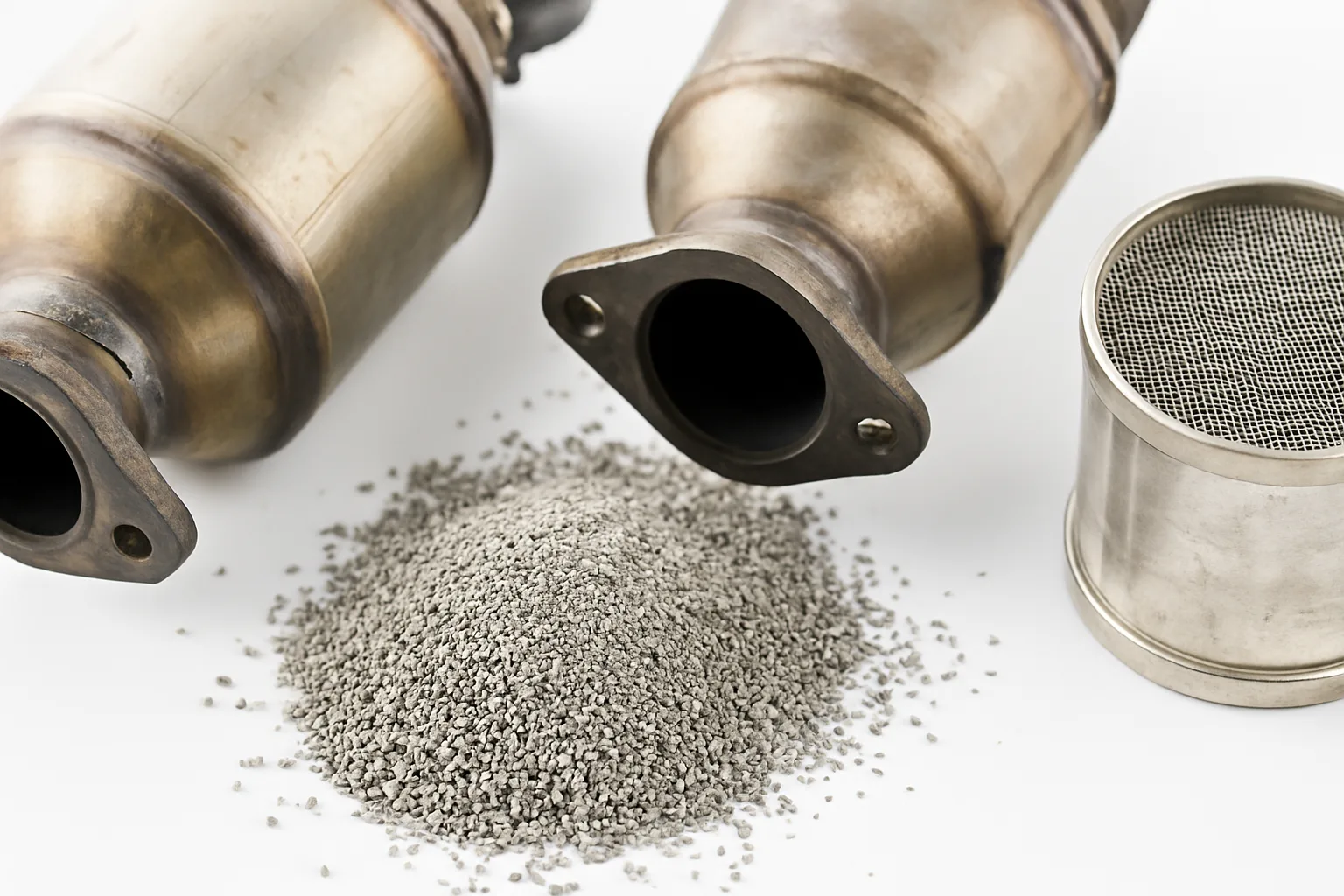
Rhodium Is Worth More Than Gold Right Now — Here's Why That Matters for Your Scrap Cats
Most people scrapping catalytic converters think platinum gets all the attention. It doesn't. Rhodium is the metal quietly driving the value in your cats — and if you don't understand why, you're probably leaving serious money on the table. Knowing what's inside your converters is the difference between getting a fair price and getting low-balled by a single buyer who's counting on your ignorance.
If you're selling scrap cats in Austin or anywhere across Texas, this breakdown is for you. Let's talk about rhodium — what it is, why it's so valuable, and how understanding it helps you find the best scrap cat prices today.
What Makes Rhodium the Most Valuable Metal in a Catalytic Converter?
Catalytic converters contain three platinum group metals (PGMs): platinum, palladium, and rhodium. All three are precious. But rhodium sits at the top of the value chain by a significant margin. The reason comes down to scarcity and function.
Rhodium is extraordinarily rare. Global annual production is measured in the low tens of tonnes — a fraction of gold or even platinum output. The vast majority of the world's rhodium supply comes from South Africa, with a small percentage from Russia and other regions. When supply disruptions hit those sources, prices spike fast and hard. That's not speculation — it's the structural reality of the rhodium market.
Inside a catalytic converter, rhodium handles one of the hardest chemical jobs in the vehicle: reducing nitrogen oxides (NOx) into nitrogen and oxygen. Platinum and palladium handle oxidation reactions, but rhodium is the metal doing the heavy NOx-reduction work. Tightening emissions standards globally have pushed automakers to load more rhodium into their converters over time — which means today's scrap cats often carry more rhodium than older units from a decade ago.
- Platinum: Handles oxidation of carbon monoxide and hydrocarbons
- Palladium: Also oxidizes hydrocarbons — more common in gasoline engines
- Rhodium: Reduces NOx emissions — highest market value per troy ounce of the three
Understanding this split matters when you're pricing a load. Not all cats carry the same rhodium loading, and that variance is exactly where buyers make their margins if you're not paying attention.
Rhodium Price Today: Why It Swings Hard and What Drives It
The rhodium price today reflects a market that moves on thin supply margins and shifting industrial demand. Unlike gold or silver, which trade in enormous global volumes, rhodium is a niche industrial metal. A single mine disruption in South Africa can move the price by hundreds — or thousands — of dollars per troy ounce.
Several factors drive rhodium's price in 2026:
- Automotive emissions regulations: Stricter NOx limits in North America, Europe, and China require higher PGM loadings in new vehicles. More rhodium per converter means sustained industrial demand.
- Supply concentration: Roughly 80% of global rhodium comes from a handful of South African operations. Labor, energy costs, and geological complexity all create supply risk.
- Secondary supply from recycling: Scrap catalytic converters are one of the most important sources of recycled rhodium. When primary mine supply tightens, the secondary market — your scrap cats — becomes even more critical to the supply chain.
- Substitution limits: There's no practical substitute for rhodium in three-way catalytic converters at current technology levels. Demand is relatively inelastic, which amplifies price movements.
Prices fluctuate daily based on spot market trading. Always check current rates before you sell — never lock in a price based on what you heard last week. Disclaimer: All metal prices referenced here are general market context only. Rhodium and PGM prices fluctuate constantly. Verify current spot prices before making any selling decisions.
How Rhodium Content Varies Across Different Catalytic Converters
Not every cat is equal. The rhodium loading in a converter depends on the vehicle make, model, engine type, model year, and the emissions standard the manufacturer was targeting. This is exactly why scrap cat value varies so widely — and why guessing your price based on one buyer's offer is a risky move.
A few general patterns worth knowing:
- Luxury and high-performance vehicles often carry higher PGM loadings, including rhodium, because their engines produce more NOx under load.
- Late-model vehicles (2018 onward) generally contain more rhodium per converter than older units, reflecting stricter emissions standards phased in over the past decade.
- Diesel converters have a different PGM profile than gasoline units — often heavier on platinum, lighter on rhodium.
- Foreign vs. domestic cats: Some foreign-make converters from Japanese and European manufacturers carry different PGM ratios than domestic equivalents of the same vintage.
- Aftermarket converters typically carry far less PGM content than OEM units — sometimes dramatically less. Know what you have before you sell.
In Texas, you see a wide range of vehicle types moving through the secondary market — trucks, SUVs, fleet vehicles, and imports. Austin's mix of vehicle types means a load of cats from a local shop can vary significantly in rhodium content from one unit to the next. That variance is exactly why documentation and buyer competition matter so much when you're trying to get a fair price for your scrap catalytic converters.
Platforms like smashscrap.com give vetted buyers access to documented inventory — VIN lookups, serial tracking, photo documentation — so buyers can bid with confidence on what they're actually purchasing. That transparency translates to better price discovery for sellers. More buyers bidding on a documented load beats one buyer making an offer on a mystery box.
Why Competitive Auctions Are the Right Format for Rhodium-Heavy Cats
Here's the old way: you call one buyer, describe your load, and take whatever number they give you. That buyer knows the rhodium content. You might not. They win. You think you got a fair deal because you don't know what you left behind.
The better approach is competition. When multiple vetted buyers see the same documented load and bid against each other, the price reflects actual market demand — not what one buyer decided to offer you that morning. This is especially important for high-value loads with significant rhodium content, because even a small difference in price per unit multiplied across a large load adds up fast.
SMASH runs catalytic converter auctions exactly this way. Sellers document their inventory — photos, serial numbers, VIN lookups where applicable — and vetted buyers compete. No subscription fees. No guessing. The auction format means price discovery happens in the open, not in a back office.
For sellers in Austin running through volume — shops, recyclers, auto dismantlers — this format makes a real difference on high-rhodium loads. If you've been relying on a single relationship for your cat pricing, it's worth understanding what competitive bidding can reveal about your inventory's actual market value. More buyers means better price discovery. That's not a sales pitch — it's basic economics.
You can also read scrap catalytic converter guides to sharpen your understanding of PGM content, converter identification, and how to document a load properly before it goes to auction.
Getting the Best Catalytic Converter Price in Austin — What to Do Before You Sell
If you're in Austin looking to move a load of scrap cats, a little preparation goes a long way. Rhodium's value is real — but it only works in your favor if you're selling in a competitive, transparent environment with buyers who can actually see what they're bidding on.
Here's a practical checklist before you sell:
- Identify your cats. Separate OEM from aftermarket converters. Aftermarket units carry a fraction of the PGM value of OEM. Don't mix them into a single lot without disclosure — it destroys buyer confidence and drives prices down.
- Document everything. Photos from multiple angles. Serial numbers where visible. VIN data if available. The more information buyers have, the more confidently they can bid.
- Know your volume. A larger documented load attracts more buyer interest than a handful of loose cats. Timing your sales to consolidate volume can improve outcomes.
- Don't take the first number. Whether you're using Austin scrap metal services or a national platform, always know that competitive formats exist and that the first offer is rarely the best one.
- Check current PGM spot prices. Rhodium, platinum, and palladium move daily. A rough understanding of where the market sits before you sell keeps you from being caught off guard.
- Use a platform with vetted buyers. Not all buyers are equal. Vetted buyers who compete openly produce better outcomes than anonymous low-ballers working a phone line.
SMASH handles auto-invoicing and full transaction documentation once a sale closes — no chasing paperwork, no disputes over what was agreed. For Texas operators running volume through their yards, that back-end efficiency matters as much as the front-end price.
Frequently Asked Questions
Q: Why is rhodium worth more than platinum in catalytic converters?
Rhodium is significantly rarer than platinum and serves a critical function — reducing nitrogen oxide emissions — that no other metal handles as effectively at scale. Global annual rhodium production is a small fraction of platinum output, which keeps supply tight and prices elevated. Demand from stricter global emissions standards has reinforced that premium.
Q: How do I know if my scrap cat has high rhodium content?
Rhodium content varies by make, model, engine type, and model year. Late-model OEM converters from gasoline engines generally carry more rhodium than older or aftermarket units. Serial number lookup tools and VIN-based identification systems — like those used on SMASH — help establish what PGMs are likely present before a sale.
Q: What's the best way to get the best catalytic converter price in Austin?
Avoid single-buyer offers. Document your inventory thoroughly with photos and serial numbers, separate OEM from aftermarket units, and sell through a competitive format where multiple vetted buyers bid on your load. Competition reveals actual market value in a way that a single phone call never will.
Q: Does the rhodium price today affect what I get for my scrap cats?
Yes — directly. Buyers price scrap cats based on PGM spot prices at the time of the transaction, with adjustments for processing costs and assay results. When rhodium prices rise, high-rhodium cats become more valuable. Monitoring the spot market before you sell gives you a realistic baseline for evaluating offers.
Q: Where can I sell scrap catalytic converters near me in Austin, Texas?
Local scrap yards and metal recyclers operate across the Austin area, but local options vary widely in buyer competition and pricing transparency. Online auction platforms like SMASH connect you with vetted buyers across North America who compete on your documented load — which often produces better price discovery than a single local buyer with no competition.
Rhodium doesn't get the headlines gold does, but it's the metal doing the hardest work inside your converters — and it's the one most directly tied to your scrap cat value. If you're selling in Austin or anywhere across Texas, understanding what's in your load is the first step toward getting paid what it's actually worth. When you're ready to move your cats in a competitive, transparent format, find the best scrap cat prices — get a free quote at best-scrap-cat-prices.com.
Stay current on scrap metal market moves and PGM pricing — follow SMASH on LinkedIn for regular industry updates and insights.