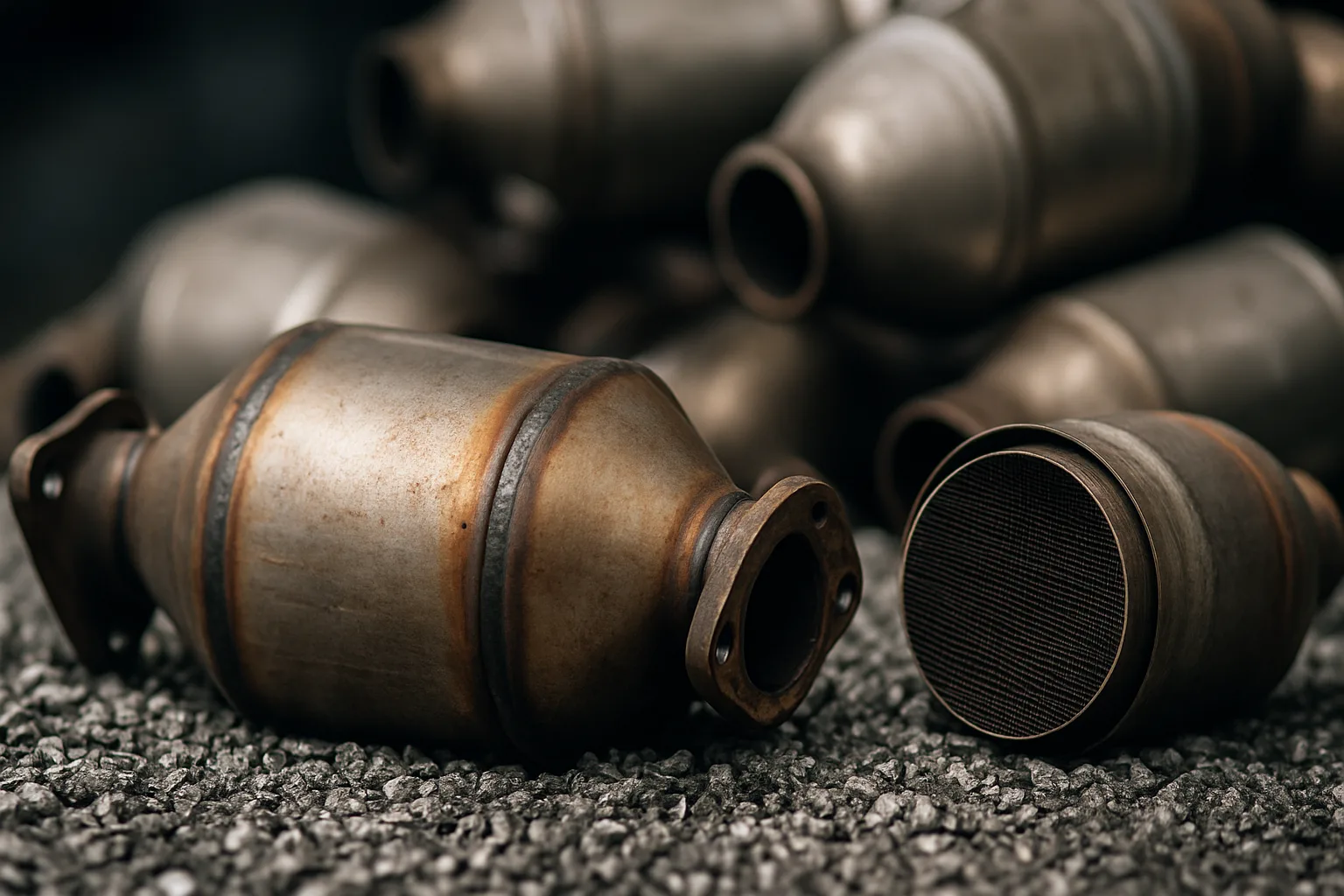
From Your Yard to the Furnace: What Really Happens After You Sell a Scrap Cat
Most scrap yards in Columbus, Ohio will hand you a check and wave goodbye. But do you actually know what happens to that catalytic converter after it leaves your hands — and why that process directly determines what you get paid? Understanding how assaying and smelting work isn't just interesting. It's leverage. When you know how buyers calculate scrap cat value, you stop guessing and start negotiating from a position of knowledge.
This is a case study in the full lifecycle of a scrap catalytic converter — from the exhaust pipe to the precious metal refinery. We'll walk through the science, the business, and the moments where sellers either capture value or leave money on the table.
What's Actually Inside a Catalytic Converter (And Why It Matters for Pricing)
A catalytic converter isn't worth anything for its steel shell. The value lives in a ceramic or metallic substrate coated with platinum group metals — platinum (Pt), palladium (Pd), and rhodium (Rh). These three metals are what refiners want. Everything else is processing cost.
The loading varies dramatically depending on the vehicle, the make, the model year, and whether the converter is OEM or aftermarket. A domestic full-size truck cat might carry a very different PGM load than a small foreign economy car unit. That spread in value is exactly why generic pricing is a trap. A buyer offering a flat rate per unit is almost always averaging down — which means your high-value cats are subsidizing someone else's low-value ones.
- Platinum: Common in diesel applications and older gasoline vehicles
- Palladium: Dominant in modern gasoline engine converters
- Rhodium: Present in smaller quantities but historically the highest-value PGM by weight
PGM spot prices fluctuate constantly based on global supply, mining output (primarily from South Africa and Russia), and industrial demand. That volatility is why cat converter prices in Columbus — or anywhere — can shift week to week. Always check current market rates before locking in a price.
The Assay Process: How Buyers Figure Out What Your Cats Are Worth
Assaying is the process of determining the exact PGM content in a batch of catalytic converters. This is where the real number gets established — not at the counter, not on the phone, and not from a price sheet posted on the wall. The assay result is the ground truth.
Here's how a standard assay process works at a licensed sampling facility:
- De-canning: The steel shell is cut open and the substrate (the honeycomb or pellet material inside) is removed and separated.
- Crushing and milling: The substrate is mechanically crushed into a fine, homogeneous powder. Consistency here matters — uneven grinding leads to inaccurate samples.
- Sampling: A representative sample is pulled from the milled material. Industry standard protocols require multiple samples to account for variation within the lot.
- Analysis: Samples go through ICP-OES (Inductively Coupled Plasma Optical Emission Spectrometry) or fire assay methods. This produces precise PPM (parts per million) readings for Pt, Pd, and Rh.
- Return calculation: The PPM results are multiplied by the lot weight and current spot prices to produce the gross metal value. Refinery charges, sampling fees, and settlement terms are then applied to arrive at the net payment.
This process is why lot size matters. A single converter doesn't get assayed on its own — refiners work with consolidated lots, typically measured in hundreds of pounds of substrate. Smaller sellers who consolidate their material with a trusted buyer or through a platform that aggregates lots tend to get better access to assay-based pricing rather than flat-rate guessing.
Smelting and Refining: Turning Powder Into Payable Metal
Once the assay is complete and the lot is accepted, the real metallurgical work begins. The milled substrate goes into a smelter, where it's processed at extreme temperatures — often exceeding 1,400°C — to separate the PGMs from the ceramic or metallic carrier material.
The smelting stage produces what's called a PGM-rich alloy or collector metal. From there, refining uses hydrometallurgical processes — acid leaching, solvent extraction, and precipitation — to isolate pure platinum, palladium, and rhodium separately. These metals are then sold back into industrial markets: automotive manufacturers building new catalysts, electronics producers, jewelry makers, and medical device companies.
The full cycle from received lot to refined metal typically runs four to twelve weeks depending on the refinery, lot composition, and any contractual settlement terms. That settlement timeline is a negotiating point. Buyers offering faster payment are often discounting your metal to compensate. Understand what you're trading when you accept quick-pay terms.
How Catalytic Converter Auctions Change the Pricing Equation
Here's the problem with the traditional model: one buyer, one offer, no visibility. You call a single contact, they give you a number based on their in-house grading, and you either take it or walk. There's no way to know if that number reflects current PGM spot prices, actual assay expectations, or just the buyer's margin target for the week.
A catalytic converter auction flips that dynamic. Multiple vetted buyers see the same documented inventory — including photos, weights, VIN lookups, serial tracking, and lot composition data — and bid competitively. Competition can help reveal the market. More buyers means better price discovery. That's not a slogan, it's basic economics applied to scrap cat value.
Platforms like smashscrap.com are built on exactly this principle. When you list a documented load of cats on SMASH, you're not calling one buyer and hoping. You're putting verified inventory in front of a network of vetted buyers who compete. Documented inventory gives buyers more confidence, and confidence translates into stronger bids. Sellers who submit well-documented lots — clear photos, accurate weights, proper packing lists — consistently attract more bidding activity than those who list vague or poorly documented material.
For sellers in the Columbus area handling regular volume, this approach changes the math. If you're pulling cats from a dismantler, a tow operation, or your own yard and selling to a single local buyer every time, you have no idea whether that buyer's price reflects the market or just your lack of alternatives. A catalytic converter auction gives you a baseline. It gives you data. That's how you stop guessing.
To find the best scrap cat prices today, you need competition. Full stop.
What Columbus Sellers Should Know Before Their Next Load
Ohio has a strong scrap infrastructure, and Columbus sits in the middle of a major automotive corridor. That means there's no shortage of buyers — but it also means competition among sellers is real, and undercutting happens. Knowing how assaying and smelting work puts you in a stronger position at the counter or on the platform.
A few practical considerations for sellers in Columbus and across Ohio:
- Document everything. Photos, weights, VINs where applicable. Buyers pay more for lots they can verify before bidding.
- Understand lot composition. Domestic cats, foreign cats, aftermarket cats, and pre-cats all carry different PGM profiles. Mixing them without disclosure affects your credibility with serious buyers.
- Watch PGM spot prices. Rhodium, in particular, has historically shown extreme volatility. Timing a sale around spot trends isn't always possible, but awareness helps.
- Know your settlement terms. Assay-based payment with a 30-day settlement at full spot return is very different from a same-day flat-rate offer. Both have their place depending on your cash flow needs.
- Use the tools available. VIN lookup, serial tracking, and inventory management tools on platforms like SMASH exist precisely to help sellers build documented loads that command better bids.
If you're working with Columbus scrap metal services and want a better read on what your material is actually worth, start with documentation. Then add competition. That combination is what moves the needle on scrap catalytic converter prices in Columbus.
For guides on getting the most from your material, read scrap catalytic converter guides covering everything from lot preparation to settlement terms.
The Bottom Line on Assay Value and Why Transparency Wins
The scrap cat market rewards sellers who understand what they have. Assaying exists because PGM content varies — sometimes dramatically — between converter types. Smelting and refining exist because those metals have real industrial value that far exceeds the weight of the steel around them. And auctions exist because one buyer with a flat-rate sheet is not a market.
When you get a fair price for your scrap catalytic converters, it's because someone on the other side of the transaction did the math on PGM content, lot weight, spot prices, and refinery costs. Understanding that math — even at a high level — means you're no longer just hoping for a good number. You're evaluating one.
Whether you're running a small dismantling operation in Columbus, Ohio or consolidating loads across multiple yards, the process is the same. Know your material. Document it properly. Put it in front of multiple buyers. That's how you stop leaving value on the table every time a load goes out the door.
Disclaimer: Catalytic converter scrap prices fluctuate based on PGM spot markets, lot composition, and refinery terms. Always verify current rates before finalizing any transaction.
Frequently Asked Questions
Q: How are scrap catalytic converter prices in Columbus determined?
Prices are based on the platinum group metal (PGM) content in the converter's substrate — specifically platinum, palladium, and rhodium. Buyers use assay results, current PGM spot prices, and lot weight to calculate value. Flat-rate offers from single buyers don't always reflect actual metal content, which is why competitive bidding through a catalytic converter auction tends to produce better price discovery.
Q: What is the assay process and how long does it take?
Assaying involves de-canning, crushing, milling, and chemically analyzing the substrate to determine exact PPM levels of Pt, Pd, and Rh. The full assay and settlement cycle at a refinery typically takes four to twelve weeks, depending on lot size and contractual terms. Faster payment options usually come with a discount on your metal return.
Q: Are catalytic converter prices the same across Ohio?
The underlying metal values are tied to global PGM spot markets, so the base pricing is consistent. However, what different buyers in Columbus or elsewhere in Ohio actually offer you can vary significantly depending on their margin structure, processing costs, and how much competition exists for your material. More buyer competition generally means better pricing.
Q: What makes a catalytic converter load more valuable to buyers?
Documentation, lot consistency, and accurate weights. Buyers on competitive platforms bid more confidently on documented loads with clear photos, serial numbers, VIN lookups where applicable, and proper packing lists. A well-documented load of foreign full-size cats is worth materially more than the same cats listed without documentation because buyers can model their return before bidding.
Q: How does SMASH help sellers get better scrap cat prices?
SMASH puts your documented inventory in front of vetted buyers who bid competitively rather than offering a take-it-or-leave-it flat rate. The platform includes tools for photo documentation, VIN lookup, serial tracking, and auto-invoicing — everything needed to build a credible lot that attracts serious bidders. No subscription fees means you only pay when a transaction closes.
Ready to stop guessing what your cats are worth? Head to best-scrap-cat-prices.com for a free quote and see what competitive pricing actually looks like for your load.
Follow SMASH on LinkedIn for ongoing scrap metal market insights, PGM price trends, and industry updates that help you sell smarter.
```