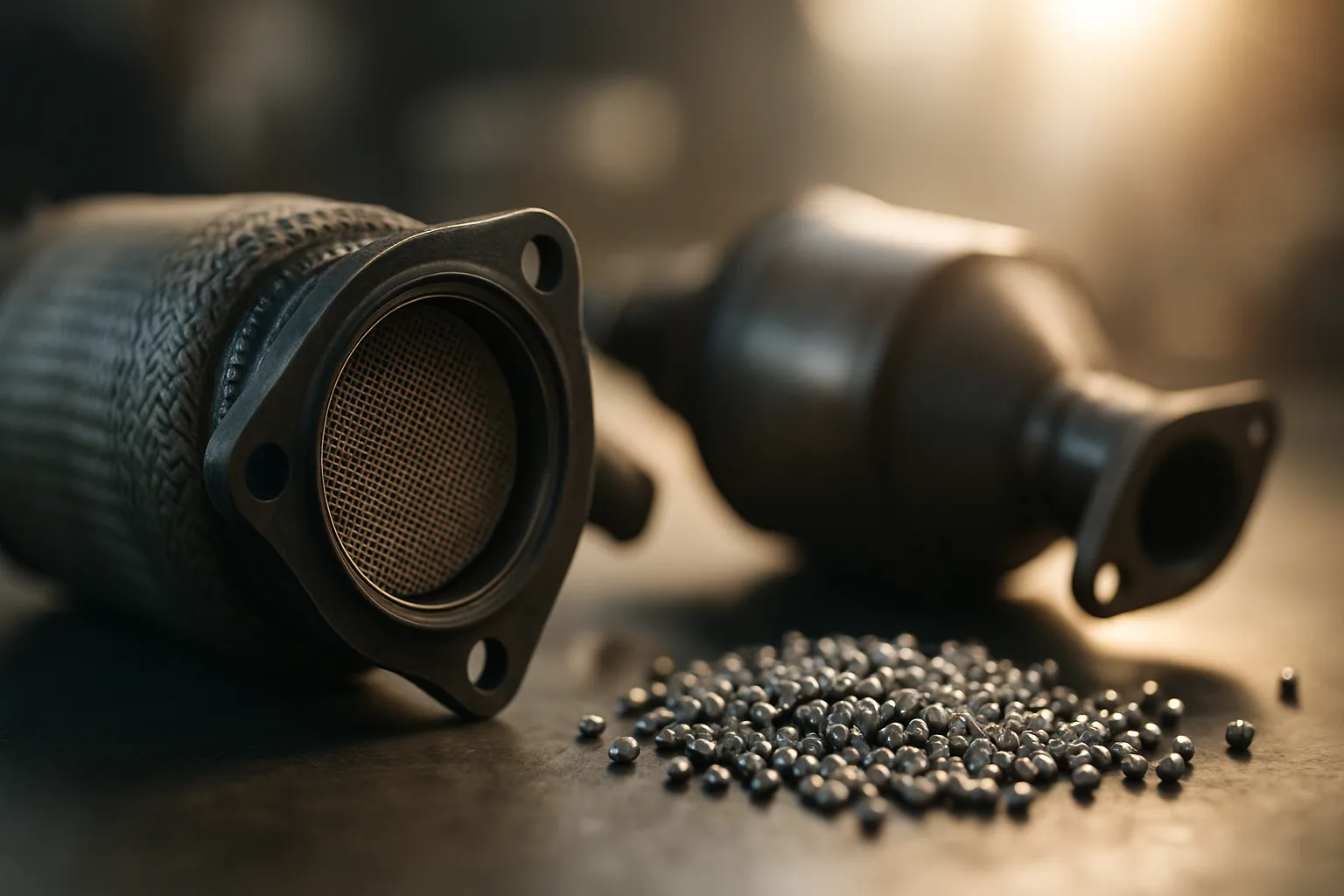
Hybrid Cats Are Worth More — Here's Why Most Sellers Leave Money on the Table
Pull a catalytic converter off a 2022 Toyota Prius and compare it to one from a 2010 Ford F-150. Same job. Very different value. Hybrid vehicle catalytic converters consistently carry higher concentrations of platinum, palladium, and rhodium — and most sellers have no idea. If you're looking to sell catalytic converters online, understanding what's actually inside a hybrid cat is the difference between getting a fair price and getting taken.
This isn't a minor gap either. The precious metal loading in a hybrid converter can be significantly higher than a standard internal combustion engine (ICE) cat. That matters when platinum price today swings, palladium stays volatile, and rhodium remains one of the most expensive metals on earth. If you're sitting on hybrid cats and you're not vetting your buyer — or using a competitive platform — you're guessing at your own money.
Why Hybrid Catalytic Converters Carry Higher Precious Metal Loads
Internal combustion engines run hot and consistent. A hybrid powertrain is different. The combustion engine in a hybrid cycles on and off constantly — particularly during low-speed urban driving. Every time the engine shuts down and restarts, the catalytic converter goes through a thermal cycle. It heats up, cools down, heats up again. That's brutal on the substrate and the precious metal washcoat.
To compensate, manufacturers load hybrid cats with more platinum group metals (PGMs) to maintain emissions performance across those repeated cycles. The catalytic converter has to reach "light-off" temperature quickly — the point where it starts converting harmful gases efficiently — even during a cold restart. More PGMs means faster light-off. That's the engineering reason hybrid cats are heavier in value.
- Platinum (Pt): Handles oxidation of carbon monoxide and unburned hydrocarbons. Hybrid cats often carry elevated platinum loadings to ensure fast light-off.
- Palladium (Pd): Works alongside platinum. Particularly effective at high temperatures and during rapid thermal cycling — exactly the conditions a hybrid converter faces.
- Rhodium (Rh): Reduces nitrogen oxides (NOx). Small amounts, massive value per troy ounce. Even marginal increases in rhodium content move the needle on scrap cat value.
When you find the best scrap cat prices today, hybrid cats should always be quoted separately from standard ICE converters. Any buyer quoting them the same is either uninformed or deliberately undervaluing your load.
How Platinum Price Today Affects What Your Hybrid Cat Is Worth
PGM markets are volatile. Platinum, palladium, and rhodium prices move based on mining output (primarily from South Africa and Russia), automotive production cycles, and industrial demand. A shift in platinum price today can move the value of a single hybrid cat by a meaningful amount — especially on higher-grade units from vehicles like the Prius, Honda Accord Hybrid, or Ford Escape Hybrid.
Rhodium deserves special attention. It's the smallest component by weight in most converters, but it's historically the most expensive PGM per ounce. When rhodium prices spike, hybrid cats — which tend to carry relatively more rhodium than budget ICE converters — see outsized value increases. The inverse is also true: when rhodium softens, high-rhodium hybrid cats drop faster than standard units.
The practical takeaway: don't sit on hybrid cats for months hoping the market moves in your favor unless you're actively tracking PGM spot prices. Most yard operators don't have the bandwidth for that. What you can control is the number of buyers competing for your load — which is exactly where platforms built for competitive bidding come in. Find the best price for your scrap on SMASH and let buyers compete rather than accepting a single quote.
Disclaimer: Precious metal prices fluctuate daily based on global market conditions. Always check current PGM spot rates and request updated quotes before committing to a sale. The information in this article reflects general market dynamics as of July 2026 and is not a guarantee of specific pricing.
Identifying High-Value Hybrid Cats Before You Sell
Not all hybrid cats are created equal. The vehicle make, model, year, and engine configuration all affect precious metal content. A serial number lookup or VIN-based identification gives you a real starting point — and it's the first thing a legitimate cat converter buyer should be doing when they quote your load.
Here's what to look for when sorting hybrid converters:
- Vehicle source matters. Toyota hybrids (Prius, Camry Hybrid, RAV4 Hybrid) are consistently among the higher-value hybrid cats. Honda, Ford, and Hyundai hybrids also carry solid PGM content — though values vary by generation.
- Year of manufacture. Stricter emissions standards introduced over the past decade pushed manufacturers to increase PGM loadings. Newer hybrid cats often carry more precious metals than earlier models, though this isn't universal.
- Converter position. Some hybrid vehicles have two converters — a primary (close-coupled) unit near the engine and a secondary underfloor unit. The close-coupled cat handles the critical cold-start emissions and typically carries higher PGM loading.
- Physical condition. A converter with a cracked or damaged substrate loses value. Buyers will discount heavily for substrate damage because PGM recovery rates drop in processing.
- Serial number identification. Platforms and buyers that use serial tracking can match your converter to assay data and historical pricing — giving you a documented, defensible quote rather than a gut estimate.
If you're in San Francisco or anywhere in California, you're pulling hybrid cats regularly. The state's EV and hybrid adoption rates are among the highest in the country — which means California scrap yards and dismantlers see a disproportionate volume of hybrid converters compared to many other states. That volume is an opportunity if you're pricing it right.
Why Selling Hybrid Cats on a B2B Scrap Metal Marketplace Gets You More
The old model: call one buyer, hear one number, take it or leave it. That worked when information was asymmetrical — when the buyer knew more about PGM content and market pricing than the seller. That gap has closed. Data is available. And yet plenty of sellers still call one contact and move on.
A B2B scrap metal marketplace changes the dynamic entirely. When multiple vetted buyers see your load and compete, you get actual market discovery rather than one buyer's margin calculation. For high-value items like hybrid catalytic converters — where the difference between a low bid and a competitive bid can be substantial — that competition matters more, not less.
SMASH runs exactly this model. List your hybrid cats with photo documentation, serial numbers, and vehicle source data. Vetted buyers across North America see the listing and bid. You don't have to wonder if you got a fair number — you see what the market is willing to pay. No subscription fees. SMASH takes a cut only when a deal closes, so the incentive is aligned with getting sellers a real price.
For San Francisco-area yards and dismantlers moving hybrid inventory, this matters. California's hybrid vehicle density means you're not dealing with occasional one-offs — you're likely building volume. Moving that volume through a competitive auction format, with proper documentation and vetted buyers, is the professional approach. If you want to get a fair price for your scrap catalytic converters, the starting point is giving buyers the information they need to compete — and using a platform that creates that competition.
How to Prepare Your Hybrid Cats for Sale and Maximize Value
Preparation affects price. A well-documented load of hybrid converters — with photos, serial numbers, vehicle source, and condition notes — gets taken more seriously by buyers. It reduces the discount they build in for uncertainty. That uncertainty discount is real: if a buyer can't identify what they're buying, they price for the worst case.
Here's a practical prep checklist before you list or quote:
- Photograph every unit. Both ends, the shell, any visible damage to the substrate. Buyers can assess condition remotely with good photos.
- Record serial numbers. If the serial is stamped or welded on, capture it clearly. Serial tracking connects your converter to assay data.
- Note the vehicle source. Year, make, model, and whether it's from a hybrid or plug-in hybrid powertrain. PHEV units often carry different specs than standard hybrids.
- Separate by grade. Don't mix high-value hybrid cats with low-grade domestic units. Buyers price a mixed lot to the lowest common denominator.
- Check physical integrity. Shakers and cracked substrates need to be identified and disclosed. Trying to pass damaged units as whole costs you credibility with buyers long-term.
Once your load is documented, you're in a position to read scrap catalytic converter guides and approach the market with context — not just accepting the first number you hear. That's the shift from reactive selling to informed selling.
San Francisco yards dealing in hybrid volume should also stay current on California's evolving emissions and EV transition policies — not because they directly affect scrap cat pricing, but because they shape the future supply of hybrid vs. full EV vehicles coming off the road. Full battery electric vehicles don't have catalytic converters. As the California fleet shifts, the composition of your incoming inventory will shift with it. Hybrid cats are a strong market today — and understanding that window matters for how you operate.
If you're ready to stop guessing and start getting real competitive quotes on your hybrid inventory, find the best scrap cat prices and get a free quote at best-scrap-cat-prices.com. The market is there. You just need buyers competing for your load.
Frequently Asked Questions
Q: Why are hybrid catalytic converters worth more than regular ones?
Hybrid converters are engineered for repeated thermal cycling — the engine starts and stops constantly, which stresses the converter. Manufacturers compensate by loading more platinum, palladium, and rhodium into the substrate to maintain emissions performance. More PGMs means higher scrap value when the converter reaches end of life.
Q: How do I sell catalytic converters online and get a competitive price?
The key is creating competition among buyers rather than accepting a single quote. Platforms like SMASH let you list your inventory with photos and serial documentation so vetted buyers can bid against each other. More buyers seeing your load means better price discovery — especially for high-value hybrid units.
Q: What's the best way to find a catalytic converter buyer in San Francisco?
Local buyers exist, but limiting yourself to a single local contact limits your pricing options. Online B2B platforms extend your buyer pool across North America while still allowing you to manage logistics locally. San Francisco-area yards often find that the best offers come from buyers outside their immediate market.
Q: Does the platinum price today affect what I get for my scrap cat?
Yes, directly. Catalytic converter scrap prices are tied to PGM spot prices — platinum, palladium, and rhodium. When platinum or palladium rises, converter values move up. When markets soften, values follow. Always check current PGM rates before accepting a quote, and request updated pricing if your quote is more than a few days old.
Q: Should I separate hybrid cats from regular ICE converters before selling?
Absolutely. Mixing grades forces buyers to price your entire lot conservatively. Hybrid cats should be identified, photographed, and quoted separately. A good cat converter buyer will use serial tracking and vehicle source data to value each unit accurately — and will pay more for a well-documented, sorted load than for a mixed pile.
---Stay current on scrap metal markets and catalytic converter pricing — follow SMASH on LinkedIn for regular industry updates and PGM market insights.
```