Catalytic Converter Theft Is Poisoning the Legitimate Recycling Market — Here's What Honest Sellers Need to Know
Every stolen catalytic converter that moves through a scrap yard makes life harder for the legitimate seller standing next to it. If you've noticed tighter documentation requirements, slower payouts, or suspicious looks when you show up with a load of cats, theft isn't just a headline — it's directly affecting your bottom line. And if you're trying to track the platinum price today to time your sale right, a market distorted by stolen material is one more variable working against you.
This guide breaks down how catalytic converter theft impacts the recycling market in Fort Lauderdale and across Florida — and what legitimate sellers can do to protect themselves, get paid fairly, and stay ahead of the chaos.
How Catalytic Converter Theft Distorts the Scrap Cat Market
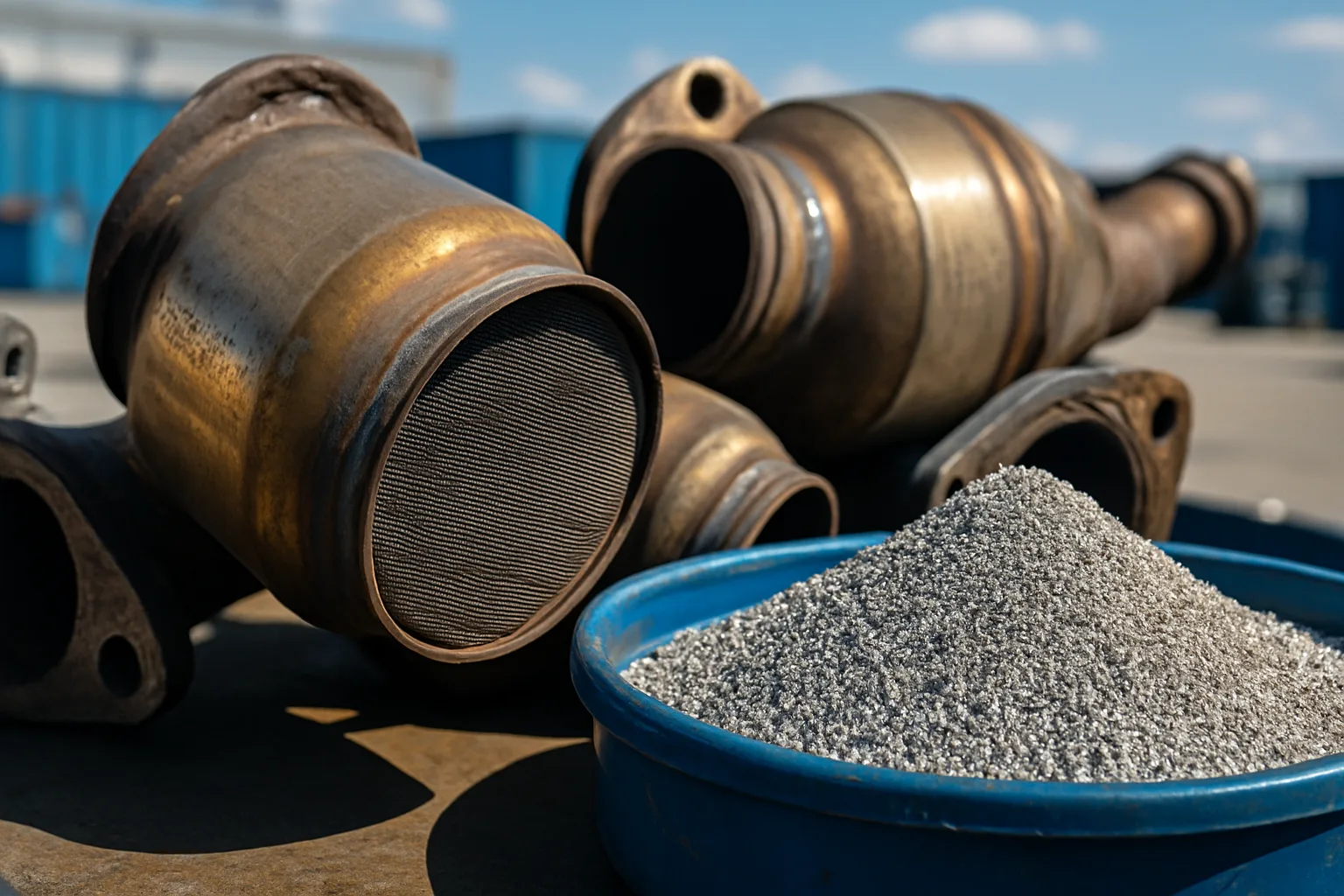
Catalytic converters contain platinum, palladium, and rhodium — three precious metals that make them worth hundreds of dollars each, sometimes more. That value is also what makes them a target. In Florida and across the U.S., theft rings have grown sophisticated enough to move material through multiple hands before it ever reaches a processor. That volume of stolen inventory doesn't disappear — it flows into the market and muddies pricing signals for everyone.
When stolen cats flood local buyers, it creates artificial supply. Buyers who know they're seeing inflated volume may lower offers across the board to hedge their risk. That suppressed pricing hits you — the legitimate recycler with documented inventory and clean title — whether you realize it or not. The platinum price today on the spot market might look strong, but what a local buyer actually offers you can be a different number entirely, partly because of this dynamic.
- Stolen material inflates local supply, which can depress local offers
- Buyers face increased legal and compliance risk, which they price into every transaction
- Legitimate sellers get caught in slower, more documentation-heavy processes
- Traceability gaps mean honest yards get lumped in with bad actors by regulators
Florida's Regulatory Response — And What It Means for Sellers in Fort Lauderdale
Florida has been aggressive about cracking down on catalytic converter theft. State law now requires detailed recordkeeping at the point of purchase — seller identification, vehicle information, and in many cases, photo documentation. Broward County, which includes Fort Lauderdale, has seen enforcement activity ramp up alongside broader statewide efforts to close the loopholes that let stolen material move freely.
For legitimate catalytic converter buyers in Fort Lauderdale, these requirements mean more compliance overhead. For you as a seller, it means showing up prepared. If you walk in without documentation, expect friction. If your inventory isn't clean and traceable, expect lower offers or a flat refusal. The regulation isn't aimed at honest sellers — but it catches everyone in its net.
Here's what documentation responsible sellers in Florida should have ready in 2026:
- Proof of ownership or acquisition — bill of lading, purchase records, or dismantler documentation
- Vehicle identification — VIN numbers tied to the units you're selling
- Photo documentation — photos of the cats, ideally with serial numbers visible
- Business credentials — if you're a licensed dismantler or recycler, have those handy
- Seller ID — government-issued ID is standard at any reputable buyer
This isn't bureaucracy for its own sake. Clean documentation is what separates you from the guy who cut a cat off a truck in a parking lot at 2 a.m. It also gives you leverage when negotiating — a documented load is a lower-risk load for the buyer, and lower risk should translate to a better offer.
Why Single-Buyer Transactions Leave Legitimate Sellers Exposed
Here's a problem that predates theft rings but gets worse because of them: most scrap cat sellers in Fort Lauderdale are still calling one buyer, getting one number, and taking it or leaving it. That single-buyer model was already leaving money on the table before theft-related market distortions entered the picture. Now it's worse.
When a single buyer knows you have nowhere else to go, they price accordingly. They factor in their compliance risk, their current inventory levels, their mood that day — and they give you a number that works for them. You have no way to know if that number reflects the actual platinum price today or if it's a lowball built on information asymmetry. Without competition, you can't find out.
This is exactly the problem that a scrap metal auction platform like SMASH is built to solve. Instead of one buyer's opinion, you get multiple vetted buyers bidding on your documented inventory. Competition does what a single phone call never can — it reveals the actual market. Documented inventory, photo evidence, serial numbers, and VIN data give buyers the confidence to bid aggressively. That's how legitimate sellers capture value that theft and opacity have been eroding.
If you're ready to move away from the single-buyer guessing game, find the best scrap cat prices today with a platform built around transparency and competition.
How SMASH Protects Legitimate Sellers in a Compromised Market
SMASH was built for exactly this environment. When theft and regulatory pressure make buyers cautious, documentation becomes currency. SMASH's inventory tools let you build a load that tells its own story — photos, serial numbers, VIN lookups, and packing lists that prove provenance before a buyer ever places a bid. That transparency isn't just good for compliance. It's good for your price.
Vetted buyers on SMASH Scrap — where verified buyers bid on your metal know they're dealing with legitimate inventory. That reduces their risk, which means they can offer more. You're not competing with stolen material when your load is documented end-to-end. You're in a separate, cleaner market where the platinum price today can actually work in your favor.
SMASH charges no subscription fees. You don't pay to list. The model only works when you win — which means the platform has a direct interest in getting you the best number possible. Auto-invoicing and clean transaction records also mean you stay compliant with Florida's documentation requirements without extra work on your end.
If you want to understand how legitimate sellers approach this market differently, read scrap catalytic converter guides built around real-world selling strategy — not theory.
What Legitimate Sellers in Florida Can Do Right Now
Theft isn't going away overnight. Regulatory scrutiny isn't easing up. But that doesn't mean legitimate sellers in Fort Lauderdale are stuck absorbing the cost. There are concrete steps you can take to insulate yourself from the market distortions that theft creates — and to position your inventory to capture the best possible price.
Document everything, every time. This is the single most valuable habit you can build. A documented load commands a better offer and moves through compliance faster. Serial tracking, VIN data, and photo documentation aren't just regulatory requirements — they're your proof of legitimacy in a market that's been forced to be suspicious.
Stop relying on one buyer. The single-buyer model works for the buyer, not for you. More buyers create competition. Competition creates price discovery. That's not theory — it's how markets work. Platforms like SMASH exist to create that competition for your specific load.
Understand what drives scrap cat value. The platinum, palladium, and rhodium content in a converter determines its base value. The make, model, and year of the vehicle it came from affect that content. Knowing what you have before you walk into a negotiation gives you a baseline — and keeps you from accepting a number that has no relationship to actual precious metal content.
Stay current on local regulations. Florida's rules around catalytic converter sales have evolved, and Broward County enforcement has been active. Know what's required before you show up at a buyer. Gaps in your documentation don't just slow the transaction — they can flag your load for additional scrutiny even when everything is legitimate.
When you're ready to sell with confidence, get a fair price for your scrap catalytic converters through a process that rewards documentation and transparency.
Frequently Asked Questions
Q: How does catalytic converter theft affect the platinum price today for legitimate sellers?
Theft inflates local supply and increases compliance risk for buyers, both of which can suppress the offers legitimate sellers receive even when spot prices for platinum, palladium, and rhodium are strong. The gap between the spot price and what a local buyer offers is often wider in markets with high theft activity. Using a competitive auction platform helps close that gap by introducing multiple buyers and transparent pricing.
Q: What documentation do I need to sell scrap catalytic converters in Fort Lauderdale?
Florida law requires sellers to provide identification, proof of ownership or acquisition, and in many cases vehicle identification numbers tied to the units being sold. Fort Lauderdale and Broward County have seen active enforcement of these requirements. Showing up with photo documentation, BOLs, and VIN records puts you in the best position to transact quickly and compliantly.
Q: How do I find legitimate catalytic converter buyers in Florida who pay fair prices?
Start by looking for buyers who ask for documentation — that's a sign they're operating legitimately and understand compliance requirements. Beyond that, using a platform that puts multiple vetted buyers in competition for your load is the most reliable way to find market-accurate pricing. Single-buyer transactions give you one opinion; competitive auctions give you the market.
Q: Does the platinum price today directly determine what I get paid for my scrap cats?
Precious metal spot prices set the ceiling, but what you actually receive depends on the assay content of your specific units, the buyer's processing margins, and current market demand. Documented, well-graded inventory with known vehicle provenance typically commands stronger offers because buyers can price the actual metal content with more confidence.
Q: Is it still worth selling scrap catalytic converters in 2026 given the regulatory environment?
Absolutely — legitimate sellers with clean documentation and access to competitive buyers are in a stronger position than ever. The regulatory tightening has pushed out some less-reputable buyers and created more room for transparent platforms to operate. If your inventory is documented and you're using a competitive selling channel, the compliance overhead is manageable and the pricing upside is real.
The theft problem is real, the regulatory response is ongoing, and single-buyer pricing is still leaving money on the table. But none of that has to work against you. If you've got documented inventory and want to see what competition actually does to your offer, find the best scrap cat prices — get a free quote at best-scrap-cat-prices.com.
Prices for platinum, palladium, and rhodium fluctuate daily based on global market conditions. Always check current rates before finalizing any sale.
Stay sharp on scrap metal market moves — follow SMASH on LinkedIn for industry updates, pricing insights, and news that actually matters to people in the recycling business.