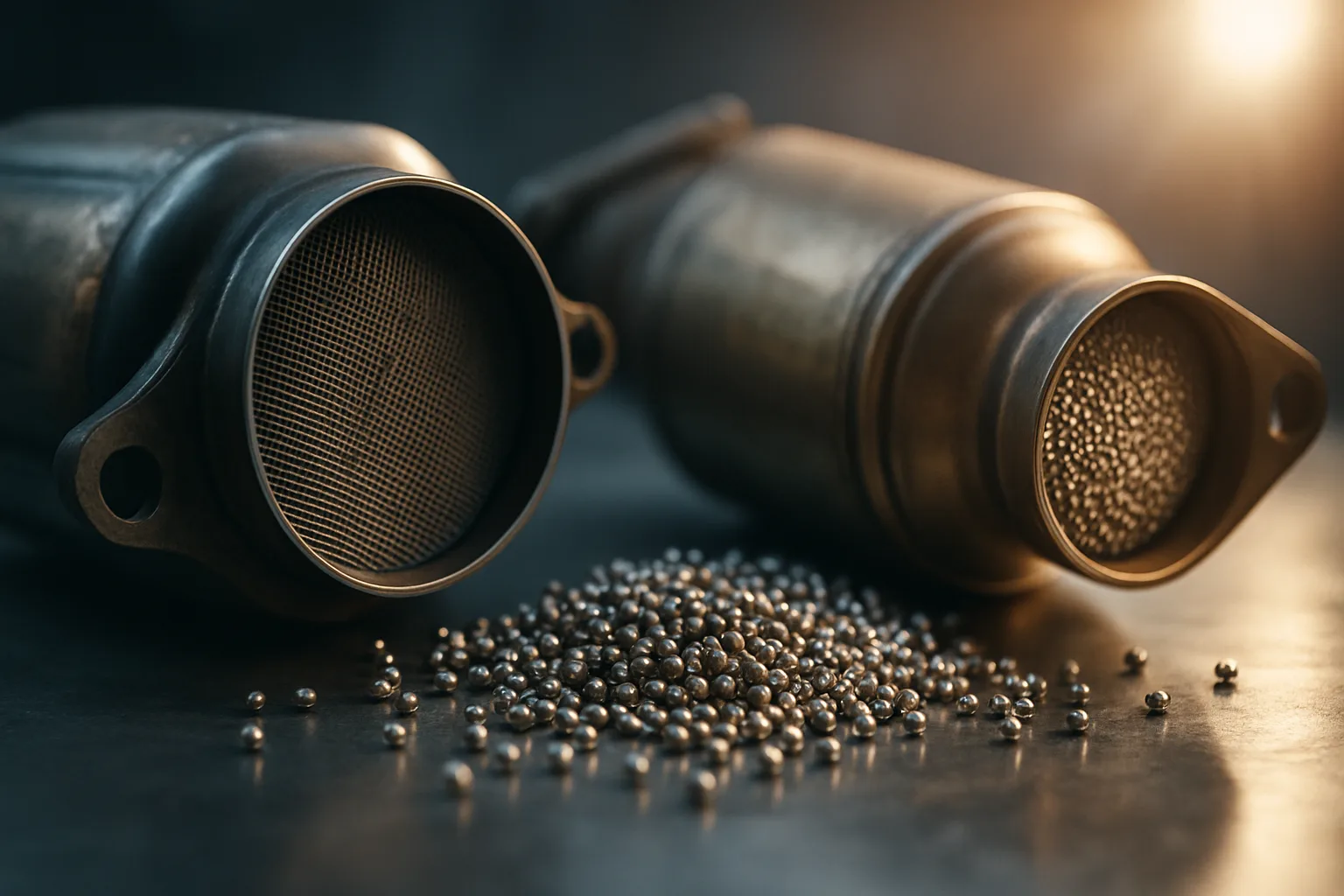
Foil vs. Bead Catalytic Converters: What's the Difference and What Are They Worth?
Most sellers think a catalytic converter is a catalytic converter. Hand it over, get paid, done. But that assumption is costing yards and individual sellers real money. The internal structure of your cat — foil or bead — directly affects its OEM catalytic converter value, and knowing the difference before you sell puts you in a stronger position at the scale.
This isn't complicated chemistry. It's practical knowledge that any scrap cat seller in Aurora, Illinois or anywhere else in the U.S. can use today. Let's break it down.
What Are Foil Catalytic Converters?
Foil cats use a metallic substrate — thin layers of corrugated metal foil wound tightly into a honeycomb structure. That foil is typically made from a high-grade iron-chromium-aluminum alloy, and the precious metals (platinum, palladium, rhodium) are coated onto the surface of that foil. You'll find foil-style converters in a wide range of vehicles, from performance cars to diesel trucks, and in many industrial and aftermarket applications.
Here's what makes foil cats stand out from a scrap perspective:
- Higher surface area per gram of substrate — the tight honeycomb allows more coating contact per unit of weight
- Often lighter than ceramic bead units — which means the precious metal loading is more concentrated relative to substrate weight
- Common in European OEM applications — BMW, Mercedes, Audi, and many diesel platforms use metallic foil substrates
- More durable in high-heat environments — which is why they show up in performance and heavy-duty contexts
For scrap purposes, foil cats can sometimes command strong prices precisely because the PGM (platinum group metal) loading is efficient. But not all foil cats are equal. Condition, melt integrity, and whether the substrate has been contaminated or crushed matters significantly. Reputable catalytic converter buyers near me open now will assess all of these factors before quoting.
What Are Bead Catalytic Converters?
Bead cats are a different animal. Instead of a foil or ceramic honeycomb, bead converters use small alumina (aluminum oxide) pellets — literally thousands of tiny beads — coated with precious metals and packed inside the converter housing. Exhaust gases flow through the gaps between the beads, triggering the catalytic reaction.
You'll find bead-style converters most commonly in older domestic vehicles (think pre-1990s GM platforms), certain industrial equipment, and some off-road machinery. They were largely phased out in favor of honeycomb designs for automotive use, but they still show up in scrap yards across Illinois and the broader Midwest regularly.
Key characteristics of bead cats:
- Heavier substrate per unit — the bead mass adds weight that doesn't contain PGMs
- Variable PGM loading — older units may carry lower platinum and palladium loads than modern OEM converters
- Easier to process at the smelter — the loose bead structure separates cleanly
- Common in fleet, industrial, and vintage vehicle applications — if you're pulling these off old equipment in Aurora or surrounding Illinois counties, that's typically what you're dealing with
- Pricing can be unpredictable — bead value depends heavily on the specific application and PGM assay results
Bead cats aren't worthless — far from it. But their scrap cat value tends to differ from foil and ceramic honeycomb units because the math on PGM recovery looks different. If you want to find the best scrap cat prices today, you need buyers who understand bead processing specifically, not just generic converter pricing.
OEM Catalytic Converter Value: How Foil and Bead Compare
This is the core question. What's the actual difference in OEM catalytic converter value between foil and bead units? The honest answer: it depends on the specific part, the market conditions at the time of sale, and how well you document what you have.
Here are the factors that drive value for each type:
Factors Affecting Foil Cat Value
- PGM loading by manufacturer — European OEM foil cats often carry higher rhodium content, which matters significantly given rhodium's price volatility
- Substrate integrity — crushed or melted foil loses surface area and may reduce recovery yield
- Vehicle make and application — serial number or part number identification unlocks accurate pricing (more on this below)
- Market conditions for platinum and palladium — catalytic converter prices today move with PGM spot markets, which fluctuate daily
Factors Affecting Bead Cat Value
- Bead condition — contaminated or wet beads reduce yield; dry, clean beads process better
- Application type — industrial bead cats from stationary equipment often carry different PGM loads than automotive units
- Weight vs. PGM ratio — since beads add substrate weight, buyers focus on PGM density rather than gross weight
- Age and manufacturer — older GM bead units and vintage imports can vary widely in PGM content
The bottom line: don't let a buyer tell you "bead cats pay X" or "foil cats pay Y" without showing their work. Both converter types deserve individual assessment based on real data. That's exactly where platforms like SMASH bring structure to a process that's historically been guesswork.
How Much Is My Catalytic Converter Worth by Serial Number?
One of the most common questions sellers ask — and one of the most important. The answer: your serial number is the fastest path to an accurate price. Whether you're holding a foil cat pulled from a BMW 5 Series or a bead unit off an older Chevy truck, the serial or part number tells a buyer exactly what they're working with before they cut anything open.
Serial number lookup gives buyers access to:
- The OEM application (which vehicle or equipment the converter came from)
- The substrate type — foil, ceramic honeycomb, or bead
- Estimated PGM loading from manufacturer specifications
- Historical assay data from smelters that have processed that specific part number
Without that serial number, you're selling blind and hoping the buyer knows more than you do. With it, you can verify quotes, compare offers, and push back if something doesn't add up.
SMASH uses serial tracking and photo documentation as part of its inventory system — which means buyers bidding on your load have the same information you do. That transparency is how competition actually works in a B2B scrap metal marketplace. No more accepting a single quote and hoping it's fair. Multiple vetted buyers see your documented inventory and bid accordingly. You can read scrap catalytic converter guides to get deeper into how serial number lookup affects pricing before you bring a load to market.
Why Aurora, Illinois Sellers Should Know This Before Their Next Sale
Aurora sits in a strong industrial corridor. Yards in and around Aurora, Illinois move significant volume — fleet vehicles, construction equipment, older domestic trucks, and a mix of import platforms all flow through the regional scrap market. That means foil cats, bead cats, and ceramic honeycomb units all show up in the same loads, sometimes mixed together without clear separation.
Commingling converter types is one of the fastest ways to leave money on the table. A mixed load gets priced to the lowest common denominator if buyers can't assess individual units. Sellers who sort and document their inventory — foil cats separated from bead cats, serial numbers photographed, condition noted — consistently get better price discovery than those who dump everything in a drum and ask for a number.
If you're in Illinois and dealing volume, that discipline compounds quickly. A few extra minutes of documentation per load, repeated across dozens of transactions per year, changes the economics meaningfully. And when you're ready to get a fair price for your scrap catalytic converters, having your inventory organized is the single biggest advantage you can bring to any buyer conversation.
For larger loads, the SMASH scrap metal auction format puts your documented inventory in front of multiple vetted buyers simultaneously. That's how you find out what the market actually pays — not what one buyer feels like offering on a Tuesday afternoon. You can also sell your scrap metal on the SMASH marketplace and see how competitive pricing through a structured platform compares to your current process.
Getting the Best Price: Practical Steps for Foil and Bead Cat Sellers
Whether you're a yard operator in Aurora moving volume or an individual seller with a handful of units, the approach is the same. Here's what actually moves the needle on your scrap cat value:
- Identify your converter type before you sell. Shake it — beads rattle. Open end inspect if possible. Foil units have a metallic substrate you can see at the opening. Don't guess; know.
- Find and photograph the serial number. It's usually stamped on the housing or on a heat shield near the unit. That number unlocks accurate pricing.
- Separate foil from bead from ceramic honeycomb. Never commingle converter types in a sale unless you're comfortable taking a blended price that favors the buyer.
- Check catalytic converter prices today before you engage buyers. PGM markets move. Knowing whether platinum or rhodium has spiked or dropped this week changes your negotiating position.
- Get multiple quotes. One buyer, one price is the old way. Use platforms designed for competition — that's where price discovery actually happens.
- Document condition honestly. Crushed, wet, or contaminated units price differently. Accurate representation builds trust with buyers and avoids disputes after the fact.
None of this is complicated. But most sellers skip most of these steps — and the buyers who benefit from that are the ones making the phone calls, not the ones receiving them.
Frequently Asked Questions
Q: Are foil catalytic converters worth more than bead catalytic converters?
Not automatically. Foil cats from European OEM applications often carry higher PGM loads, which can make them more valuable per unit. But a high-load bead cat from industrial equipment may outvalue a low-load foil unit. The specific part, its condition, and current PGM market prices all factor in. Always assess by serial number rather than type alone.
Q: How do I know if I have a foil or bead catalytic converter?
The easiest test: shake it gently near your ear. Bead cats rattle — you'll hear the alumina pellets moving inside the housing. Foil cats are solid and silent. You can also look at the open end of the converter; foil units show a metallic honeycomb, while ceramic units show a tan or gray ceramic honeycomb. Bead cats may show loose material if the housing is open.
Q: How much is my catalytic converter worth by serial number in Aurora, Illinois?
Serial number lookup gives you the most accurate starting point for OEM catalytic converter value. The number ties your unit to a specific vehicle application and PGM loading data. Prices vary by market conditions and PGM spot prices, so checking current rates matters. Sellers in Aurora, Illinois can use platforms like SMASH to get competitive quotes based on documented inventory rather than a single buyer's estimate.
Q: Where can I find catalytic converter buyers near me open now in Illinois?
Start with regional scrap yards and specialty cat buyers in the Aurora and greater Illinois area. For volume sellers or anyone looking to compare multiple offers, a B2B scrap metal marketplace like SMASH connects you with vetted buyers without requiring you to cold-call individual yards. Bring your serial numbers and photos — documented loads attract stronger bids.
Q: Do catalytic converter prices change often?
Yes — and significantly. Catalytic converter prices today are directly tied to platinum, palladium, and rhodium spot prices, all of which trade daily on global commodity markets. A load worth a certain amount this week may be worth noticeably more or less next month. Check current PGM prices before you sell, not after.
Disclaimer: Catalytic converter prices fluctuate based on PGM market conditions. Always verify current rates before selling. No prices listed in this article should be taken as current market quotes.
You now know more about foil and bead converter types than most sellers ever bother to learn — and that knowledge directly translates to better outcomes at the scale. Sort your inventory, pull those serial numbers, and stop accepting single-buyer quotes as if they're the market. If you're ready to see what competition actually does for your pricing, find the best scrap cat prices — get a free quote at best-scrap-cat-prices.com. The information is free. Leaving money on the table isn't.
Stay current on scrap metal market trends and pricing insights — follow SMASH on LinkedIn for regular industry updates you can actually use.