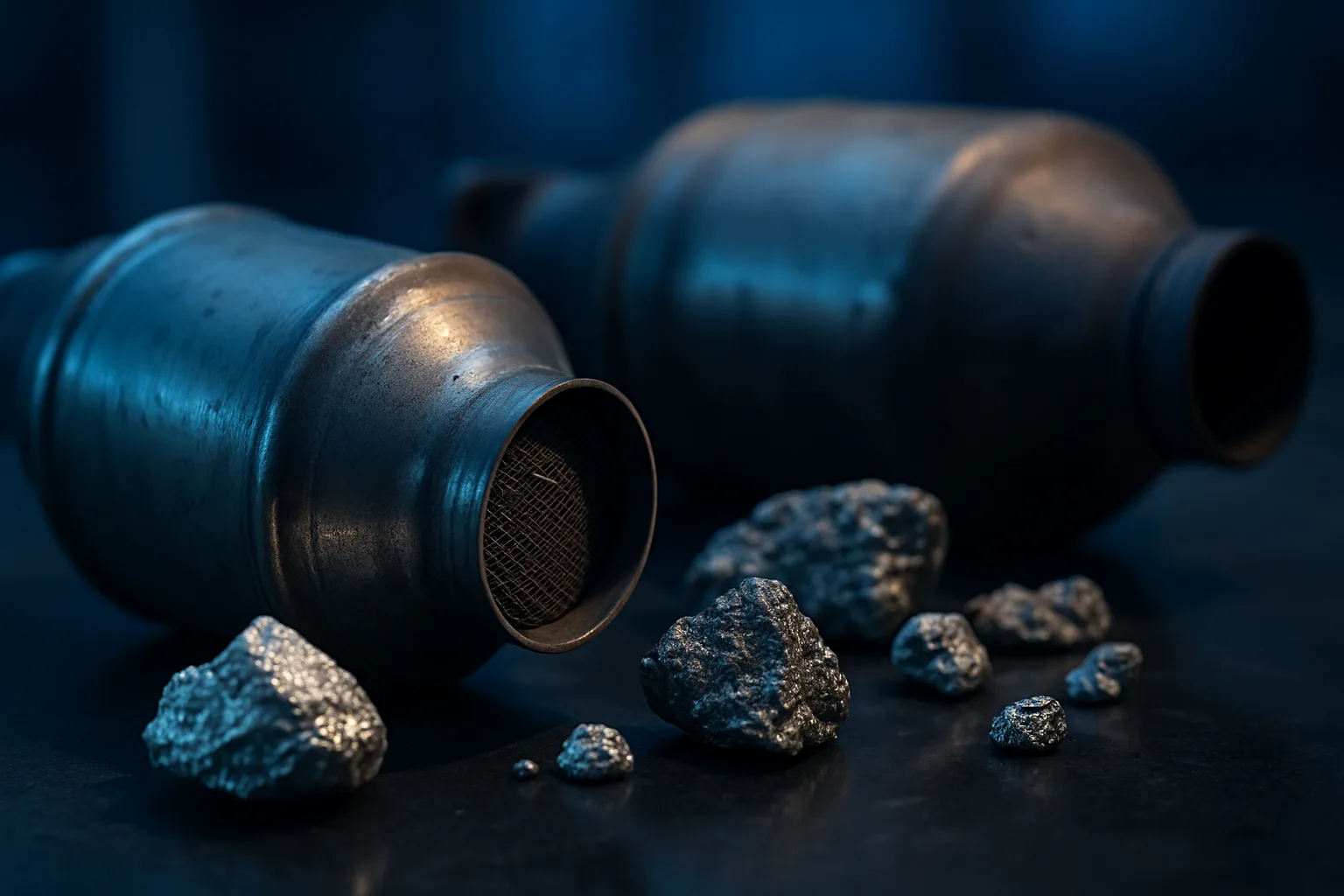
What Most Yards Don't Tell You About OEM Catalytic Converter Value — And Why Removal Method Matters
Here's something that catches a lot of first-time scrap cat sellers off guard: the condition of your catalytic converter at the time of removal directly affects what a buyer will pay for it. A cracked substrate, a bashed-in shell, or a converter that's been torched off the pipe isn't worth the same as one that comes off clean. OEM catalytic converter value isn't just about what's inside — it's about how much of what's inside survives the removal process.
If you're in Dayton, Ohio, or anywhere across the Midwest where older vehicles cycle through yards regularly, this matters more than you'd think. The precious metals inside these converters — platinum, palladium, and rhodium — are delicate. Damage the ceramic honeycomb substrate during removal and you're handing buyers a reason to pay less. This guide walks you through safe removal, smart documentation, and how to actually get competitive pricing once the cat is in your hands.
Understanding OEM Catalytic Converter Value Before You Touch a Wrench
Not all cats are created equal. An OEM (original equipment manufacturer) catalytic converter is the factory-installed unit — built to tighter tolerances and typically loaded with higher concentrations of platinum group metals (PGMs) than aftermarket replacements. Buyers who purchase scrap cats for processing are paying for those PGMs, and OEM units generally command stronger prices than aftermarket converters with the same outer dimensions.
Before you remove anything, identify what you're working with. The serial number or part number stamped on the converter shell tells a buyer exactly what's inside. This is why documentation matters from the jump — a readable serial number matched to a VIN lookup can significantly improve a buyer's confidence in your load. Platforms like compare scrap metal bids from verified buyers use this kind of data to drive real competition on individual units, not just bulk lots.
Key factors that affect what your converter is worth:
- Vehicle make, model, and year — OEM fitment matters. A converter off a late-model luxury vehicle or a full-size truck often carries more PGM loading.
- Serial number legibility — Buyers can't confirm value without it. Protect the stamp during removal.
- Substrate integrity — A cracked or shattered honeycomb means lost PGMs and a lower payout.
- Shell condition — Heavy rust, deep dents, or torched ends signal rough handling and raise questions about substrate condition.
- Aftermarket vs. OEM — Know the difference. Aftermarket cats often have lower PGM content, and experienced buyers price accordingly.
Step-by-Step: How to Safely Remove a Catalytic Converter Without Killing Its Value
Safe removal isn't complicated, but it does require patience and the right tools. Rushing the job — especially with heat or brute force — is the fastest way to turn a high-value unit into scrap-grade material. Follow this process and you protect both the cat and yourself.
What You'll Need
- Penetrating oil (apply at least 24 hours before removal if possible)
- Reciprocating saw or angle grinder with a cutting wheel
- Ratchet set and breaker bar
- Floor jack and jack stands rated for the vehicle weight
- Safety glasses and gloves
- Marker and paper or a phone camera for documentation
The Removal Process
- Let the vehicle cool completely. Catalytic converters run extremely hot. Even hours after the engine shuts down, the converter can retain dangerous heat. Never work on a warm system.
- Soak the flanges and bolts. Apply penetrating oil to every bolt and connection point. If you're working a salvage yard in Dayton or processing end-of-life vehicles regularly, this step alone prevents more substrate damage than any other precaution.
- Photograph before you cut. Take a clear photo of the converter in place, including any visible serial numbers. Document the VIN from the dash. This prep work pays dividends when you're trying to get buyers to compete on your load.
- Cut at the pipe, not the converter. If bolts won't budge, cut the exhaust pipe on either side of the converter — leave several inches of pipe intact on each end. Never cut through the converter shell itself. You risk destroying the substrate and scattering PGMs you can't recover.
- Support the converter before the final cut. Dropping it on concrete is a substrate-killer. Have a second person hold it or rig a support before the last connection comes free.
- Mark it immediately. Once it's off, write the vehicle's VIN or your yard's ID directly on the converter shell with a paint marker. Keep your documentation matched to the unit.
For yards processing multiple vehicles daily, this workflow should be standard operating procedure — not optional. Consistent removal practices mean consistent quality in your inventory, and consistent quality is what gives you leverage when it's time to sell.
Scrap Metal Inventory Management: Why Documentation Is Your Price Advantage
Here's where most small operations leave money on the table. They pull cats, throw them in a barrel, and call one buyer when they have enough. That buyer names a price. The seller accepts it because they don't have a baseline to push back. That's the old way, and it's expensive.
Proper scrap metal inventory management flips that dynamic. When you know exactly what you have — part numbers, VINs, photos, substrate condition — you can present your load to multiple buyers at once. Read scrap catalytic converter guides to understand how documentation directly affects competitive pricing in today's market. Buyers bid more aggressively when they can assess a load with confidence rather than guessing what's inside the shell.
Build your inventory system around these basics:
- Photo documentation for every unit (pre-removal, post-removal, serial number close-up)
- VIN-to-part-number matching where possible
- Condition notes — intact substrate, minor damage, aftermarket vs. OEM
- Date of removal and source vehicle (if relevant for compliance purposes)
- Weight per unit or per lot
This isn't bureaucracy — it's leverage. In Ohio and across the broader Midwest, regulations around catalytic converter sales have tightened over the past several years. Documented inventory protects you legally and commercially. It tells buyers you run a clean operation, and clean operations attract better offers.
How SMASH Helps Dayton-Area Sellers Get Competitive Catalytic Converter Prices Today
One phone call to one buyer is not a pricing strategy. It's a guess. And in a market where catalytic converter prices today can shift based on palladium and rhodium spot prices, guessing what your load is worth means you're almost always leaving money behind.
SMASH changes the math. Instead of calling one buyer and hoping for a fair number, you put your documented inventory in front of a vetted pool of buyers who compete against each other. More buyers bidding on your load means the price discovery process actually works. Competition reveals market value — that's not a slogan, that's how auctions function.
For yards in the Dayton area processing OEM converters off domestic trucks, fleet vehicles, or older model cars, the difference between one buyer's offer and the best offer from a competitive process can be meaningful. SMASH's platform handles the inventory tool side, VIN lookup integration, photo documentation upload, serial tracking, and auto-invoicing — so the administrative work doesn't fall entirely on your team. No subscription fees. SMASH only wins when you do.
If you're serious about getting the best return on your scrap cats, find the best scrap cat prices today and stop leaving your pricing to a single buyer's discretion.
Finding Catalytic Converter Buyers and Getting the Price You've Earned
Searching for catalytic converter buyers near me is a reasonable starting point, but proximity alone isn't the metric that matters. What matters is competition. A buyer two states away who knows your load is up for auction will often outbid a local buyer who thinks they're the only option on the table.
That said, local market awareness still has value. Ohio has a strong secondary metals ecosystem, and Dayton sits in a corridor with significant industrial and fleet vehicle activity. Knowing what's moving locally — and what buyers in your region are actively looking for — helps you time your sales and build better buyer relationships over time.
Whether you're selling a single high-value OEM converter or a pallet of mixed cats, the process is the same: document thoroughly, present to multiple buyers, and let the competition work for you. Platforms that connect sellers with vetted buyers — and create actual auction pressure — are how serious yards operate in 2026. The single-call approach is a relic.
Ready to stop guessing and start getting offers based on real market competition? Get a fair price for your scrap catalytic converters — the documentation and removal work you've already done puts you ahead of sellers who show up with an unlabeled barrel and a hope.
Disclaimer: Catalytic converter prices fluctuate based on platinum group metal spot prices and market demand. Always check current rates before committing to a sale. Prices referenced in this article are general in nature and not guaranteed.
Frequently Asked Questions
Q: Does how I remove a catalytic converter actually affect its scrap value?
Yes — significantly. The substrate inside the converter contains the platinum, palladium, and rhodium that buyers are paying for. Cracking or shattering it during removal reduces the recoverable PGM content. Cutting through the shell instead of the adjacent pipe is one of the most common removal mistakes and one of the most costly.
Q: What is OEM catalytic converter value compared to an aftermarket unit?
OEM converters are factory-installed units built to stricter emissions specifications, which typically means higher PGM loading than aftermarket replacements. Buyers who process cats for precious metal recovery pay more for OEM units because the yield is higher. If you're unsure whether you have an OEM or aftermarket unit, the serial number and a VIN lookup can usually confirm it.
Q: How do I find competitive catalytic converter prices today in the Dayton, Ohio area?
The most reliable method is to present your documented inventory to multiple buyers simultaneously rather than calling one buyer and accepting their number. Platforms like SMASH connect sellers with vetted buyers who bid competitively — which is how you find out what your load is actually worth in the current market, not just what one buyer is willing to offer.
Q: What documentation do I need when selling scrap catalytic converters in Ohio?
Ohio regulations around catalytic converter sales require sellers to provide identification and proof of ownership or legal right to sell. Beyond legal compliance, detailed documentation — photos, serial numbers, VIN matching — also improves your commercial position by giving buyers the confidence to bid higher on a well-documented load. Check current Ohio regulations before selling, as requirements can change.
Q: What's the difference between used catalytic converter scrap value and a full recycling price?
Used catalytic converter scrap value refers to what a buyer pays based on the PGM content they expect to recover through processing. This is different from a working used converter sold for vehicle repair. When you're scrapping a converter, buyers assess the unit's type, condition, and PGM loading — not whether it would still pass an emissions test. OEM units from vehicles driven in normal conditions typically retain more recoverable metal than aftermarket units.
When you're ready to move your next load, find the best scrap cat prices — get a free quote at best-scrap-cat-prices.com. You've done the work to remove and document your converters correctly. Make sure the sale reflects that effort.
Follow SMASH on LinkedIn for scrap metal market updates, pricing trends, and practical industry insights delivered straight to your feed.
```