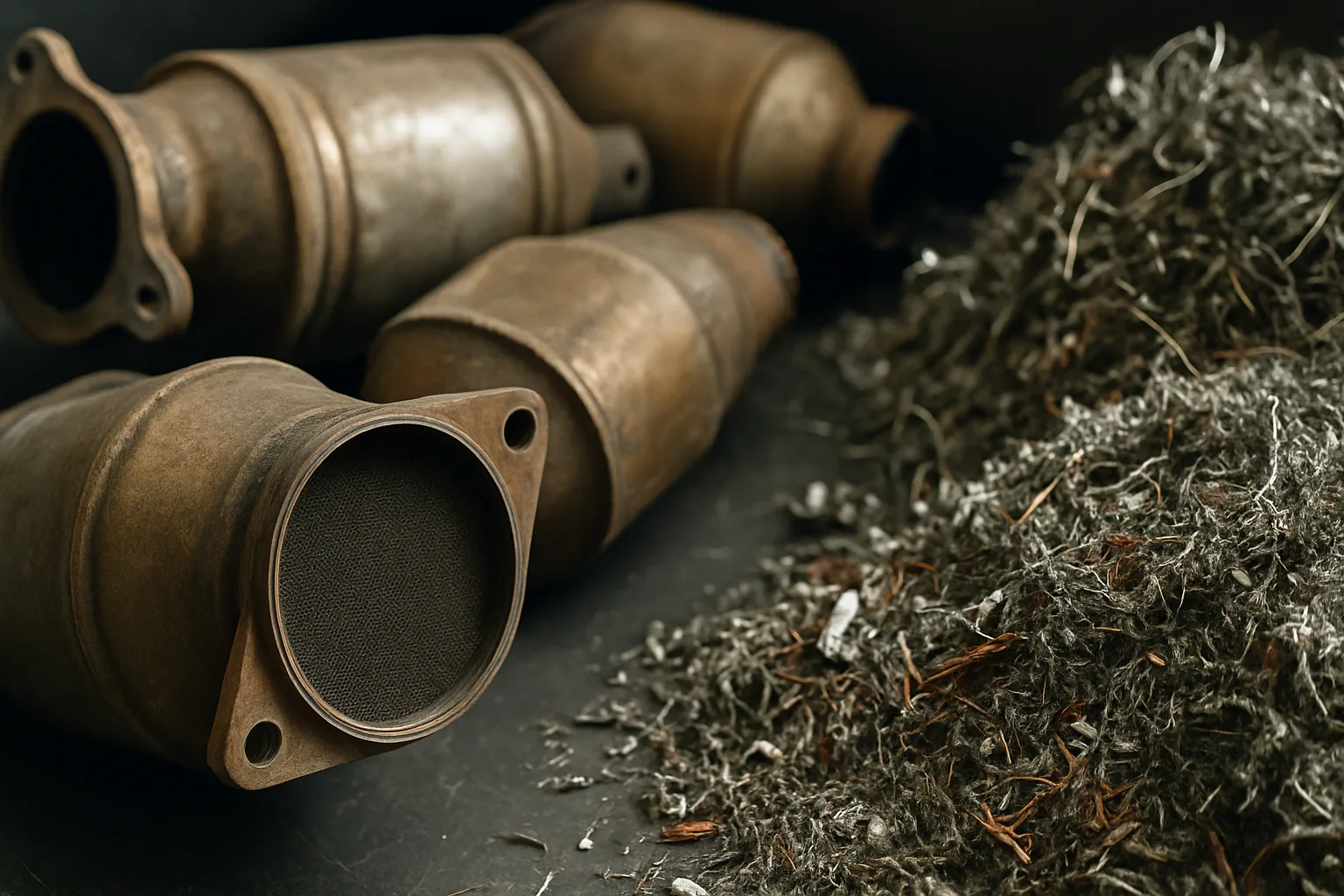
Diesel vs. Gasoline Catalytic Converters: What Every Scrap Cat Seller Needs to Know
Most scrap yards treat all catalytic converters the same. They shouldn't — and neither should you. The difference between a diesel catalytic converter and a gasoline one isn't just mechanical. It directly affects catalytic converter scrap value, how buyers bid, and what you walk away with. If you're selling cats in Cleveland or anywhere across Ohio, understanding this distinction could be the difference between leaving money on the table and getting a fair price.
Here's the breakdown — no filler, no fluff.
What's Actually Inside a Catalytic Converter (And Why It Matters for Scrap)
The precious metals inside a converter — platinum (Pt), palladium (Pd), and rhodium (Rh) — are what drive scrap cat value. These metals are embedded in a ceramic or metallic substrate called the "wash coat." How much of each metal is present, and in what ratio, varies dramatically depending on whether the converter came off a gas or diesel engine.
Gasoline converters (three-way catalysts) typically carry higher concentrations of palladium and rhodium. Diesel converters run a different system — and that changes the math entirely when you're trying to get the best scrap cat price.
- Gasoline three-way catalysts (TWC): Handle CO, HC, and NOx simultaneously. Higher Pd and Rh loading. Often more valuable on the scrap market.
- Diesel oxidation catalysts (DOC): Handle CO and HC only. Lower precious metal loading overall, but platinum tends to dominate over palladium.
- Diesel particulate filters (DPF): Trap soot. May contain small amounts of precious metals — but value varies widely depending on make, model, and condition.
Understanding this breakdown is essential before you call a buyer. A scrap yard that lumps your diesel DOC in with gasoline converters isn't giving you accurate price discovery. You're leaving real money behind.
Diesel DOCs and DPFs: How They Work and What They're Worth as Scrap
Diesel emissions systems are more complex than most people realize. Modern diesel vehicles — everything from heavy-duty pickup trucks common in Ohio to commercial fleet vehicles rolling through Cleveland — typically run a multi-component aftertreatment system. That system includes a DOC, a DPF, and sometimes a selective catalytic reduction (SCR) unit.
Each component has a different scrap profile:
- DOC (Diesel Oxidation Catalyst): Contains platinum as the primary PGM. Lower overall PGM loading compared to gasoline TWCs, but still recyclable and valuable with the right buyer. Typically ceramic substrate inside a stainless steel shell.
- DPF (Diesel Particulate Filter): The most misunderstood component in scrap cat recycling. DPFs trap soot and carbon — which means their condition at the time of scrap matters. A clogged or contaminated DPF may have reduced recoverable PGM content. Some DPFs contain very low levels of precious metals and are primarily valued for their substrate material.
- SCR (Selective Catalytic Reduction): Uses urea (DEF fluid) rather than precious metals to reduce NOx. Minimal scrap value for precious metal recovery — mostly steel and substrate value.
The takeaway: not all diesel emission components carry the same catalytic converter scrap price. A DOC from a heavy-duty diesel has a different value profile than a DPF from the same truck. Know what you have before you sell.
Why Cat Converter Prices in Cleveland Vary So Much Between Diesel and Gas Cats
Cleveland sits in a part of Ohio with significant industrial, commercial, and transportation activity. That means a real mix of vehicles — gasoline-powered personal vehicles, diesel fleet trucks, heavy equipment, and everything in between. That diversity creates a wide range of cats coming through local scrap operations, and it's why cat converter prices Cleveland buyers quote can vary so dramatically from one load to the next.
A few factors drive the price gap between diesel and gasoline converters:
- PGM loading: Gasoline TWCs typically carry more palladium and rhodium — metals that have commanded strong market interest. Diesel DOCs skew toward platinum. Price differences between these metals shift the relative value of each converter type.
- Volume and weight: DPFs are often larger and heavier than traditional gasoline cats. Weight alone doesn't drive value — PGM content does. Don't assume a bigger unit means a better price.
- Condition: A contaminated or oil-fouled diesel DPF will test lower for recoverable PGMs. Document condition with photos before selling. It protects you and gives buyers more confidence in what they're bidding on.
- Market timing: Platinum, palladium, and rhodium prices fluctuate with global supply and demand. Diesel-heavy loads are more platinum-sensitive. Gasoline-heavy loads track palladium and rhodium more closely.
When you find the best scrap cat prices today, you're not just comparing yard to yard — you're looking for buyers who understand the specific PGM profile of what you're selling. That's where competitive auctions beat single-buyer calls every time.
How SMASH Handles Mixed Loads of Diesel and Gasoline Cats
Here's where the old way breaks down hardest. You call one buyer. They quote you a flat price per unit or a rough per-pound rate. They don't differentiate between your diesel DOCs, your gasoline TWCs, and your DPFs. You take the number because you have no baseline.
That's not price discovery. That's guessing.
Platforms like sell your scrap metal on the SMASH marketplace are built to fix exactly this problem. SMASH connects sellers with vetted buyers who bid competitively on documented loads. When you separate your diesel and gasoline cats, document them with photos, log serial numbers and VINs where available, and put them in front of multiple buyers — you get actual market feedback instead of one yard's take-it-or-leave-it number.
For Cleveland-area scrap operations running mixed loads — fleet truck DOCs alongside personal vehicle gasoline cats — this distinction in how you present your inventory matters. Buyers bid higher when they know what they're getting. Documented inventory gives buyers more confidence, and more confidence produces better bids.
No subscription fees. SMASH only wins when you win. That's the model.
Regulation Updates in 2026: What's Changing for Diesel Emissions Parts Recycling
Scrap cat recycling doesn't exist in a vacuum. In 2026, emissions regulations continue to push more diesel vehicles into the aftermarket — which means more DOCs, DPFs, and SCR units flowing into the scrap stream. Federal and state-level regulations around catalytic converter documentation and chain-of-custody tracking have tightened across the U.S., including in Ohio.
Several states have implemented or expanded serial number tracking requirements for catalytic converters. Ohio scrap operators should be documenting:
- Vehicle VIN (where applicable)
- Unit photos showing part number and condition
- Bill of lading (BOL) for any commercial load movement
- Packing list detail separating unit types (DOC, DPF, TWC)
This documentation isn't just about compliance — it's about value. A well-documented load moves faster and attracts more serious buyers. If you're working with a catalytic converter recycling company that doesn't ask for this information, that's a red flag about the accuracy of their pricing.
You can read scrap catalytic converter guides for more on documentation best practices and how to protect yourself when selling cats in today's regulatory environment.
Getting the Right Price for Your Diesel Cats in Cleveland, Ohio
If you're sitting on a load of diesel DOCs or DPFs in the Cleveland area, don't settle for the first number you hear. The market for these units is real — but it rewards sellers who know what they have and how to present it. Separate your diesel components from your gasoline cats. Document condition. Know the difference between a DOC and a DPF before you call a buyer.
Ohio's industrial corridor produces a steady flow of diesel scrap cats from fleet vehicles, construction equipment, and commercial trucks. That supply is real. What's less consistent is whether sellers get paid fairly for it.
The Cleveland scrap metal services available through best-scrap-cat-prices.com are built to put competitive buyers in front of your load — not just one yard's number. When multiple vetted buyers see your documented inventory, competition does the work. That's how you get a fair price for your scrap catalytic converters — not by calling around and hoping.
SMASH operates the same way. Vetted buyers. Auction format. Full transparency on what sold and why. If you're serious about maximizing your scrap cat value in 2026, the one-call model isn't working for you.
Disclaimer: Catalytic converter scrap prices fluctuate based on daily precious metal markets, unit condition, and buyer demand. Always verify current rates before selling.
Frequently Asked Questions
Q: Are diesel catalytic converters worth more than gasoline ones for scrap?
Not necessarily. Gasoline three-way catalysts often carry higher concentrations of palladium and rhodium, which have historically commanded strong market prices. Diesel DOCs are platinum-dominant and typically carry lower overall PGM loading. DPFs vary widely. Value depends on the specific unit, condition, and current precious metal markets — not just fuel type.
Q: What is the scrap value of a diesel particulate filter (DPF)?
DPF scrap value varies significantly based on manufacturer, condition, and precious metal content. Some DPFs carry meaningful PGM value; others are primarily worth their substrate and steel shell. A clogged or oil-contaminated DPF will recover less. Get multiple quotes and document condition before selling.
Q: Where can I get the best cat converter prices in Cleveland, Ohio?
The best way to find competitive pricing in Cleveland is to put your documented load in front of multiple vetted buyers rather than calling one yard. Platforms that use competitive auction formats — like SMASH — help reveal the real market for your units. Separating diesel and gasoline cats before quoting also helps buyers price accurately.
Q: Do I need to document my catalytic converters before selling in Ohio?
Yes. Ohio scrap operators are subject to documentation requirements that include vehicle VINs, part photos, and chain-of-custody records. Beyond compliance, well-documented loads attract more serious buyers and can produce better prices. Always maintain a packing list that separates unit types.
Q: Does SMASH buy scrap catalytic converters directly?
SMASH is a marketplace platform that connects scrap sellers with vetted buyers through a competitive auction format — not a direct buyer itself. You list your documented load, qualified buyers bid, and you sell at the best price offered. There are no subscription fees; SMASH earns only when you complete a sale.
---Ready to stop guessing and start selling smarter? Find the best scrap cat prices for your diesel and gasoline converters — get a free quote at best-scrap-cat-prices.com. Whether you're running a single load or managing regular volume out of Cleveland, competitive pricing starts with putting the right buyers in the room.
Follow SMASH on LinkedIn for ongoing industry updates, precious metal market insights, and scrap cat news that actually matters to your operation.
```