What's Actually Inside a Catalytic Converter — and Why It Matters for Your Scrap Price
Most people know catalytic converters are worth money. Fewer people know why. The answer isn't steel. It isn't aluminum. It's a small cluster of precious metals that happen to be some of the rarest materials on earth — and understanding them is the fastest way to stop leaving money on the table when you sell.
If you're trying to make sense of the platinum price today and how it connects to your scrap cat value, this guide breaks it down without the chemistry textbook. You'll understand what's inside, how it affects pricing, and how to make sure you're getting paid for what you actually have.
The Three Precious Metals Inside Every Catalytic Converter
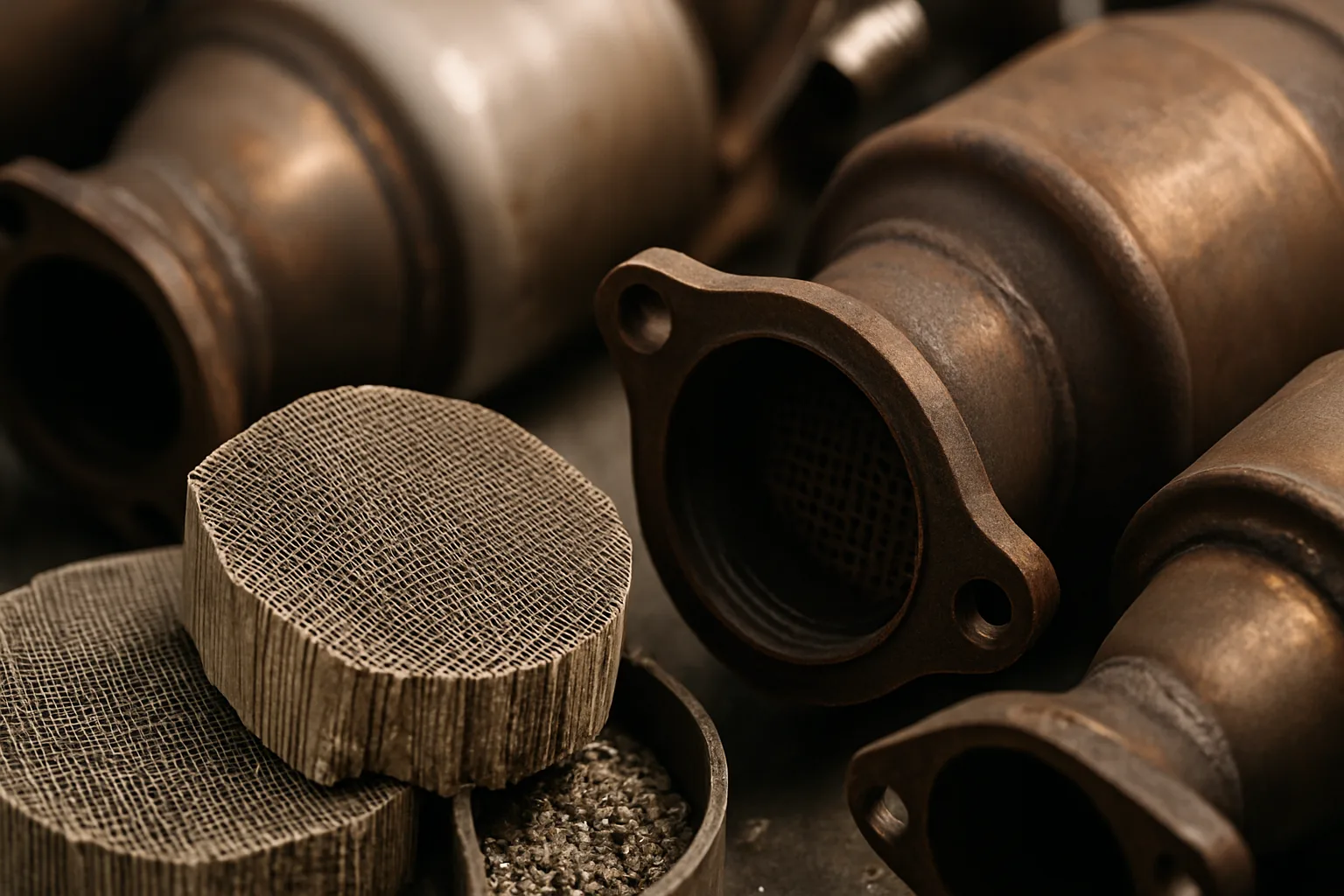
A catalytic converter contains a ceramic or metalite substrate — the honeycomb-looking core inside the shell. That substrate is coated with a wash of precious metals. Three metals do the work: platinum, palladium, and rhodium. Together, they're known in the industry as PGMs — platinum group metals.
Each metal plays a different role in the emissions process. And each carries a different market value, which is why two converters that look nearly identical on the outside can be worth very different amounts when cracked open and assayed.
- Platinum (Pt): Oxidizes hydrocarbons and carbon monoxide. Common in diesel catalytic converters. The platinum price today tends to be lower than palladium, but platinum-heavy cats from diesel trucks are still high-value units.
- Palladium (Pd): Handles oxidation in gasoline engines. Palladium has seen significant price swings over the past several years and often trades at a premium to platinum. Gasoline-engine cats are typically palladium-dominant.
- Rhodium (Rh): Reduces nitrogen oxides. This is the rarest of the three and often the highest-priced per troy ounce. Even a small amount of rhodium content can dramatically change a converter's scrap value.
The actual PGM content per converter is measured in troy ounces — and we're talking fractions of an ounce, not full ounces. A typical passenger vehicle cat might contain between 3–7 grams of combined PGMs. That sounds small, but at current market prices, even a few grams of rhodium can be worth serious money.
Why the Platinum Price Today Doesn't Tell the Whole Story
Sellers often check the platinum price today and assume that number directly reflects what they'll get paid. It doesn't — at least not in a simple one-to-one way. Your scrap cat price depends on several variables stacked on top of the spot price.
First, not every converter has the same PGM loading. A Ford F-150 cat is not the same as a Honda Civic cat. A diesel pickup from a heavy-duty fleet carries more platinum. A hybrid vehicle often has a higher-grade converter because the engine cycles on and off more, requiring a more robust catalyst coating. The make, model, year, and even engine size all affect what's inside.
Second, the buyer's processing costs come out before you get paid. Smelting, assaying, and refining all cost money. A legitimate buyer prices those costs into their offer — which is why the gap between spot price and what you receive exists. A buyer offering you spot price for a raw converter is either mispriced or cutting corners somewhere.
Third, palladium and rhodium prices fluctuate independently of platinum. A week where platinum drops but rhodium spikes can mean your palladium-heavy cats are worth more than last week, even if the "platinum price" headline made it sound bearish. Watch all three, not just one.
Want to stay up to date on how these prices shift and what they mean for your loads? Read scrap catalytic converter guides that break down current market conditions in plain language.
How Catalytic Converter Buyers in Houston Price Your Cats
Houston is one of the most active scrap markets in the country. The density of commercial fleets, industrial vehicles, and automotive traffic through Texas creates a consistent flow of used converters. That volume means buyers are competitive — but it also means you need to know your material before you walk in the door.
Most catalytic converter buyers in Houston use one of two pricing methods. The first is flat-rate pricing by converter type — a price list that assigns a dollar value to specific converter codes or vehicle applications. This is fast, but it works best when the buyer's list is current and the prices reflect actual PGM market values. The second method is assay-based pricing, where your converter gets processed and you're paid on actual precious metal recovery. Assay-based pricing takes longer but tends to be more accurate for high-value or rare units.
For Houston scrap metal services, the difference between a flat-rate buyer and a market-based buyer can be significant, especially on larger loads. If you're moving volume — fleet cats, shop sweeps, or full pallets — it pays to understand which method your buyer uses and whether their price list is updated against live PGM spot prices.
Competitive markets are good for sellers. More buyers bidding on your material means better price discovery. Platforms like SMASH are built on exactly this idea — instead of accepting one offer from one buyer, your material goes to a network of vetted buyers in a structured auction format. Sell your scrap metal on the SMASH marketplace and let competition work in your favor.
What Makes a Catalytic Converter High Value vs. Low Value
Not all cats are created equal. Experienced sellers learn to spot the difference quickly. Here's what actually drives value — beyond just checking which metal is expensive today.
High-value converter characteristics:
- Intact substrate — the ceramic honeycomb inside should be whole, not cracked or rattling loose
- Diesel or hybrid vehicle origin — these tend to carry higher PGM loads
- Larger physical size — more substrate surface area generally means more coating
- Clean interior — excessive carbon buildup or contamination can reduce recovery rates
- Identifiable make/model — buyers can verify PGM content against known specs
Low-value or difficult converter characteristics:
- Aftermarket or "direct-fit" replacement cats — these contain minimal PGM content by design
- Failed or "blown-out" substrates — no substrate means no precious metals to recover
- Bead-style converters — a different internal structure with lower PGM density than standard honeycomb types
- Unknown or stripped shells — without verifiable origin, buyers discount heavily
Documentation matters more than most sellers realize. Photo documentation, VIN lookup, and serial tracking — features built into platforms like SMASH — give buyers confidence in your material. Confident buyers bid higher. That's not a theory; it's basic market logic.
How to Get the Best Scrap Cat Price for Your Load
Getting the best price isn't complicated. It requires a few disciplined habits before you ever make a call or send an email.
- Sort your cats by type. Don't mix diesel and gasoline converters in the same pile. Separate foil-type from ceramic. Buyers price by category, and mixed loads get priced at the lowest common denominator.
- Document what you have. Photos of the cat, the vehicle it came from, and the substrate condition all help buyers make informed offers. Better information equals fewer unknowns, and fewer unknowns means tighter, stronger bids.
- Know the PGM market before you sell. You don't need to be a commodities trader. But knowing whether palladium is up or down this week gives you context to evaluate an offer. The platinum price today is freely available — check it.
- Get more than one offer. This sounds obvious. Most sellers don't do it. Calling one buyer and accepting their price is the old way. A catalytic converter auction format puts multiple buyers in competition for your material simultaneously.
- Work with vetted buyers only. Scrap cat theft is a real issue across the industry. Working with verified, accountable buyers protects you legally and ensures you're dealing with businesses that can actually follow through on payment.
If you're ready to stop guessing and start getting competitive offers, find the best scrap cat prices today through a platform built for exactly this kind of transaction.
Why Auction-Based Selling Changes the Game for Cat Sellers
The traditional model for selling scrap cats is broken. You call a buyer, they name a price, you take it or leave it. There's no way to know if that price is fair without doing the same call five more times — and even then, you're relying on whoever picks up the phone.
A catalytic converter auction flips that dynamic. Your load goes to multiple buyers at once. They compete. The price that emerges reflects actual market demand, not a single buyer's margin target. This is how price discovery is supposed to work.
SMASH is built on this model. No subscription fees. Vetted buyers. Auto-invoicing. Photo documentation built into the listing process. For sellers in Texas managing regular volume — shops, yards, fleet operators — the difference between one offer and five competing offers adds up fast.
Whether you're moving a single high-value unit or a full pallet of mixed cats from a busy shop in Houston, the principle is the same: competition works in your favor. Get a fair price for your scrap catalytic converters by making buyers compete for your business instead of the other way around.
Frequently Asked Questions
Q: How does the platinum price today affect what I get paid for my scrap catalytic converter?
The platinum spot price is one input in your final payout — but it's not the only one. Palladium and rhodium prices also factor in, along with the specific PGM content of your converter, the buyer's processing costs, and current market demand. Checking the platinum price today gives you useful context, but you need all three PGM prices to get a real picture of your cat's value.
Q: Where can I find reliable catalytic converter buyers in Houston?
Houston has a competitive scrap market with multiple buyers active in the area. Look for buyers who offer transparent, market-based pricing rather than flat-rate lists that may not reflect current PGM prices. Platforms like SMASH connect sellers with vetted buyers across the country, including Texas, so you're not limited to whoever is closest. More competition on your load means better price discovery.
Q: What is the difference between a diesel and gasoline catalytic converter for scrap value?
Diesel converters are typically platinum-dominant, while gasoline converters tend to carry more palladium. Because rhodium, palladium, and platinum all have different market prices, the type of vehicle your converter came from significantly affects its scrap value. Diesel cats from heavy trucks often command higher prices due to their larger substrate and higher PGM loading.
Q: Will an aftermarket catalytic converter have the same scrap value as an OEM unit?
No — aftermarket and direct-fit replacement converters are manufactured with minimal PGM content to keep costs low. They typically have much lower scrap value than OEM factory converters. If you're sorting a load that includes aftermarket cats, separate them from OEM units so buyers can price each category accurately.
Q: How does a catalytic converter auction work, and is it right for my volume?
A catalytic converter auction puts your documented load in front of multiple vetted buyers simultaneously. They submit competing bids, and the best offer wins. This format works well for any volume — from a single high-value unit to full pallets. The main benefit is transparency: you see competing offers instead of accepting the first number you're given. For sellers in Texas moving regular volume, the difference in realized price can be meaningful over time.
The precious metals inside your cats are worth real money — but only if you sell them right. Knowing what's in there, how PGM prices work, and how to create competition among buyers puts you in control. If you're in Houston or anywhere across Texas, don't settle for a single cold-call offer. Find the best scrap cat prices — get a free quote at best-scrap-cat-prices.com.
For ongoing scrap metal market updates, industry news, and insights on PGM pricing trends, follow SMASH on LinkedIn — it's the fastest way to stay current without sorting through the noise yourself.
Disclaimer: Precious metal prices — including platinum, palladium, and rhodium — fluctuate daily based on global market conditions. All pricing references in this article are general in nature. Always check current PGM spot prices and get live quotes before selling your scrap catalytic converters.
```