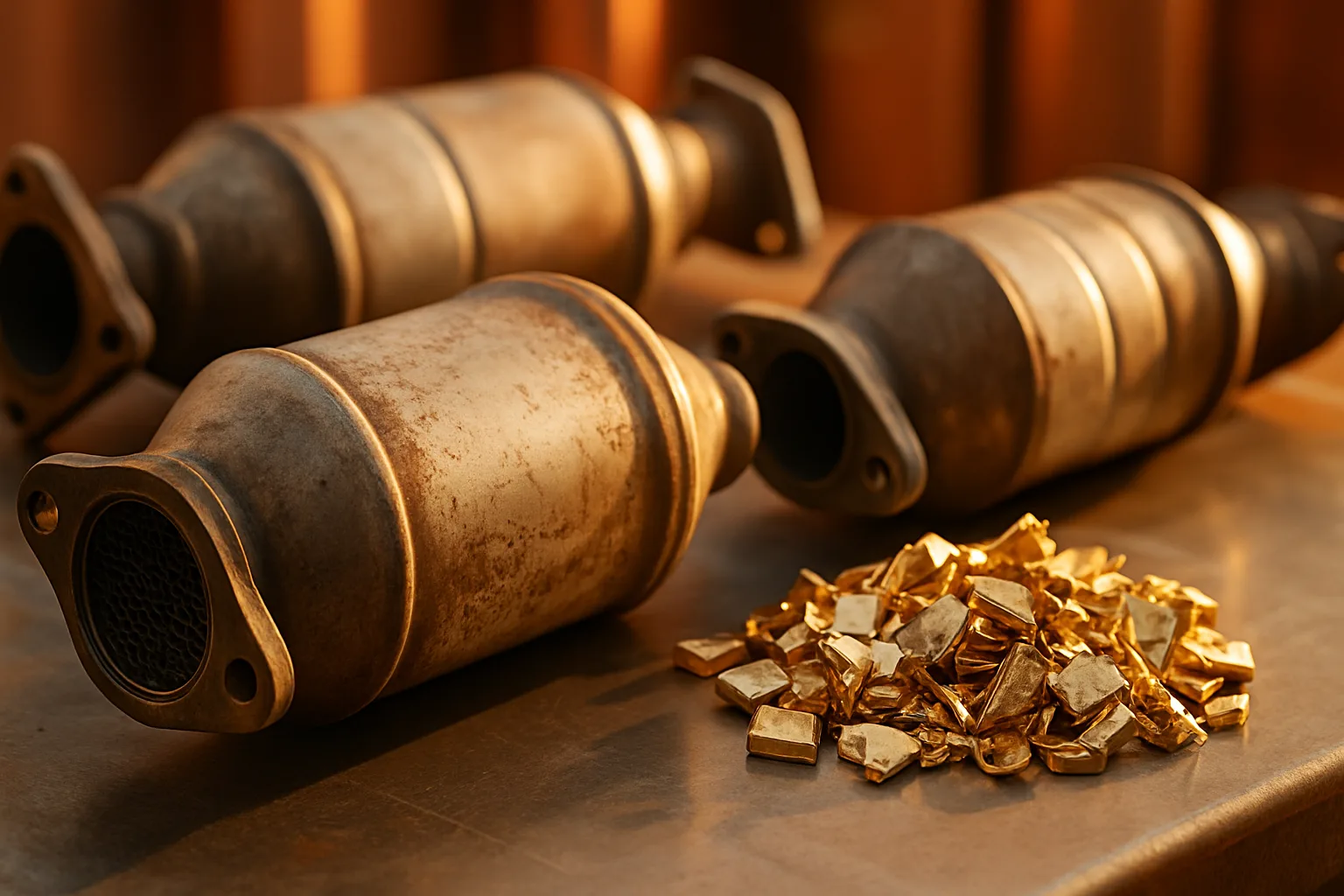
Catalytic Converter Theft Is Quietly Destroying the Legitimate Scrap Cat Market
Here's a number that should make any legitimate recycler angry: catalytic converter theft costs the auto industry and insurance sector billions annually — and the people who pay the steepest hidden price aren't the vehicle owners. It's the honest yards and sellers trying to get fair catalytic converter scrap value for clean, documented inventory. Theft floods the secondary market with suspicious material, spooks buyers, triggers compliance crackdowns, and ultimately drags down pricing signals for everyone playing it straight.
If you're in Cincinnati, Ohio trying to sell cats legitimately right now, you're operating in a market shaped — in part — by people who aren't. That's the reality. And understanding how theft distorts the recycling market is the first step to protecting your margins and your reputation.
How Stolen Cats Enter the Legitimate Supply Chain
This is where it gets uncomfortable. Stolen catalytic converters don't evaporate. They move. Fast. The typical path runs from parking lot to middleman to secondary dealer to processor — often crossing state lines within 48 hours. By the time a stolen cat reaches a processor, the paperwork (if any exists) may look legitimate enough to pass a casual inspection.
The problem for honest sellers is twofold:
- Buyers tighten up. When processors get burned by compliance investigations or stolen material chargebacks, they push that risk downstream. That means more documentation requirements, slower payouts, and lower bids — even on clean inventory from verified sources.
- Price signals get distorted. Stolen cats often sell at steep discounts to move quickly. That underground pricing creates a false floor that some buyers use to lowball legitimate sellers. Your clean, documented load shouldn't be priced against someone else's stolen one.
The honest seller absorbs friction they didn't create. That's the core injustice of how theft bleeds into the legitimate market.
The Compliance Crackdown: What It Means for Sellers in Ohio
Ohio has tightened regulations around catalytic converter purchases in response to the theft surge. Sellers now face increased documentation requirements at many yards — photo ID, vehicle title or bill of sale, VIN verification, and in some cases waiting periods before payment clears. Several major catalytic converter recycling companies have added internal audit layers that slow down transactions across the board.
In a city like Cincinnati, where legitimate recyclers and auto dismantlers run high-volume operations, that friction has a real cost. Time is money. Waiting three business days for a payout on a load you could have turned same-day two years ago eats into your margins. And if your documentation isn't airtight, you risk having loads held or rejected entirely — even when every piece of your inventory is clean.
The yards and sellers who are surviving this environment well share one thing: they documented everything before the regulations forced them to. If you want to get a fair price for your scrap catalytic converters, your documentation is now part of your negotiating position — not just a compliance checkbox.
5 Ways Catalytic Converter Theft Directly Impacts Your Scrap Cat Value
Let's get specific. Here's how the theft epidemic translates into real dollars and real friction for legitimate sellers:
- Buyer pool shrinks. Some processors have exited the spot-purchase market entirely due to compliance risk. Fewer buyers means less competition for your load. Less competition means lower prices. It's that simple.
- Palladium price today doesn't matter if no one will buy your load. Precious metal markets — palladium, platinum, rhodium — move daily. But if you can't find a buyer who'll move fast and pay fairly, the spot price is irrelevant. Theft-driven compliance delays disconnect you from the actual market.
- Documentation gaps kill deals. A load without proper BOLs, photos, and VIN documentation is increasingly unsellable to top-tier buyers. Theft has raised the baseline expectation for what "documented" means.
- Insurance costs rise for processors. When processors absorb stolen material liability, their insurance premiums climb. Those costs get embedded into the prices they offer sellers. You pay for industry-wide theft even if you've never had a stolen unit on your floor.
- Reputation risk is now a pricing factor. Buyers are running deeper checks on sellers than they were in 2023 or 2024. A yard with a clean compliance history commands better prices. A yard with any question marks — even innocent ones — gets discounted offers.
The through-line is clear: theft doesn't just hurt theft victims. It restructures the entire market against honest participants.
How to Protect Your Catalytic Converter Scrap Value in This Environment
You can't stop theft. But you can build a business that isn't dragged down by it. Here's what legitimate sellers in Ohio and across the country are doing to maintain strong returns despite the market disruption:
Document Everything, Every Time
Serial number tracking, photo documentation at intake, VIN lookups on vehicle-attached units — these aren't just compliance boxes. They're proof that your inventory is clean, and clean inventory commands better offers. Platforms like North America's B2B scrap metal auction platform SMASH have built these tools directly into their workflow. When your packing list and photos are already attached to a load before it goes to market, buyers bid with more confidence. More confidence means more competition. More competition means better scrap cat value.
Get Your Inventory in Front of Multiple Buyers
Calling one buyer and taking whatever they offer was always a weak strategy. In today's theft-distorted market, it's worse. Single-buyer deals mean you have no price discovery. You don't know if the offer you're taking is market rate or a lowball justified by the buyer's own compliance concerns. The answer is competition. When multiple vetted buyers see the same load at the same time, you get a real signal on what your inventory is worth based on current palladium price today, platinum, and rhodium content — not on one buyer's risk calculation.
SMASH operates as an auction platform specifically built for this. Vetted buyers compete for your load. You see real offers, not one person's take-it-or-leave-it number. If you want to find the best scrap cat prices today, putting your documented inventory in front of multiple buyers isn't optional — it's the strategy.
Use Platforms That Verify Buyers, Not Just Sellers
Most compliance pressure in the current market flows downward onto sellers. But sophisticated sellers are increasingly asking: who's buying from me, and are they vetted? Selling to unverified buyers creates its own liability exposure. Platforms that verify buyers before they can access your loads protect you from being the last stop in a chain that started with stolen material — even when your inventory is clean.
For Cincinnati-area sellers and Ohio recyclers managing volume, this isn't paranoia. It's good business. You can learn more about how documentation and vetted networks affect your bottom line when you read scrap catalytic converter guides built specifically for this market.
The Legitimate Market Is Still Strong — If You Play It Right
Here's what's easy to lose sight of in all this: the fundamentals of the catalytic converter scrap market remain solid. Precious metals in spent cats still have real value. Palladium, platinum, and rhodium don't stop being valuable because thieves also want them. The processors who pay top dollar for clean, documented inventory are still out there. Buyers who will compete aggressively for high-quality loads still exist.
The market hasn't collapsed. It's bifurcated. There's a market for undocumented, friction-laden inventory — and it pays poorly. And there's a market for clean, well-documented loads sold through competitive channels — and it pays significantly better. Which market you're in is largely a choice.
Sellers in Cincinnati and across Ohio who've built tight intake documentation, VIN verification habits, and relationships with platforms like SMASH are not complaining about the current environment the same way others are. They built the infrastructure to thrive in a tighter market before it was forced on them.
If you're ready to stop guessing at your converter's worth and start getting real competitive offers, Cincinnati scrap metal services are available through best-scrap-cat-prices.com — and the process starts with your documentation.
Disclaimer: Catalytic converter scrap prices fluctuate based on precious metal markets, converter type, and buyer demand. Check current rates before selling. Palladium, platinum, and rhodium values change daily.
Frequently Asked Questions
Q: Does catalytic converter theft actually affect what I get paid for my legitimate inventory?
Yes — directly. Theft drives compliance costs for buyers and processors, which shrinks the buyer pool and adds documentation friction that slows deals. It also distorts price signals when stolen inventory moves at below-market rates. Legitimate sellers absorb these costs even when their inventory is completely clean.
Q: What documentation do I need to sell catalytic converters in Ohio right now?
Ohio regulations and buyer requirements have tightened significantly. At minimum, most buyers now expect photo documentation, a valid ID, and proof of ownership (title or bill of sale) for vehicle-attached units. VIN verification is increasingly standard. Check with your specific buyer for their current requirements, as these can vary and continue to evolve.
Q: How does the palladium price today affect my scrap cat value?
Palladium is one of the three precious metals — alongside platinum and rhodium — that drives catalytic converter scrap value. When palladium prices rise, converters containing higher palladium concentrations (common in gasoline engines) are worth more. Daily spot prices directly affect what processors will pay, which is why selling through a competitive auction format gives you better price discovery than a single phone call.
Q: Is it worth selling catalytic converters online versus locally in Cincinnati?
Online platforms that connect you with multiple vetted buyers typically deliver stronger price discovery than relying on local buyers alone. That said, local Cincinnati-area buyers matter for logistics. The best approach is to use a platform like SMASH that combines competitive online bidding with practical transaction support — so you get market-rate pricing without sacrificing convenience.
Q: How can I tell if a catalytic converter buyer is legitimate and not a theft operation?
Legitimate buyers will ask for documentation — not avoid it. Red flags include buyers who offer cash with no paperwork, don't ask for ID or ownership proof, and want to move unusually fast with no records. Selling through a vetted platform where buyers are verified before they can place bids removes this guesswork entirely and protects your legal standing as a seller.
Ready to stop leaving money on the table? Find the best scrap cat prices — get a free quote at best-scrap-cat-prices.com. Your documented inventory deserves a competitive market — not one buyer and one phone call.
Stay current on scrap metal market trends and precious metal pricing. Follow SMASH on LinkedIn for industry updates and insights that affect your bottom line.