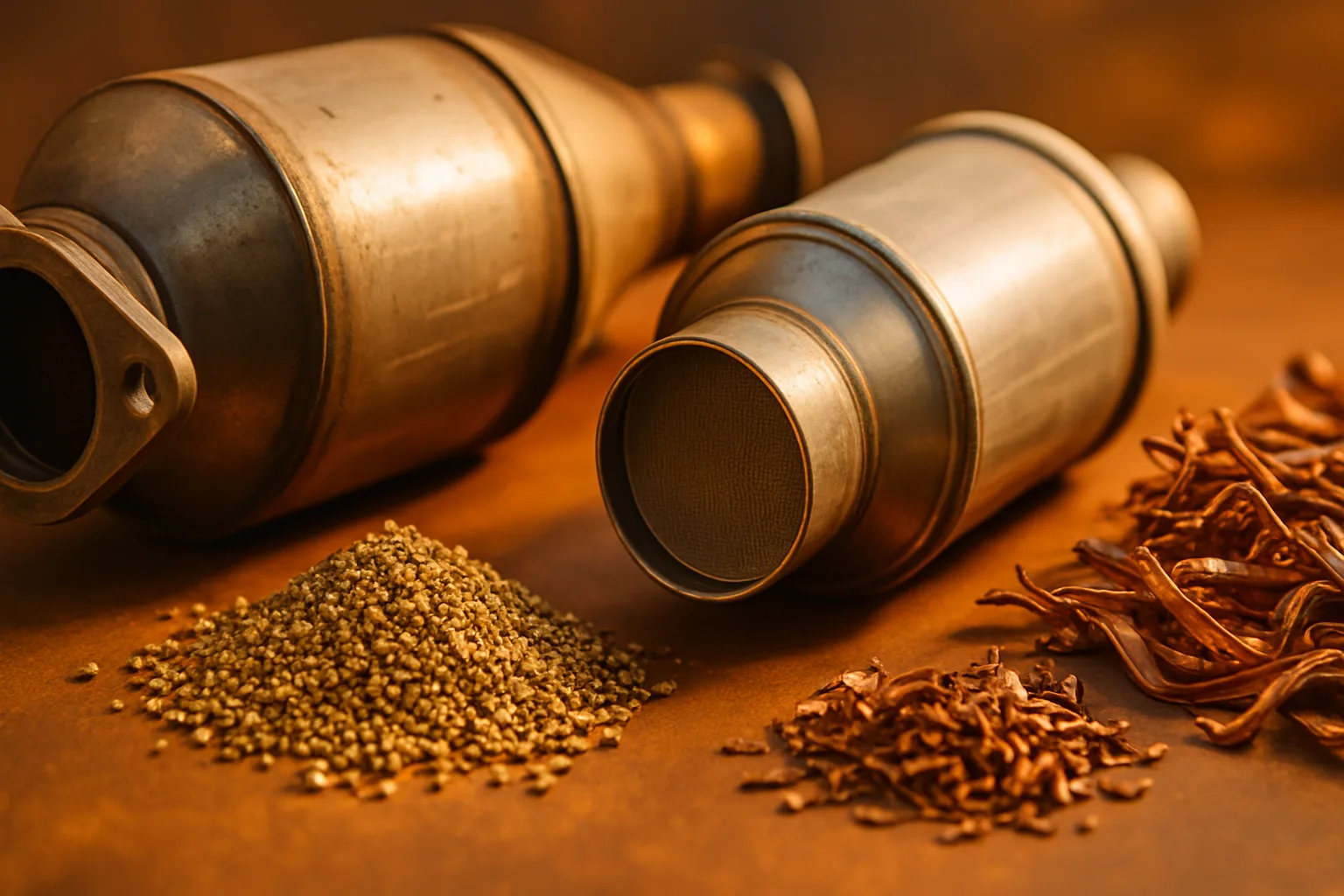
Diesel vs. Gasoline Catalytic Converters: What Scrap Cat Sellers Need to Know in 2026
Most scrap yards treat all catalytic converters the same. That's a mistake — and it's costing sellers real money. If you're looking to sell catalytic converters online, understanding the difference between diesel and gasoline converters isn't just academic. It directly affects what your load is worth and how you should price it.
Diesel catalytic systems — specifically Diesel Particulate Filters (DPFs) and Diesel Oxidation Catalysts (DOCs) — have a very different precious metal profile than standard gasoline three-way cats. Lump them together when you're grading a load, and you're either leaving money on the table or quoting buyers the wrong thing entirely.
Here's what separates them, why it matters for scrap cat value, and how platforms like the SMASH scrap metal auction marketplace help you get proper price discovery when you've got a mixed load.
How Gasoline Catalytic Converters Work — and What's Inside Them
The standard gasoline catalytic converter is a three-way catalyst. It handles three pollutants simultaneously: hydrocarbons, carbon monoxide, and nitrogen oxides. To do that job, it needs a precise blend of platinum group metals (PGMs) — typically platinum, palladium, and rhodium — coated onto a ceramic or metalite substrate.
Rhodium is the heavy hitter in gasoline cats. It's the metal responsible for NOx reduction, and it's typically the rarest and most valuable PGM in the mix. That's why certain gasoline converter types — think large GM trucks, certain Toyotas, or European luxury sedans — consistently command strong scrap cat prices. The PGM loading is high, and the metal recovery is predictable.
- Substrate type: Usually ceramic honeycomb or metalite foil
- PGM mix: Platinum, palladium, and rhodium — all three present
- Rhodium content: Present and significant in most units
- Size: Ranges from compact inline units to large oval biscuits
- Scrap value driver: Primarily rhodium and palladium content
The gasoline converter market is well-established. Buyers know the common part numbers, the substrate types, and the expected returns. When you find the best scrap cat prices today, you're usually navigating a market built around gasoline converter data.
DPFs and DOCs: The Diesel Difference That Changes Your Scrap Cat Value
Diesel exhaust systems play by different rules. Diesel engines run lean — excess oxygen is always present — which means you can't use a three-way catalyst the same way. Instead, diesel vehicles use a two-stage approach: a Diesel Oxidation Catalyst (DOC) handles hydrocarbons and carbon monoxide, while a Diesel Particulate Filter (DPF) traps soot and particulate matter.
Here's where scrap sellers get tripped up. DPFs look like catalytic converters. They're similar in size, they come off the same section of the exhaust, and they go in the same pile at a lot of yards. But they are not the same thing. A DPF is primarily a soot filter. It's engineered to trap particulates, not to convert gases using PGMs. The precious metal loading in a DPF is dramatically lower than in a gasoline three-way cat — in many cases, nearly zero.
DOCs are closer to a traditional gasoline converter in function, but still differ in metal composition:
- DOC (Diesel Oxidation Catalyst): Contains platinum and palladium, but typically no rhodium. Handles CO and hydrocarbon oxidation.
- DPF (Diesel Particulate Filter): Low PGM content. Primary function is physical soot capture, not catalytic conversion. Some DPFs have a catalytic washcoat, but loadings are much lower than gasoline cats.
- SCR catalyst (Selective Catalytic Reduction): Found on newer diesel trucks — uses urea injection to reduce NOx. Typically contains vanadium or zeolite-based formulations, not platinum group metals.
If a buyer quotes you gasoline converter prices on a load of DPFs, you may actually be getting overpaid — which sounds great until the assay comes back and you're dealing with a dispute. Know what you have before you list it.
Why Platinum Price Today Matters Differently for Diesel Units
Platinum is the dominant PGM in diesel catalytic systems. While gasoline cats lean heavily on rhodium and palladium, diesel DOCs run predominantly on platinum. That makes diesel units more sensitive to platinum price today movements than their gasoline counterparts.
In 2026, platinum has remained the most underpriced of the major PGMs relative to its industrial demand profile — particularly with hydrogen fuel cell applications pulling from the same supply. That creates a specific dynamic for scrap cat sellers with diesel loads: platinum-heavy DOCs may offer better recovery value than raw spot prices suggest, depending on your processor's assay methodology and fee structure.
The key variable is always PGM loading per unit. A heavy-duty commercial diesel DOC from a Class 8 truck can carry significantly more platinum than a small passenger car gasoline converter. But a DPF from the same truck might carry almost none. Sorting matters. Mixing these units in a single lot without documentation hurts price discovery on both ends.
This is exactly where platforms built for transparency — like SMASH — create real value. When buyers can see documented inventory with unit types clearly identified, they bid on what the load actually contains. That's not guesswork. That's a B2B scrap metal marketplace working the way it should.
How to Sort and Document a Mixed Diesel/Gasoline Load Before You Sell
If you run a yard in Jacksonville or anywhere across Florida, you're pulling cats off a wide range of vehicles — pickup trucks, SUVs, commercial vans, fleet vehicles. Mixed loads are the norm, not the exception. The question is whether you're grading that mix or just throwing it in a gaylord and hoping for the best.
Here's a practical sorting approach for mixed diesel and gasoline loads:
- Identify the vehicle source first. Gasoline or diesel? If you're pulling from a late-model Ford F-250 or Ram 3500, assume diesel until proven otherwise.
- Separate DPFs from DOCs. DPFs are typically larger, heavier, and have a different internal structure. If you cut one open, you'll see a wall-flow filter, not a honeycomb flow-through substrate.
- Photo document every unit. Serial numbers, substrate condition, and physical dimensions help buyers assess value. A converter with ash loading inside a DPF is worth less than a clean one.
- List diesel and gasoline units separately. Combining them into one lot without disclosure creates pricing friction. Separate listings get cleaner bids.
- Use VIN data where available. Knowing the make, model, and year of the source vehicle gives downstream buyers confidence in PGM composition.
If you're looking to get a fair price for your scrap catalytic converters, documentation is the single biggest lever you control. Buyers pay more when they know what they're bidding on. Ambiguity gets discounted every time.
For sellers in Jacksonville using Jacksonville scrap metal services, the documentation process is becoming a baseline expectation — not a differentiator. Buyers across Florida and the rest of North America are getting more sophisticated, and undocumented loads are being priced accordingly.
Selling Diesel Catalytic Converters Through a B2B Marketplace vs. Local Buyers
Walking diesel DPFs and DOCs to a local buyer has one advantage: speed. You get paid same-day. But speed has a cost when the buyer on the other side of the counter is the only price you see. They know exactly what's in your load. You don't always know what it's worth.
Using a B2B scrap metal marketplace changes the dynamic. Multiple vetted buyers compete on the same documented inventory. A DOC from a heavy diesel commercial unit that might get a flat pass at one local yard could attract a much stronger bid from a specialty processor who runs those units regularly. Competition reveals the market. That's not a pitch — that's how price discovery actually works.
For yards handling volume — weekly loads of mixed cats coming off Jacksonville's commercial fleet vehicles, construction equipment, or long-haul trucks — the difference between one local quote and an auction format with multiple buyers can be significant. Read scrap catalytic converter guides to understand how different converter types are typically valued across the market.
If you're searching for catalytic converter buyers near me within 20 miles of Jacksonville, that's a reasonable starting point. But don't let geography limit your price. The best offer on your diesel DOC load may come from a buyer three states away who has the processing capacity and the demand to pay more. A digital marketplace gets you in front of that buyer without you making a single cold call.
No subscription fees. You list your inventory, buyers bid, and you decide whether to accept. When the load sells, SMASH earns its cut. Not before. That's the model.
Frequently Asked Questions
Q: Are DPFs worth scrapping as catalytic converters?
DPFs have a lower precious metal content than traditional gasoline catalytic converters. They shouldn't be priced or sold as standard cats. Some DPFs contain a catalytic washcoat with trace platinum, but the PGM loading is generally much lower. Separate them from your DOCs and gasoline units before listing.
Q: What's the difference between a DOC and a DPF in scrap value?
A Diesel Oxidation Catalyst (DOC) contains platinum and palladium and has a meaningful scrap cat value similar in structure (though different in composition) to gasoline converters. A Diesel Particulate Filter (DPF) is primarily a soot filter with lower PGM content. They require different pricing and should never be lumped into the same lot without disclosure.
Q: Can I sell catalytic converters online if I'm in Jacksonville, Florida?
Yes. Sellers across Florida and the rest of North America regularly sell catalytic converters through online B2B platforms. You document your inventory, submit your load, and vetted buyers compete for it. Geography doesn't limit your price — it just determines your logistics. Pickup and shipping arrangements are typically part of the transaction process.
Q: Does platinum price today affect what I get for diesel catalytic converters?
Yes, directly. Diesel DOCs are platinum-heavy, so platinum spot price movements affect their scrap value more than rhodium or palladium fluctuations do. Keep an eye on platinum pricing when timing your sale, especially if you're holding a significant volume of diesel units. Prices fluctuate — always check current rates before committing to a sale.
Q: How do I find the best scrap cat price for a mixed load of diesel and gasoline converters?
Sort and document your load before listing it. Separate DPFs, DOCs, and gasoline three-way cats. Photo each unit and record serial numbers where possible. Then use a platform with multiple vetted buyers — like SMASH — to let competition determine the price. A single local buyer quote on a mixed load is rarely the best number available.
If you're sitting on diesel units and not sure what they're actually worth, don't guess — and don't default to whoever's closest. Sorted, documented inventory listed on a competitive platform consistently outperforms single-buyer phone calls. When you're ready, find the best scrap cat prices today at best-scrap-cat-prices.com and get a free quote on your load.
Disclaimer: Precious metal prices fluctuate daily. All scrap catalytic converter values depend on current PGM spot prices, unit condition, and buyer demand. Always verify current rates before finalizing any sale.
Stay current on scrap metal market movements and catalytic converter pricing trends — follow SMASH on LinkedIn for regular industry updates and market insights.