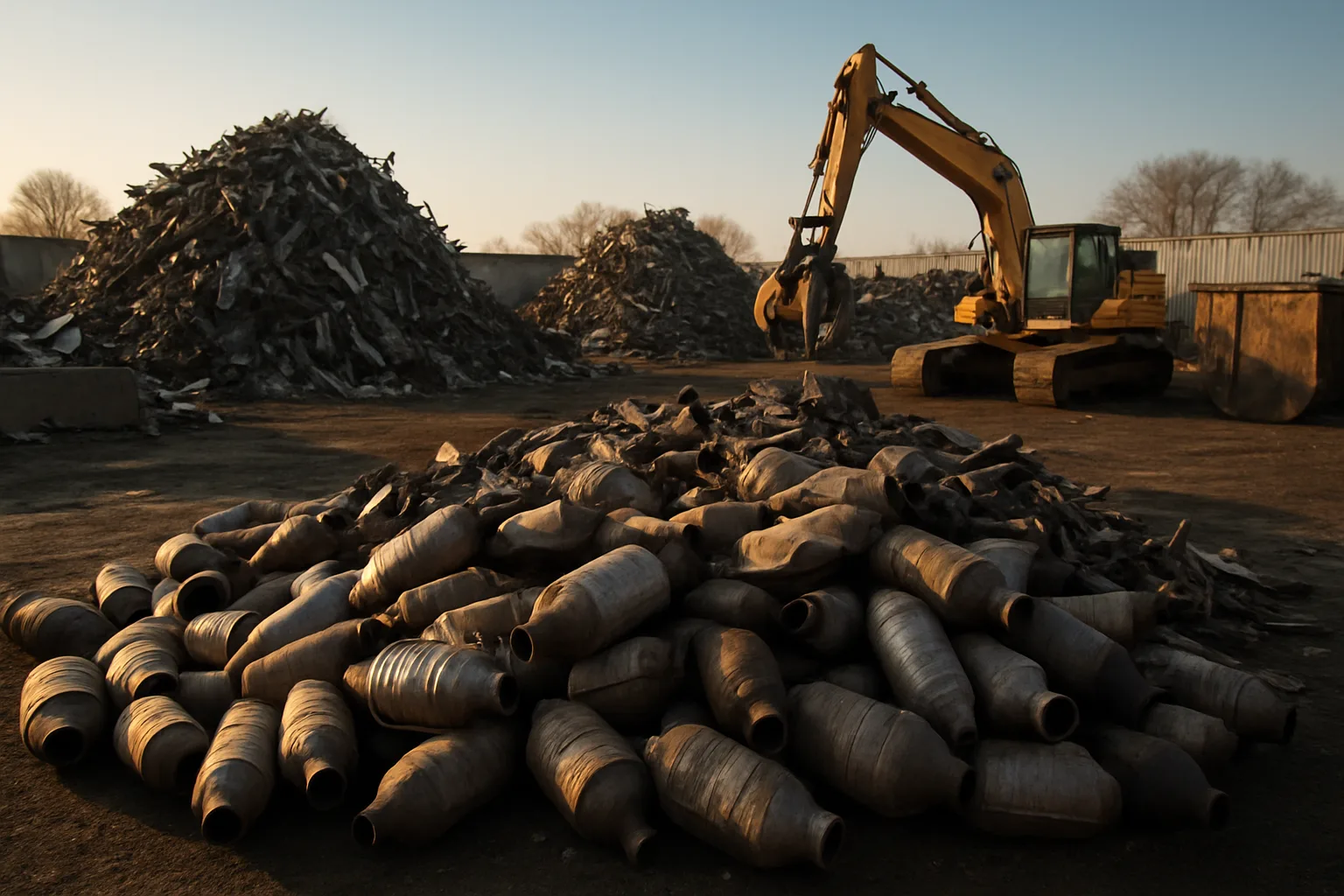
Rhodium Is Worth More Than Gold — And It's Sitting in Your Old Catalytic Converter
Most scrap sellers know catalytic converters are valuable. Few understand why. The answer comes down to three letters: PGMs — platinum group metals. And sitting at the top of that group, commanding prices that dwarf gold, is rhodium. If you're trying to get the best catalytic converter price in Sacramento, understanding what's actually inside your cats isn't optional. It's the difference between getting paid what your load is worth and leaving money on the table.
Rhodium doesn't get the press coverage gold does. It doesn't have futures contracts most retail investors recognize. But in the recycling and refining world, it's the metal that moves the needle on converter payouts more than anything else. Let's break down why — and what it means for your scrap cat value in 2026.
What Makes Rhodium So Valuable? Understanding Platinum Group Metals
Catalytic converters contain three primary precious metals: platinum, palladium, and rhodium. All three are classified as platinum group metals (PGMs). All three are rare. But rhodium is in a league of its own when it comes to scarcity and industrial function.
Rhodium is one of the rarest elements on Earth. Global annual mine supply is measured in the low tens of tonnes — an almost incomprehensibly small number given how critical the metal is to emissions control. The vast majority of primary rhodium supply comes from South Africa, with smaller contributions from Russia and Zimbabwe. Any disruption to that supply chain — and there have been several significant ones in recent years — sends rhodium prices swinging hard.
Here's why miners can't simply ramp up production to meet demand: rhodium doesn't occur in concentrated, standalone deposits. It comes out of the ground as a byproduct of platinum and palladium mining, at trace levels. You can't decide to mine more rhodium without mining more platinum first. That supply constraint is structural, not temporary.
- Platinum: Used for diesel emissions control, also found in gasoline converters
- Palladium: Dominant in gasoline-powered vehicles, high recycling recovery rates
- Rhodium: Used in all converter types for NOx reduction — the most reactive and the rarest
Rhodium's specific job inside a converter is reducing nitrogen oxides (NOx) — one of the most regulated classes of automotive emissions. No other metal does this job as efficiently at scale. That's not a marketing claim. It's chemistry. Auto manufacturers can't simply substitute something cheaper. Regulations in California and across the U.S. mandate emissions performance that currently requires rhodium.
Rhodium Price Today: Why It Drives Your Scrap Cat Payout
Rhodium prices are volatile. That's not a warning — it's a market reality you need to plan around. The metal has historically traded at multiples of gold, sometimes reaching extraordinary highs before correcting sharply. In 2026, the rhodium market continues to be driven by the same core tension: tight primary supply against steady demand from global auto production and emissions compliance.
When you look at scrap metal prices today, PGM spot prices are the engine behind converter valuations. A load of mixed cats that looked one way on Monday can price differently by Friday if rhodium moves significantly. That's not a reason to panic — it's a reason to move quickly once you've documented your inventory and understand what you're holding.
The rhodium content per converter varies significantly by vehicle type, make, and model year. This is critical to understand:
- Small domestic converters from compact vehicles typically carry the least PGM content
- Larger converters from trucks, SUVs, and performance vehicles often carry more
- Foreign domestic converters (those installed in vehicles manufactured overseas but sold in North America) can carry premium loadings — especially from Japanese manufacturers
- California emissions converters, required in states following California's stricter standards, often contain higher PGM loadings due to tighter NOx limits
That last point matters specifically if you're running a yard or collecting cores in Sacramento. California has some of the strictest vehicle emissions standards in the country. That regulatory environment translates directly into higher-spec converters on California-registered vehicles — and potentially higher scrap cat value on your loads.
How to Find the Best Catalytic Converter Price in Sacramento
Knowing rhodium is valuable doesn't automatically get you paid for it. The gap between what your cats are worth and what you actually receive comes down to one thing: how many buyers are competing for your load.
The old way of selling cats in Sacramento — one phone call, one number, take it or leave it — doesn't reflect market value. It reflects what a single buyer is willing to offer that day. Those are two very different things. One buyer has no reason to compete. No competition means no price discovery.
This is where platforms like SMASH change the math. North America's B2B scrap metal auction platform connects verified sellers with vetted buyers in a competitive auction format. When multiple buyers bid on your documented load, the price you receive reflects actual market demand — not one buyer's margin target.
For yards and collectors in Sacramento trying to find the best scrap cat prices today, the process matters as much as the market conditions. Here's what separates a good payout from a great one:
- Accurate identification: Every converter has a serial number. Buyers price off part identity, not guesses. Serial tracking eliminates ambiguity.
- Photo documentation: Clean, clear photos of each unit — including any damage — give buyers confidence. Confident buyers bid higher.
- Verified counts: A packing list that matches your actual load prevents disputes at delivery. BOLs matter.
- Competitive exposure: The number of buyers who see your load directly affects price discovery. More vetted buyers mean better competition.
SMASH handles the documentation infrastructure — inventory tools, VIN lookup for vehicle-tied cores, serial tracking, photo uploads — so your load goes to market properly represented. No subscription fees. You only pay when you sell.
Platinum Group Metals Recycling: Why Your Sacramento Load Matters to the Global Supply Chain
Here's a perspective most scrap sellers never hear: your catalytic converter load in Sacramento is part of a global recycling loop that helps stabilize PGM supply. Primary mine production of rhodium, platinum, and palladium cannot meet global demand on its own. Secondary recovery — meaning recycled material from spent converters — is a critical supply source that refiners, automakers, and industrial users depend on.
This isn't feel-good sustainability language. It's economics. When secondary supply is strong, it takes pressure off primary prices. When secondary supply tightens — because cats aren't being collected, or because they're moving through channels that pay sellers poorly and discourage volume — it accelerates price volatility.
The point for California sellers: your load has real downstream value. Platinum group metals recycling isn't a niche corner of the scrap industry. It's a supply chain function. And the sellers who understand that — who document their inventory properly, price their loads against the real market, and work through competitive channels — are the ones extracting full value from that function.
You can read scrap catalytic converter guides that walk through how PGM content is calculated, how lots are graded, and what buyers look for when evaluating a load. The more you understand the process, the better positioned you are to negotiate from knowledge rather than hope.
What Sacramento Sellers Should Know Before Moving Their Next Load
Sacramento's position in Northern California puts sellers within range of major refining and processing infrastructure. That geographic reality is an advantage — but only if you're working with buyers who are actually competing for your material rather than setting the price unilaterally.
Before you move your next load of cats, work through this checklist:
- Have you identified each converter by serial number or part type?
- Do you have photo documentation for the lot?
- Do you know which units are California-spec (higher emissions standards = potentially higher PGM content)?
- Are you getting quotes from more than one buyer?
- Is your pricing tied to current PGM spot prices — or is someone quoting you a static number?
If you're not getting multiple bids, you're not getting market price. Period. Sacramento scrap metal services through SMASH connect you to vetted buyers in a format designed around competition, not convenience for the buyer.
Don't guess what your load is worth. Get a fair price for your scrap catalytic converters by putting your documented inventory in front of buyers who have to compete for it. That's how price discovery works. That's how you stop leaving money behind.
The rhodium in your converters is real value. The platinum and palladium are real value. The question is whether the process you're using to sell reflects that value — or just the first number someone was willing to offer. In Sacramento and across California, the sellers winning on price are the ones who treat scrap cats like the commodity they are: documented, competitive, and market-priced.
Frequently Asked Questions
Q: Why is rhodium more valuable than gold in catalytic converters?
Rhodium is structurally scarcer than gold — global annual mine supply is a fraction of gold production, and it can only be produced as a byproduct of platinum mining. Its critical role in reducing nitrogen oxide emissions means automakers can't substitute it, keeping industrial demand persistently high against a very tight supply ceiling.
Q: How do I get the best catalytic converter price in Sacramento?
Document your inventory thoroughly — serial numbers, photos, accurate counts — and get it in front of multiple vetted buyers. Platforms like SMASH use a competitive auction format that creates real price discovery. One buyer, one phone call is almost never the best price you can get.
Q: Do California emissions converters contain more PGMs than standard converters?
Generally, yes. California's stricter NOx and emissions standards require higher-performing catalysts, which often means higher PGM loadings — including rhodium. If you're collecting cores from California-registered vehicles in Sacramento, this is worth factoring into your load valuation.
Q: How often do scrap cat prices change?
Catalytic converter prices track PGM spot markets, which move daily. Rhodium in particular can swing significantly within a short timeframe due to thin trading volumes relative to other metals. Always price your load against current market data — static quotes from buyers may not reflect where the market actually is on the day you sell.
Q: What information do I need before selling my catalytic converters?
At minimum: a serial number or part ID for each unit, clear photos showing condition, and an accurate count for your packing list. If you can identify which units came from California-emissions vehicles, that's additional information that helps buyers price accurately — and bid more confidently.
Disclaimer: PGM and scrap metal prices fluctuate daily based on spot market conditions. All price references in this article are general in nature. Always check current rates before selling your load.
Follow SMASH on LinkedIn for ongoing scrap metal market updates, PGM price insights, and industry news that helps you sell smarter.