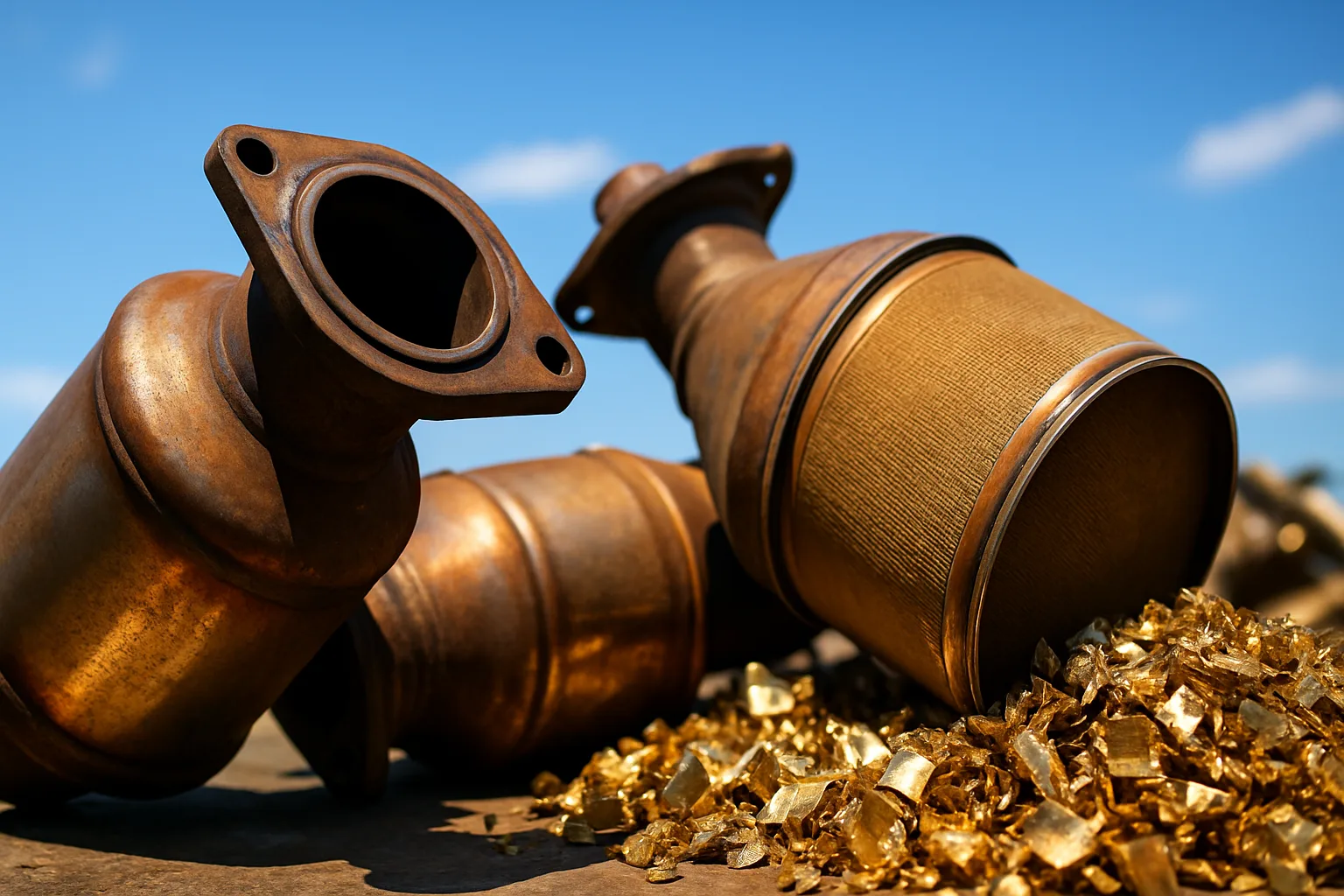
Why OEM Catalytic Converter Value Varies So Wildly — And How to Stop Leaving Money on the Table
Not all cats are created equal. Hand two scrap yards the same pile of converters and you'll get two different quotes — sometimes by hundreds of dollars per unit. The difference isn't random. It comes down to OEM catalytic converter value: the precious metal loading baked into the original equipment manufacturer's design. If you don't know which vehicles carry the most valuable cats, you're flying blind every time you negotiate a price.
This guide breaks down the most valuable catalytic converters by make and model, explains what drives scrap cat value, and shows you how platforms like SMASH Scrap — where verified buyers bid on your metal are changing the way yards and sellers get paid for their inventory.
What Actually Drives OEM Catalytic Converter Value?
Three precious metals determine what a cat is worth at the recycling stage: platinum (Pt), palladium (Pd), and rhodium (Rh). These are the platinum group metals (PGMs) embedded in the ceramic or metallic substrate inside the converter. The higher the loading of these metals — measured in grams per unit — the higher the scrap cat value.
OEM specs drive that loading. Automakers engineer each converter to meet specific emissions standards for a given engine displacement, fuel type, and duty cycle. A heavy-duty V8 truck running hot cycles needs far more catalytic activity than a small four-cylinder commuter. That demand translates directly into more PGM loading — and more money when that converter hits the secondary market.
Several other variables affect the final number:
- Vehicle age and mileage — older, higher-mileage converters lose PGM efficiency through thermal degradation and poisoning
- Physical condition — cracked substrates, rattled cores, or burned-out units reduce recoverable metal
- Original country spec — North American-spec vehicles often carry heavier PGM loads than export models built to less stringent standards
- Series and trim level — a base model and a performance trim from the same manufacturer can use entirely different converter assemblies
When you're selling in a market like Kansas City — where light trucks, SUVs, and heavy pickup trucks move in high volume — understanding which units command premium prices changes your entire approach to purchasing and sorting inventory.
The Most Valuable Catalytic Converters by Vehicle Make and Model
These aren't hard price guarantees — catalytic converter prices today shift daily with PGM spot markets. What follows is a guide to which vehicles consistently produce high-value converters based on their OEM PGM loading and substrate size. Always verify current values with a live buyer before you sell.
Ford F-250 / F-350 Super Duty (6.2L & 7.3L Gas)
Heavy-duty gas-powered Super Dutys are among the most consistently valuable cats in the North American market. The large displacement engines run high exhaust temperatures and volumes, requiring substantial PGM loading across typically two converters per vehicle. Yards in Missouri and across the Midwest see a steady supply of these trucks, making them a reliable source of high-grade inventory.
Ford Mustang Shelby GT500 / GT350
Performance platforms use high-flow converters with elevated PGM content to manage exhaust output while meeting emissions requirements. The GT350's flat-plane crank V8 is particularly noted for requiring aggressive converter specs. These aren't the most common units, but when they come through, the scrap cat value per unit is meaningful.
Toyota Tacoma and 4Runner (V6)
Toyota consistently produces converters with strong PGM loading, and the Tacoma and 4Runner V6 platforms are well-documented high performers in the secondary market. These vehicles are popular across Missouri and throughout the Midwest — which means steady supply for yards sourcing locally in areas like Kansas City.
Honda Accord and CR-V (2.4L and 1.5T)
Honda's OEM catalytic converters have long been known for their palladium-heavy formulations. The Accord and CR-V are ubiquitous on U.S. roads, which makes them a high-volume source of above-average cats. The four-cylinder and turbo four variants are commonly targeted by professional buyers specifically for their PGM yield.
Ram 1500 / 2500 (Hemi V8)
The 5.7L Hemi is one of the most common high-displacement engines in the U.S. market. Its converters carry significant PGM loads to manage the output from all eight cylinders. Two converters per vehicle, combined with the sheer number of Hemi-powered trucks on U.S. roads, makes this one of the most important platforms to understand if you're actively buying or sorting cats in Kansas City or anywhere in the Midwest.
Chevrolet Suburban / Tahoe / Silverado (5.3L and 6.2L)
GM's full-size platform is a staple of American roads, and the converters on these vehicles reflect their emissions obligations. The 6.2L units in particular carry heavier PGM loading. Because these vehicles are so common, knowing how to correctly identify and grade these cats — by series, year, and engine code — directly affects what you walk away with at the end of the deal.
Lexus LX 570 / Toyota Land Cruiser
Full-size luxury SUVs from Toyota's premium brands are among the highest-value cats in the entire North American market. The V8-powered Land Cruiser platform is frequently cited by professional cat buyers as one of the top units for OEM catalytic converter value. Supply is limited, but when these come through a yard, you want to know exactly what you're holding.
How Professional Buyers Grade and Price Scrap Cats
Serious cat converter buyers don't rely on guesswork. They use a combination of serial number lookups, physical measurements, and XRF (X-ray fluorescence) analysis to determine recoverable PGM content. That data drives their bids. If you're selling without that same level of information, you're negotiating blind.
This is exactly where documentation matters. Platforms like SMASH allow sellers to submit photo documentation, serial numbers, and unit descriptions so that vetted buyers are pricing based on real information — not assumptions. More buyer confidence means better price discovery. That's the direct opposite of calling one buyer, getting one number, and not knowing if it's fair.
If you're running a yard in Kansas City and you're still relying on a single local buyer relationship for your cat inventory, you're leaving competition — and potentially money — off the table. A B2B scrap metal marketplace built around auction mechanics changes that dynamic entirely.
Why the Auction Model Changes Everything for Scrap Cat Sellers
The old way: sort your cats, call your buyer, accept their number, load the truck. The new way: document your inventory, list it in a competitive environment, and let verified buyers drive the price up through real bids.
That's the core of what a SMASH scrap metal auction delivers. No subscription fees. No locked-in relationships. Just vetted buyers, transparent pricing, and a process built around actual competition. When multiple qualified buyers see the same inventory and bid against each other, the price reflects market reality — not one buyer's margin target.
For cat converter sellers specifically, the combination of proper documentation and competitive bidding is especially powerful. Because PGM values fluctuate daily and OEM converter specs vary so widely by vehicle, having a buyer base that specializes in cats and bids actively on verified inventory is a significant structural advantage. You can find the best scrap cat prices today by putting your inventory in front of the right buyers — not just the closest ones.
Whether you're sourcing in Missouri or shipping loads cross-country, the fundamentals are the same: documented inventory, competitive buyers, and market-driven pricing. That's how serious sellers approach this. If you want to get a fair price for your scrap catalytic converters, the process matters as much as the product.
For more context on how the cat market works and how to maximize your returns, read scrap catalytic converter guides from sellers and buyers who've been in this market long enough to know what actually moves the needle.
If you're based in the Kansas City area and want to understand your local options for moving cats competitively, check out our Kansas City scrap metal services page for regional-specific resources.
Disclaimer: Catalytic converter prices fluctuate daily based on PGM spot markets and buyer demand. All pricing references in this article are for general guidance only. Always verify current rates with an active buyer before selling.
Frequently Asked Questions
Q: What makes an OEM catalytic converter more valuable than an aftermarket one?
OEM converters are engineered to meet the specific emissions requirements of a given engine and vehicle platform, which often requires higher PGM loading than aftermarket alternatives. Aftermarket cats are built to price points and typically use lower precious metal loads to stay cost-competitive. When it comes to scrap, OEM units almost always yield more recoverable PGM per unit, which is why buyers pay more for them.
Q: What are catalytic converter prices today based on?
Scrap cat prices are driven primarily by the spot prices of platinum, palladium, and rhodium on global commodity markets. These shift daily. The unit's PGM content, physical condition, and whether it's been properly identified by serial number all affect the final offer. Check with active buyers or a live platform for current pricing before you sell.
Q: Where can I sell scrap catalytic converters in Kansas City?
Kansas City has an active scrap market, but local buyers vary significantly in what they'll pay for cats. Your best approach is to document your inventory with photos and serial numbers, then get competing offers from multiple verified buyers. A competitive auction platform gives you exposure beyond a single local buyer, which can make a real difference on higher-value OEM units.
Q: Does the year of the vehicle affect OEM catalytic converter value?
Yes, significantly. Vehicles manufactured during periods of stricter emissions standards — particularly post-2000 and post-2010 — often carry heavier PGM loads. However, condition matters just as much: a newer converter with a cracked substrate may yield less than an older intact unit from the same platform. Age and condition together determine what a buyer is willing to bid.
Q: How does SMASH help cat sellers get better prices?
SMASH connects sellers with a network of vetted buyers who bid competitively on documented inventory. Instead of accepting a single offer from one buyer, sellers expose their cats to real market competition. The platform supports photo documentation and serial tracking, which gives buyers the confidence to bid higher on properly identified inventory. No subscription fees — SMASH only wins when the seller does.
Ready to stop guessing and start selling at market price? Get a free quote at best-scrap-cat-prices.com and find out what your cats are actually worth in today's market.
Stay current on PGM markets and scrap metal pricing by following SMASH on LinkedIn — practical industry updates without the noise.