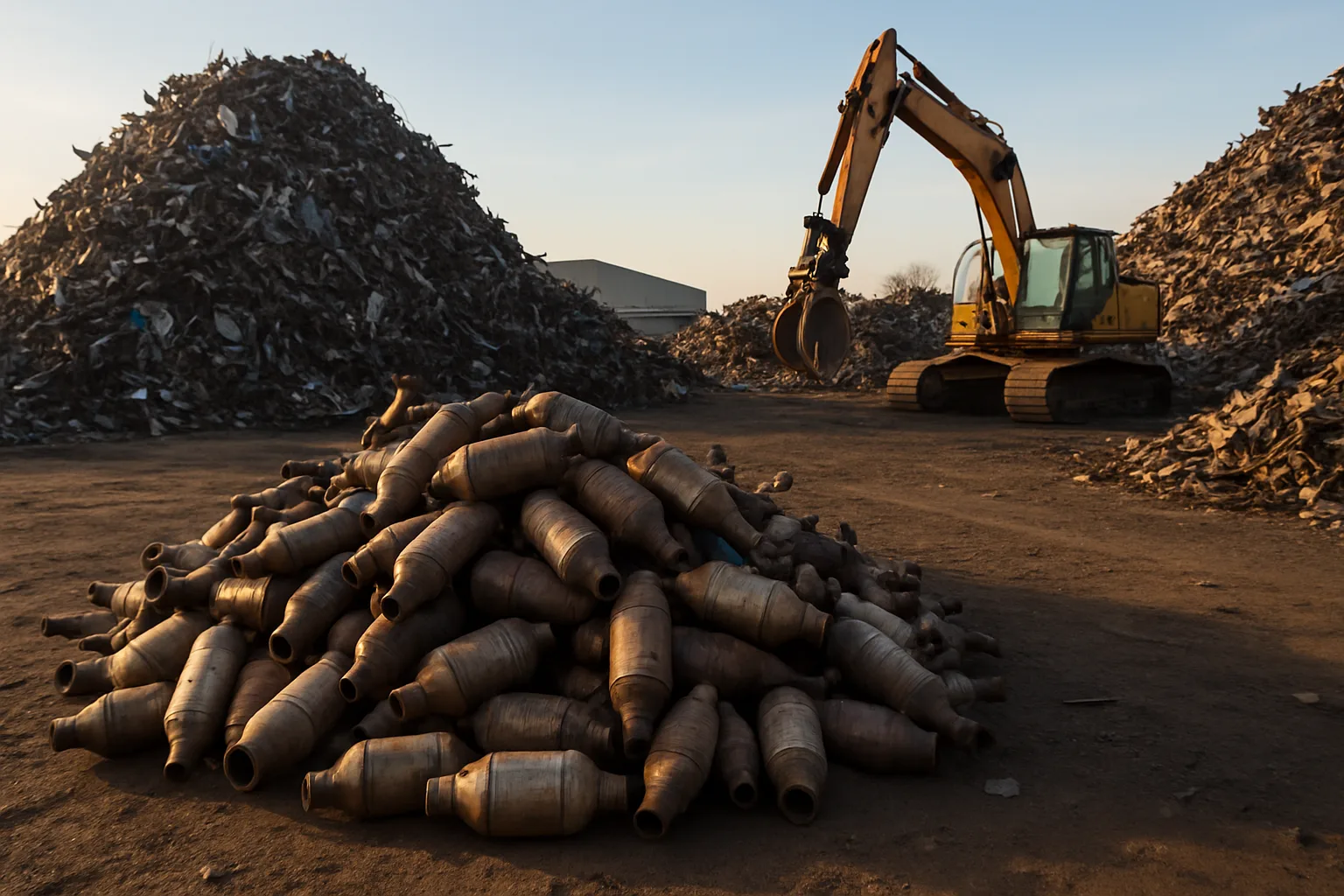
Which Catalytic Converters Are Actually Worth the Most in 2026?
Most people selling scrap cats leave money on the table — not because the market is bad, but because they don't know which converters carry the real weight. The difference between a low-value cat and a high-value one can be hundreds of dollars per unit, and it all comes down to what's packed inside: platinum, palladium, and rhodium. If you're ready to find the best scrap cat prices today, understanding which makes and models produce the most valuable converters is your starting point.
This isn't a generic overview. This is a practical breakdown of the vehicles that consistently produce high-value catalytic converters, why those units command premium pricing, and how to make sure you're getting a fair return when you sell. Whether you're a yard in Newark moving volume or an individual seller with a handful of units, the vehicle source matters more than most people realize.
Why Vehicle Make and Model Drive Scrap Cat Value
Not all catalytic converters are engineered the same. A converter's scrap value is determined almost entirely by its precious metal loading — the concentration of platinum group metals (PGMs) baked into the ceramic or metallic substrate inside. Manufacturers load different amounts of PGMs depending on the engine size, emissions standards the vehicle was designed to meet, and whether the vehicle runs gasoline or hybrid.
Larger engines and stricter emissions requirements generally mean higher PGM loading. That's why a heavy-duty truck converter or a hybrid system cat will almost always outperform the converter off a small four-cylinder economy car. The vehicle's origin market matters too — converters built to meet stricter North American emissions standards often carry more precious metal content than units designed for less regulated markets.
- Engine displacement: Bigger engines typically require more PGM loading to meet emissions thresholds.
- Hybrid technology: Hybrid cats often run at lower temperatures, which means manufacturers load more PGMs to compensate for reduced thermal efficiency.
- Model year: Newer vehicles often have higher-loaded converters as emissions standards have tightened over time.
- OEM vs. aftermarket: Original equipment converters consistently outvalue aftermarket replacements — sometimes by a wide margin.
Understanding this hierarchy is the foundation of smart scrap cat selling. When you know what you're holding, you negotiate from a position of knowledge — not guesswork.
The Most Valuable Catalytic Converters by Vehicle Make and Model
These are the categories and specific vehicles that consistently produce high-value converters. Prices fluctuate with PGM spot markets — always verify current rates before selling — but these vehicles reliably sit at the top of scrap cat value charts.
Toyota and Lexus Hybrids
Toyota Prius converters have become almost synonymous with high-value scrap cats. Because Prius engines run in hybrid mode, the catalytic converter operates at lower consistent temperatures — requiring higher PGM loading to maintain emissions compliance. The result is a converter that routinely commands a significant premium over standard gasoline units. Lexus hybrid models, including the RX 450h and ES 300h, carry similar characteristics and can produce even higher-value units due to larger engine displacement.
Ford F-Series and Heavy-Duty Trucks
The Ford F-250 and F-350 with V8 and diesel configurations produce converters with substantial PGM content. High-output engines demand more catalytic activity to process emissions, which translates directly to higher metal loading. Fleet operators and salvage yards in New Jersey regularly see strong returns on heavy truck converters — the weight alone signals value before you even run the serial number.
Dodge and Chrysler V8 Applications
Ram 2500 and 3500 converters, along with those from larger Chrysler V8 applications like the Dodge Durango and Jeep Grand Cherokee with HEMI engines, consistently produce valuable cats. These units often run dual-converter systems, meaning two cats per vehicle — doubling your return per unit sourced.
BMW and Mercedes-Benz
European luxury brands engineer converters to meet some of the tightest global emissions standards. BMW and Mercedes-Benz converters — particularly from V6, V8, and V12 applications — carry high PGM loading. The BMW 5 Series, 7 Series, and Mercedes E-Class and S-Class models are worth looking for in salvage and dismantling operations.
Honda Accord and Civic (Pre-2010 OEM Units)
Older Honda OEM converters, particularly from Accord and Civic models produced before 2010, have a well-established reputation in the scrap cat market. These units are widely available, easy to identify, and carry consistent value. They're not the highest-value converters in absolute terms, but their volume and reliability make them a staple for any yard processing scrap catalytic converters at scale.
Ferrari, Lamborghini, and Exotic V12 Applications
When they come through, these are the units that get attention. Exotic and supercar converters carry extraordinary PGM loading relative to their size. They're rare, but when you have one, it's worth taking the time to identify it correctly and put it in front of multiple qualified buyers — not just handing it off to the first offer.
Platinum Price Today and How PGM Markets Affect Your Return
The value of every catalytic converter you sell is tied directly to live PGM spot prices — platinum, palladium, and rhodium. When these markets move, your scrap cat prices move with them. Rhodium in particular has seen extreme volatility over the past several years, and while the market has stabilized somewhat in 2026, it remains one of the most sensitive variables in scrap cat pricing.
Checking the platinum price today before you sell isn't optional — it's how you avoid leaving money behind. A converter worth a strong price during a palladium spike may return less during a soft market, and vice versa. Any serious cat converter buyer will be pricing against live PGM data. You should be, too.
Here's what moves scrap cat prices up or down:
- Palladium and rhodium spot prices — these two metals drive most of the value in gasoline converter scrap
- Platinum spot price — more relevant in diesel converters and certain hybrid applications
- Refiner assay spreads — the margin between what your cat contains and what a refiner pays after processing
- Supply and demand for specific models — high-volume models like Prius are always in demand; exotic units may require time to find the right buyer
For Newark-area sellers, staying current on PGM markets is straightforward — the data is publicly available. What's harder is finding buyers who price transparently against that data. That's where platform-based selling changes the equation.
Why Selling Online Beats the Single-Buyer Phone Call
The old playbook — call one buyer, take their offer, move on — made sense when there were no better options. In 2026, that approach leaves real money behind. When you sell catalytic converters online through a competitive platform, you're not accepting one person's price. You're letting the market tell you what your inventory is actually worth.
Platforms like North America's B2B scrap metal auction platform — SMASH — are built specifically for this. Instead of cold-calling buyers and guessing whether you're getting a fair number, you list your cats with documentation, and vetted buyers compete for the load. More competition means better price discovery. It's not complicated — it's just a better process.
For sellers in Newark with consistent volume, this matters even more. Newark scrap metal services through competitive platforms mean your geography stops being a ceiling on your pricing. You're not limited to whoever picks up the phone locally — you're accessing buyers across the region who want what you have.
Good scrap metal inventory management is part of this too. SMASH includes tools for photo documentation, serial tracking, and VIN lookup — so your listings come with the kind of verified data that gives buyers confidence and helps support stronger offers. Documented inventory isn't just cleaner paperwork. It's a pricing advantage.
If you're ready to get a fair price for your scrap catalytic converters, the first step is building a process that goes beyond one buyer and one phone call. You can also read scrap catalytic converter guides to sharpen your knowledge before your next sale.
How to Maximize Your Return Before You Sell
Knowing which vehicles produce the best cats is only half the work. How you prepare, document, and present your inventory directly affects the price you get. Buyers pay more when they're confident in what they're buying — and confidence comes from documentation, not descriptions.
Follow these steps to strengthen every transaction:
- Photograph every unit — multiple angles, including the serial number or part number stamped on the shell
- Record the source vehicle — year, make, model, and VIN if available. This is not optional for high-value units
- Separate OEM from aftermarket — don't mix them in a single lot. OEM units deserve their own pricing
- Check current PGM spot prices — know roughly what your load should return before you enter any negotiation
- Use a platform that brings multiple buyers to your inventory — SMASH puts your documented load in front of vetted buyers who compete on price
New Jersey yards that follow this process consistently report cleaner transactions and fewer disputes. When the documentation is solid, the deal moves faster — and fast deals at fair prices beat slow deals at uncertain ones every time.
If you're working in or around Newark and want to stop guessing your price, the tools are available now. Get a free quote at best-scrap-cat-prices.com and see what competitive pricing actually looks like for your inventory.
Frequently Asked Questions
Q: Which catalytic converter is worth the most scrap money?
Toyota Prius converters and other hybrid vehicle cats consistently rank among the highest-value units due to elevated PGM loading. Heavy-duty truck converters from Ford F-Series and Ram applications also command strong prices. Exotic vehicle converters — Ferrari, Lamborghini — carry extreme PGM content but are rare. Always verify current market rates, as PGM spot prices shift daily.
Q: How do I sell catalytic converters online safely?
Use a platform that vets its buyers and requires documentation on both sides of the transaction. SMASH, for example, requires photo documentation, serial tracking, and buyer verification before a deal closes. Avoid platforms with no accountability structure — anonymous buyers and undocumented transactions are where sellers get burned.
Q: Are there catalytic converter dealers near me in Newark?
Yes — Newark's industrial corridor supports active scrap metal buying, including catalytic converter purchasing. However, local access doesn't automatically mean the best price. Selling through a competitive online platform like SMASH means Newark sellers access buyers across the region, not just whoever is closest. Local presence is convenient; competitive pricing is more valuable.
Q: How does platinum price today affect my scrap cat value?
Every catalytic converter contains some combination of platinum, palladium, and rhodium. When any of these PGM spot prices rise, the value of your scrap cats rises with them. Palladium and rhodium typically drive gasoline converter pricing; platinum is more significant in diesel and certain hybrid units. Checking live spot prices before any sale gives you a baseline to measure offers against.
Q: Does documentation actually change the price I get for my cats?
Yes — consistently. Buyers price risk into their offers. If they can't verify what they're buying, they discount accordingly. Documented inventory — clear photos, serial numbers, source vehicle information — removes uncertainty and supports stronger bids. This is especially true on high-value units where the price difference between a documented and undocumented lot can be material.
Disclaimer: Catalytic converter scrap prices fluctuate with live PGM spot markets. All values referenced are general indicators only. Always verify current rates with your buyer or platform before completing any transaction.
Stay current on scrap metal market trends and PGM price movements — follow SMASH on LinkedIn for regular industry updates and insights from across the North American scrap market.