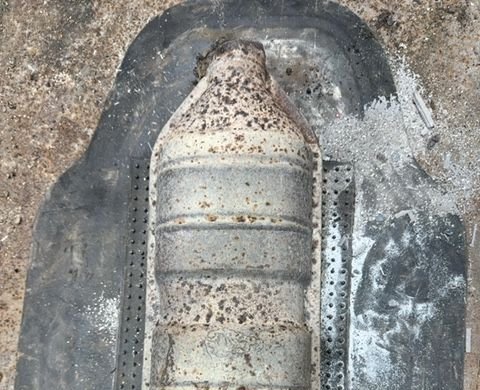
Rhodium Costs More Per Ounce Than Gold — Here's Why That Makes Your Old Cat Worth Real Money
Most scrap sellers focus on the converter sitting on the garage floor. They don't think about what's actually inside it. That's a mistake. The precious metals packed into a catalytic converter — especially rhodium — are what drive scrap catalytic converter prices in Atlanta and everywhere else in the United States. If you're leaving that value on the table by calling one buyer and taking their number, you're doing it wrong.
Rhodium has traded at multiples of gold's spot price for years. It is rare, it is essential, and it does not get replaced easily. Understanding why rhodium commands the prices it does gives you real leverage when it's time to sell. Let's break it down.
What Rhodium Actually Does Inside a Catalytic Converter
A catalytic converter houses a ceramic or metallic substrate coated with a precise blend of platinum group metals (PGMs) — platinum, palladium, and rhodium. Each one plays a different role in the emissions control process. Rhodium handles one of the hardest chemical jobs: breaking down nitrogen oxides (NOx) into harmless nitrogen and oxygen.
NOx conversion is not optional. Federal emissions regulations require it, and no other element does the job as effectively at the temperatures and pressures inside an exhaust system. Automakers cannot simply swap rhodium out for something cheaper. That locked-in industrial demand, combined with extremely limited global mine supply concentrated in South Africa and Russia, is what keeps rhodium pricing elevated.
- Platinum — oxidizes carbon monoxide and unburned hydrocarbons
- Palladium — primarily handles hydrocarbon oxidation in gasoline engines
- Rhodium — the only commercially viable solution for NOx reduction at exhaust temperatures
Rhodium loading in a converter is typically the smallest by weight — fractions of a gram in many units — but it punches far above its weight in scrap value. When a smelter recovers and refines the PGM content from your cats, rhodium's contribution to the final payout is often disproportionately high relative to its physical quantity.
Why Scrap Cat Values Swing So Hard — And What That Means for Sellers
If you've ever wondered how much your catalytic converter is worth as scrap, the honest answer is: it depends on the day, the unit, and who's buying. PGM spot prices change daily. Rhodium, in particular, has historically shown some of the most dramatic price swings of any traded commodity. It is thinly traded compared to gold or silver, so shifts in industrial demand — new emissions standards, automotive production volumes, EV adoption curves — can move the market significantly.
As of November 2026, emissions regulations in the United States continue to pressure automakers toward stricter NOx thresholds on internal combustion vehicles. That sustained regulatory demand keeps PGM recovery commercially viable. Meanwhile, the hybrid and plug-in hybrid segments still require catalytic converters, and many legacy ICE vehicles continue generating scrap cats as they age out of service. The pipeline of material is real, and so is buyer appetite for quality inventory.
What this means practically: the spread between a low-ball offer from a single buyer and a competitive market rate can be significant on high-rhodium units like those from certain Toyota, BMW, and Porsche platforms. Getting one number and accepting it is exactly the wrong move in a market this volatile.
Cat Converter Prices in Atlanta — What Local Sellers Need to Know
Atlanta sits in the middle of a dense automotive corridor. Georgia has a large and active scrap ecosystem, and the metro area alone generates substantial converter volume from repair shops, auto recyclers, salvage yards, and fleet operators. That means there are buyers in the market — but it also means local pricing can vary widely depending on who you're talking to and how hungry they are that week.
Cat converter prices in Atlanta track national PGM spot markets, but your actual payout depends on a few more variables:
- Unit identification — Buyers need to know what they're buying. OEM part numbers, VINs, and photos matter. Vague descriptions get low-ball offers.
- Grade and condition — Cracked substrates, cored-out units, or aftermarket cats carry less PGM content and price accordingly.
- Volume and mix — A load of 20 mixed units gets priced differently than a sorted pallet of identified, high-grade converters.
- Who's in the room — One buyer with no competition has every incentive to offer less. Multiple buyers competing changes the dynamic entirely.
If you're selling catalytic converters in Georgia, the question isn't just what your cats are worth — it's whether you're getting that worth. That's where the process matters as much as the metal. To explore Atlanta scrap metal services that connect you with competitive buyers, it pays to understand your options before you pick up the phone.
The Catalytic Converter Auction Model — Why Competition Reveals Real Value
The traditional way to sell scrap cats hasn't changed much in decades. You call a contact, they give you a number, you take it or argue a little and usually take it. There's no transparency, no documented basis for the offer, and no way to know if another buyer would have paid more. For low-value loads it may not matter. For loads with real rhodium content, the gap can be meaningful.
The catalytic converter auction model flips that dynamic. Instead of approaching one buyer, your documented inventory goes in front of multiple vetted buyers simultaneously. They compete. The price discovery that happens in an auction environment reflects actual market demand — not what a single buyer thinks they can get away with offering that morning.
Platforms like SMASH let you get competitive bids for your scrap metal without the guesswork. SMASH brings a structured process to cat selling: photo documentation, serial and VIN tracking, inventory tools, and a buyer network that has already been vetted. No subscription fees. The platform earns when you earn — which means their incentive is aligned with yours. If you want to find the best scrap cat prices today, that alignment matters.
Documentation isn't just about looking professional. It directly affects offers. A buyer looking at clearly photographed, identified units with packing lists and provenance data has more confidence in the material. More confidence means tighter spreads and stronger bids. Ambiguity gets discounted every time.
High-Rhodium Units and How to Spot Them Before You Sell
Not all catalytic converters are equal. Rhodium loading varies significantly by vehicle make, model, year, and engine configuration. As a general rule, converters from European and Japanese luxury brands — BMW, Mercedes, Porsche, Lexus, Acura — tend to carry higher PGM loading than budget-tier domestic units. Diesel oxidation catalysts (DOCs) have a different PGM profile than three-way catalysts used in gasoline engines.
Some practical markers that suggest higher scrap value:
- OEM units from premium brands (not aftermarket replacements)
- Larger physical size — more substrate, potentially more coating
- Units from recent-model vehicles still meeting tight emissions standards
- Intact substrate with no visible cracking, coring, or rattling when shaken
- Factory-stamped part numbers that allow accurate database lookup
VIN lookup and OEM part number identification tools — the kind built into platforms like SMASH — take the guesswork out of this. When you know what you have, you negotiate from a position of knowledge. When you don't, buyers are happy to let you stay in the dark.
If you want to get a fair price for your scrap catalytic converters, identification is the first step. Selling a high-rhodium unit as an unknown general cat is one of the most common and expensive mistakes in this business.
Selling Scrap Cats in Atlanta — Your Next Step
Atlanta's scrap market is active, but activity doesn't guarantee good pricing. The sellers who consistently get the best returns are the ones who document their inventory, know what they have, and don't settle for a single offer on a load that deserves competition. Georgia's active automotive sector means there's no shortage of cats moving through the market — which makes differentiation more important, not less.
Whether you're a shop clearing a few converters or a yard managing regular loads, the process is the same. Identify your units. Document them properly. Put them in front of multiple qualified buyers. Read scrap catalytic converter guides to stay sharp on what's driving PGM markets and how to position your inventory before you sell.
Rhodium isn't going to stop being valuable. The vehicles still on the road, the emissions standards still tightening, and the limited global supply make sure of that. The question is whether you're capturing that value or leaving it for someone else. If you're ready to find out what your cats are actually worth in a competitive market, get a free quote at best-scrap-cat-prices.com — no guessing, no single-buyer pressure, just the number your material earns.
Disclaimer: Precious metal spot prices fluctuate daily. PGM values and scrap catalytic converter payouts change with market conditions. Always check current rates before selling.
Frequently Asked Questions
Q: Why is rhodium more valuable than gold in catalytic converters?
Rhodium's value comes from its unique chemistry and extreme scarcity. It is the only commercially practical element for reducing nitrogen oxides in vehicle exhaust at operating temperatures, and global mine supply is tightly concentrated in a small number of sources. That combination of locked-in industrial demand and limited supply keeps rhodium pricing elevated relative to gold and other precious metals.
Q: How much is my catalytic converter worth as scrap in Atlanta?
Scrap catalytic converter prices in Atlanta depend on the specific unit, its PGM content, current spot prices for platinum, palladium, and rhodium, and what buyers are willing to pay that day. High-grade OEM units from luxury vehicles can be worth significantly more than aftermarket or stripped units. Getting multiple competitive offers is the most reliable way to find out what your material is actually worth.
Q: What are the best catalytic converter buyers in Georgia?
The best catalytic converter buyers in Georgia are the ones competing for your material — not the ones with a take-it-or-leave-it number. Vetted buyer networks accessed through auction platforms tend to produce better price discovery than single-buyer cold calls. Documented, identified inventory attracts stronger offers regardless of which buyers you approach.
Q: Does a catalytic converter auction get me more money than selling direct?
An auction format puts competitive pressure on buyers, which can reveal pricing you wouldn't see from a single-buyer negotiation. There are no guarantees on outcomes, but more buyers competing for the same documented load is a fundamentally better price discovery mechanism than one phone call. Platforms like SMASH are built specifically to create that competitive environment for scrap cats and other metal loads.
Q: How do I identify high-rhodium catalytic converters before I sell?
Look for OEM units from premium European and Japanese brands, intact substrates without damage or coring, factory part numbers, and units from newer vehicles meeting tight emissions requirements. VIN lookup tools and OEM part number databases — available through platforms like SMASH — can give you a much clearer picture of a unit's value before you put it in front of buyers.
---Stay current on scrap metal market trends, PGM price movements, and industry news by following SMASH on LinkedIn.