Most sellers leave money on the table before the conversation even starts — not because their cat is worthless, but because bad photos kill the quote. If a buyer can't read your serial number, identify your substrate type, or assess condition from your images, they'll lowball you or pass entirely. Getting scrap catalytic converter prices in Flint that actually reflect what your units are worth starts with documentation — and documentation starts with your phone camera.
This guide breaks down exactly how to photograph your converters for maximum quote accuracy. Whether you're clearing out one unit from a trade-in or moving a pallet of mixed cats, these steps apply. Buyers on platforms like SMASH use these photos to compete for your load — the better the image, the sharper the bid.
---Why Your Photos Directly Affect Your Scrap Cat Value
Online quotes aren't guesswork — they're grounded in precious metal content, and precious metal content is identified through your serial number, the converter body type, and visible condition. A buyer looking at a blurry photo of a dirty substrate can't confidently price platinum, palladium, or rhodium content. So they discount. Every time. That discount comes directly out of your pocket.
Think about what a buyer actually needs to know:
- Which vehicle or OEM line this cat came from (serial/code)
- Whether the substrate is intact or damaged
- Whether the body is foiled, aftermarket, or direct-fit OEM
- Condition of the end caps and pipe connections
- Whether it's been cut or gutted
Every one of those questions gets answered by a good photo — or left unanswered by a bad one. Serious catalytic converter buyers in Michigan base their numbers on confidence. Give them confidence, and you get better numbers. It's that direct.
Platforms like SMASH are built around this logic. When your inventory is documented properly, vetted buyers compete for it. Competition is how price discovery actually works. You can find the best scrap cat prices today — but only if your photos give buyers something to work with.
---The 5 Essential Shots Every Catalytic Converter Listing Needs
You don't need a ring light or a DSLR. You need a steady hand, decent lighting, and a consistent process. Here's the exact shot list that gets quotes moving on a scrap metal auction platform like SMASH.
1. The Serial Number / End Code Shot
This is the most important photo you'll take. The serial number — stamped on the body or welded endcap — tells a buyer exactly what substrate blend they're dealing with. Without it, they're guessing. With it, they're pricing.
- Get within 6–8 inches of the stamp
- Use your phone's tap-to-focus feature — tap directly on the numbers
- Shoot in natural light or under a work light (avoid flash, which washes out stamped text)
- If the serial is dirty, wipe it with a rag before shooting
- Take 2–3 shots and keep the sharpest one
Illegible serial numbers are the single biggest reason online quotes stall. Even on partial reads, a buyer might ask for clarification before committing to a number. A clean, readable serial shot eliminates that friction entirely.
2. The Full Body Shot (Both Sides)
Shoot the converter lying flat — one image of each side. This tells the buyer the body style, confirms it's not aftermarket (which often carries lower precious metal loads), and shows the overall physical condition. Dents, welds, cuts, and rust all affect pricing and should be visible, not hidden.
Hold the camera level with the converter, not above it. An aerial shot compresses the profile and misses key details on the pipe ends. Two clean side-profile shots take 30 seconds and answer most of the structural questions a buyer has.
3. The Substrate / Honeycomb Shot
If your converter has open ends, photograph the substrate face directly. A buyer wants to see whether the honeycomb is intact, cracked, or blown out. Intact substrate means full precious metal content. Damaged substrate means reduced recoverable material — which affects your catalytic converter scrap metal price.
- Shoot straight-on into the opening — don't angle the camera
- Use a flashlight or phone torch to illuminate the interior if needed
- If both ends are accessible, photograph both
4. The End Cap and Pipe Connection Shot
Buyers check whether end caps are foil-wrapped (often indicating a lower-grade aftermarket unit) and whether the flanges or pipes have been cut cleanly or hacked off. This matters for both pricing and logistics — a converter with cleanly cut pipes is easier to process.
Shoot each end cap from a 45-degree angle so the buyer can see the seam between the cap and body. This shot takes 10 seconds and removes ambiguity around unit type.
5. The Full Load / Pallet Shot
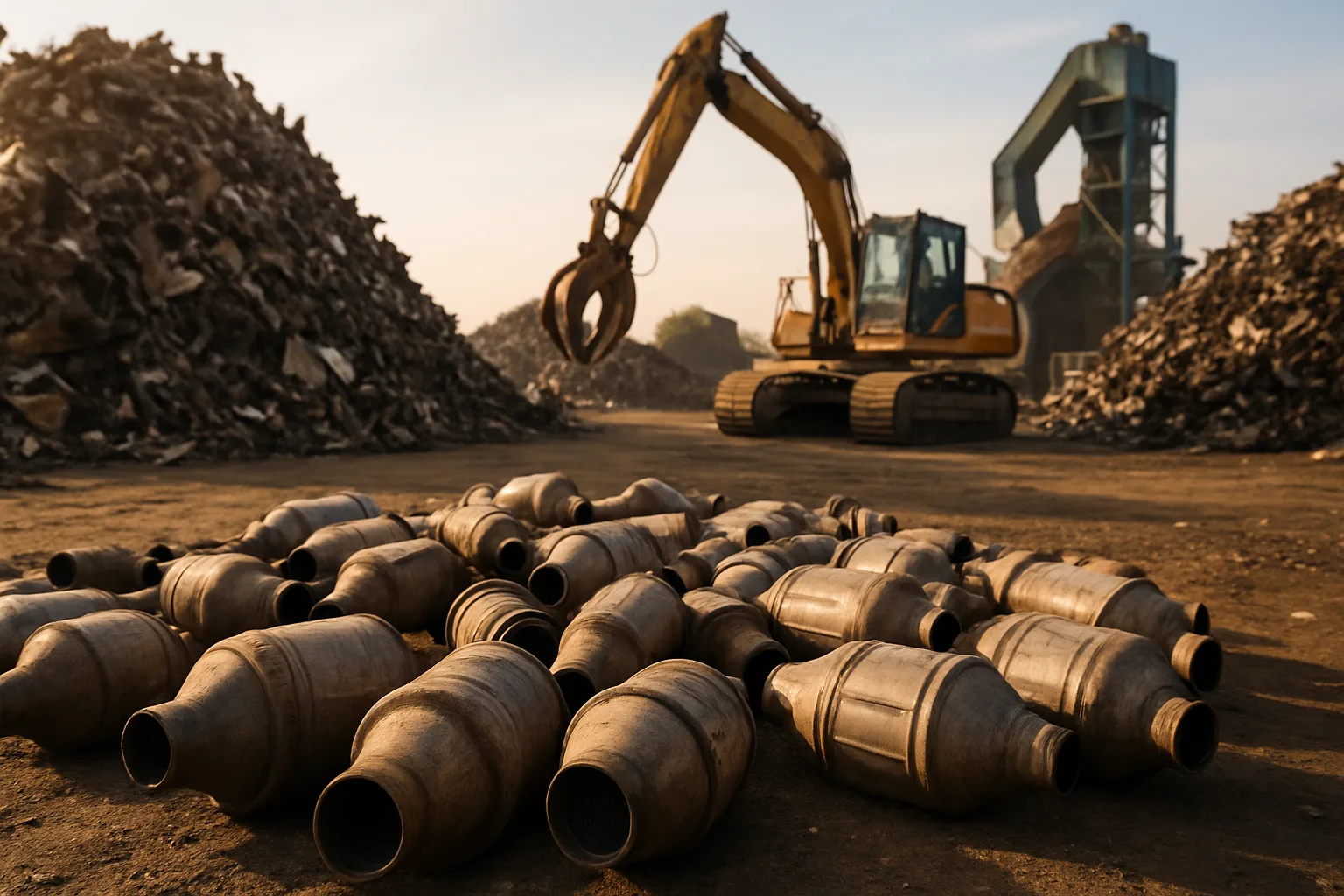
If you're selling multiple units, include at least one wide shot of the entire lot. Lay them out on a flat surface — a workbench or clean floor — and photograph from above. This confirms quantity and gives the buyer a visual tally before they dig into the individual unit photos.
For larger loads moving through Flint or anywhere in Michigan, this overview shot also helps with BOL documentation and packing list confirmation when the load ships.
---Lighting, Background, and Common Mistakes That Kill Your Quote
The mechanics of photography matter, but so does your setup. A good serial number shot taken against a cluttered background with shadows across the stamp is still a bad photo. These quick fixes cost you nothing and improve your quote accuracy immediately.
Lighting: Overcast outdoor light is ideal — no harsh shadows, no glare. Inside, position your converter near a window or under a direct work light. Avoid ceiling fluorescents from a distance — they create uneven shadows across stamped text.
Background: Place converters on a clean surface — concrete, plywood, or a shop mat. Avoid shooting in a pile. Each unit should be photographed individually if possible, or at minimum separated enough that the buyer can distinguish units in the load shot.
Common mistakes to avoid:
- Shooting through a dirty car windshield or from a distance with zoom
- Using nighttime phone flash as your only light source
- Photographing the converter still attached to the vehicle (serial often inaccessible)
- Sending only one photo and expecting a full quote
- Cropping out the end caps to "save space"
If you're newer to selling scrap cats and want to understand what buyers look for at each step, read scrap catalytic converter guides that walk through the full process — from identification to payout.
---How to Match Photos to the Right Buyer Using a Scrap Metal Auction Platform
Taking great photos is step one. Step two is getting those photos in front of the right buyers — and that's where most local sellers in Flint leave real money behind. Calling one buyer, texting a photo, and waiting for a callback is the old way. It's one bid, one number, no competition.
SMASH changes that. When you document your load properly and submit it through a platform like SMASH, vetted buyers across the region see your listing and bid against each other. More buyers means better price discovery. Your documented substrate shot, your clean serial read, your full pallet photo — all of it becomes the basis for competitive bids, not a single buyer's take-it-or-leave-it number.
This is especially relevant for sellers in Flint, Michigan, where the local market can be limited to a handful of buyers. A scrap metal auction platform expands your reach without requiring you to manage individual relationships with a dozen different buyers. SMASH handles the vetting, the bidding, and the transaction documentation — including auto-invoicing and packing list generation. You submit clean photos. Buyers compete. You get a real number.
Ready to see what your cats are actually worth? Get a fair price for your scrap catalytic converters by starting with properly documented photos and letting competition do the rest.
---Organizing and Submitting Your Photos for Maximum Quote Accuracy
Even the best individual photos lose impact if they're disorganized. Buyers reviewing a 40-photo submission with no structure will miss details or give up. A little organization goes a long way — especially when you're moving volume.
Here's a simple system that works:
- Number each unit physically — use chalk or a marker on the converter body before shooting. This ties your photos to your own inventory records.
- Create a folder per unit — even on your phone, group photos by converter so you can upload them cleanly.
- Name your files clearly — "Unit-01-Serial.jpg" and "Unit-01-Body-Left.jpg" beats "IMG_4837.jpg" every time.
- Include a reference photo — if you know the vehicle the cat came from, include a VIN shot or vehicle info. Many platforms, including SMASH, support VIN lookup that ties converter identity to the source vehicle.
- Note any known damage in writing — don't hide it. Buyers discount more aggressively when they feel surprised by damage on delivery. Disclosed damage is priced in; surprise damage causes disputes.
For anyone asking how much is my catalytic converter worth scrap by reg — your regional pricing is going to be based on the same platinum group metal (PGM) content regardless of where you are. But your ability to capture that full value depends entirely on giving buyers the information they need to price confidently. Photo quality is the lever you control.
If you're in the Flint area and moving cats regularly, building a clean photo documentation process into your standard workflow will compound over time. Better photos, better bids, faster transactions — every time.
You can explore competitive cat converter prices in Flint and across Michigan by visiting smashscrap.com to learn how the auction model works for scrap cat sellers at any volume.
---Frequently Asked Questions
Q: How many photos do I need for an accurate scrap catalytic converter quote in Flint?
At minimum, submit 4–5 photos per unit: the serial number, both sides of the body, the substrate face, and at least one end cap. For multi-unit loads in Flint or anywhere in Michigan, include a full pallet or lot overview shot so buyers can confirm quantity at a glance.
Q: Can I get a scrap cat quote if the serial number is worn or missing?
Yes, but your quote may be less precise. If the serial is illegible, submit the clearest photo you can along with close-ups of the body shape, size, and any visible markings. Experienced catalytic converter buyers in Michigan can sometimes identify units by body type and dimensions, but a readable serial will always get you a sharper number.
Q: Does a damaged substrate affect my catalytic converter scrap metal price?
Yes, significantly. The precious metals — platinum, palladium, and rhodium — are carried in the substrate honeycomb. A cracked or partially blown-out substrate means less recoverable material, which lowers the offered price. Always photograph the substrate honestly. Buyers discover damage at processing and adjust payouts regardless.
Q: How do I know if my converter is aftermarket or OEM, and does it matter for pricing?
OEM converters typically carry higher PGM content than aftermarket units, which affects your scrap cat value. Key visual indicators of aftermarket units include foil-wrapped end caps, lighter body weight, and absence of an OEM serial format. If you're unsure, photograph everything clearly and let the buyer identify it — that's exactly what a platform like SMASH is set up to handle.
Q: Are scrap catalytic converter prices in Flint different from other Michigan cities?
The underlying PGM spot prices are the same everywhere — your converter's value is driven by its metal content, not your zip code. What varies is buyer access and competition. Sellers in Flint who use a scrap metal auction platform like SMASH can access buyers across the region and country, which creates more competition than any single local buyer can provide.
---If you're ready to stop guessing and start getting real competitive numbers, the first step is in your hands — literally. Take the right photos, document your load properly, and let vetted buyers compete for your cats. That's how you stop leaving money on the table. Find the best scrap cat prices and get a free quote at best-scrap-cat-prices.com.
Disclaimer: Catalytic converter scrap prices fluctuate based on platinum, palladium, and rhodium spot prices. Always check current market rates before finalizing any transaction.
For ongoing scrap metal market insights and industry updates, follow SMASH on LinkedIn — it's worth the follow if you move cats for a living.