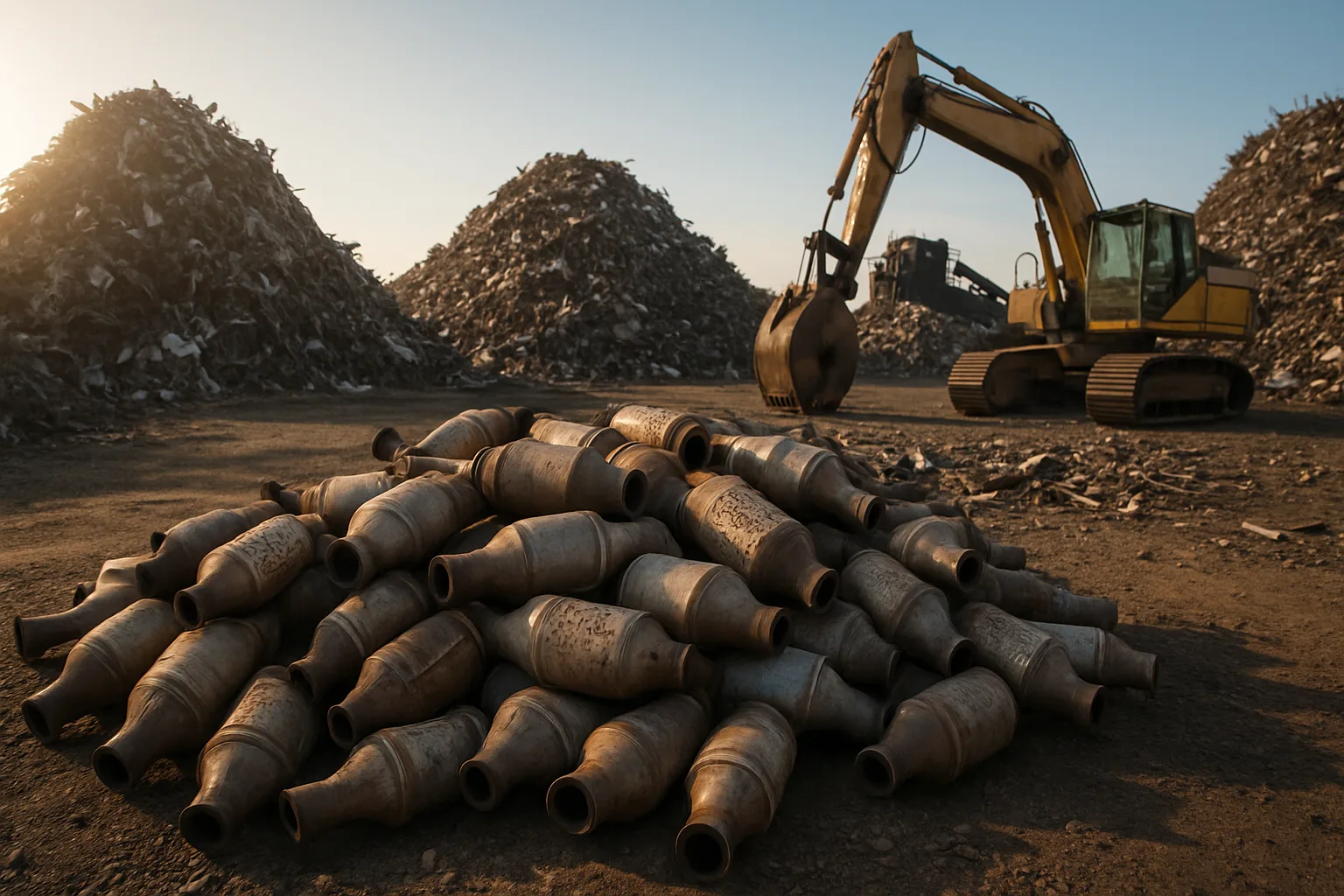
Most sellers focus on the check. That makes sense. But here's what often gets overlooked: every catalytic converter you recycle keeps a significant volume of toxic material out of landfills and puts rare precious metals back into the supply chain. The OEM catalytic converter value isn't just a dollar figure — it reflects a genuine environmental story. Platinum, palladium, and rhodium don't grow on trees. Recovering them from spent converters reduces the need for new mining, which is one of the most resource-intensive industrial processes on the planet.
If you're sitting on a pile of used cats in Tucson, you're holding more than scrap. You're holding recyclable material that has real downstream value — environmental and financial. This piece breaks down both sides of that equation, and explains how to make sure you're capturing the full value instead of leaving money on the table.
---What Makes Catalytic Converters So Environmentally Significant
A catalytic converter's job is to reduce harmful exhaust emissions — converting carbon monoxide, nitrogen oxides, and hydrocarbons into less harmful compounds before they leave the tailpipe. That function is well understood. What's less talked about is what happens at end-of-life.
Inside every cat is a ceramic or metallic substrate coated with platinum group metals (PGMs): platinum, palladium, and rhodium. These metals are extraordinarily rare. Global production of rhodium, for example, is measured in the low tens of tonnes annually. Recycling converters recovers these metals without the carbon footprint of new mining operations in South Africa, Russia, or Zimbabwe. When converters end up in landfills — or get crushed before anyone extracts the substrate — those materials are gone. That's a loss for the environment and a loss for your bottom line.
- Platinum: Used in diesel converter substrates; recovered platinum re-enters the industrial catalyst and jewelry supply chains.
- Palladium: Dominant in gasoline converter substrates; demand from automotive manufacturers and electronics keeps recovery values strong.
- Rhodium: Present in smaller quantities but historically the highest-value PGM per troy ounce — small amounts mean large price swings.
Proper recycling channels those metals back into productive use. Improper handling — crushing, landfilling, or selling to unlicensed buyers — wastes them. Arizona's heat and dry storage conditions can degrade substrates faster than some other climates, which is another reason Tucson yards need to move converters through proper channels quickly and document what they have.
---OEM Catalytic Converter Value in 2026: What Drives the Price
Understanding OEM catalytic converter value starts with understanding what you actually have. OEM converters — factory-installed units from the original manufacturer — generally contain higher and more consistent PGM loading than aftermarket replacements. That makes them more valuable to refiners and, by extension, to buyers in competitive markets.
Several factors drive the scrap cat value of any given unit in 2026:
- Vehicle make and model: A converter from a late-model truck or SUV will typically contain more PGMs than one from a small economy sedan. Luxury and performance vehicles often run higher-spec converters.
- Substrate condition: A cracked, rattling, or melt-damaged substrate means reduced PGM content. Converters that have been overheated or physically damaged pay less.
- Current PGM spot prices: Palladium and rhodium prices fluctuate with automotive production rates, EV adoption curves, and macroeconomic conditions. What you get today may differ from what you get next month.
- Buyer competition: A single buyer quoting you one price is not the same as five buyers competing for your load. Competition drives price discovery — that's basic economics, and it applies directly to scrap cat markets.
If you're trying to figure out catalytic converter prices today in Arizona, the honest answer is: it depends on what you have, and it depends on who's buying. One phone call to one buyer is not a market. It's a starting point at best.
For accurate pricing on your specific converters, find the best scrap cat prices today by getting a quote based on your actual inventory — not a generic posted rate.
---The Problem With Single-Buyer Transactions
Here's how most scrap cat sales still happen in 2026: a yard operator calls one buyer, gets a price, and takes it or hauls the load somewhere else and tries again. There's no documentation, no competitive tension, no way to know if the price offered reflects the actual market. You're guessing, and the buyer knows it.
That approach might have been acceptable when PGM prices were low and loads were small. It doesn't hold up when rhodium spikes, or when you're moving a significant volume of OEM cats and need to know you're not leaving thousands of dollars on the table. Tucson yards that deal in high-volume non-ferrous material understand this problem — you can't run a serious operation on verbal quotes and handshake deals.
The answer is documentation and competition. Know what you have. Know what it's worth. Put it in front of multiple vetted buyers. That's how the SMASH scrap metal auction marketplace is built — not as a subscription service, but as a platform that only makes money when you make money. No subscription fees. Buyers compete. Price discovery happens. You make a better-informed decision.
If you're looking for Tucson scrap metal services that connect you to real buyer competition, Tucson scrap metal services are available through the SMASH network — vetted buyers, documented loads, transparent process.
---How Proper Documentation Improves Both Compliance and Scrap Cat Value
Arizona has enforcement history around catalytic converter theft, and that has pushed legitimate recyclers to document their purchases more carefully. Proper documentation isn't just a legal protection — it's a selling advantage. Buyers on competitive platforms pay more for documented loads because they carry lower risk. An undocumented load creates exposure for both parties.
When you use a platform like SMASH, documentation is built into the process. Photo documentation, serial tracking, VIN lookup — these aren't optional extras. They're the difference between a buyer trusting your load enough to bid aggressively and a buyer discounting their offer to account for uncertainty.
From an environmental standpoint, documentation also supports proper chain-of-custody reporting. Some larger buyers and refiners require compliance records as part of their own ESG obligations. If you can't show where the material came from and how it was handled, you may be excluded from those markets entirely — regardless of price.
- Photo each unit before it ships.
- Record serial numbers or identifying markings where visible.
- Use VIN lookup tools when cats are still attached to vehicles being crushed.
- Keep purchase records that satisfy your state's secondary metals dealer requirements.
Sloppy records cost you buyers. Clean records open more of them. Read scrap catalytic converter guides to understand what documentation practices experienced yards use to protect their operations and their margins.
---Finding a Reliable Cat Converter Buyer in the Tucson Market
Tucson sits in a region with active scrap metal movement — proximity to the border, a mix of industrial and consumer vehicle turnover, and a recycling ecosystem that handles both ferrous and non-ferrous material at meaningful volumes. Finding a reliable cat converter buyer in that environment means looking beyond the first number someone quotes you.
What makes a buyer reliable? A few things matter more than price alone:
- Vetting: Do they have a track record? Are they licensed? Can they handle your volume?
- Payment terms: How fast do they pay? Is it net 30, net 15, or same-day? Cash flow matters for yard operations.
- Transparency: Do they show you the assay? Do they explain how they're pricing your material?
- Competition: Are you getting their best price, or their opening offer?
SMASH connects sellers with vetted buyers who have already passed screening. You're not cold-calling strangers or relying on word-of-mouth. The auction format means the market tells you what your load is worth — not one buyer's margin calculation. If you want to get a fair price for your scrap catalytic converters, that starts with making sure more than one serious buyer sees what you have.
For yards across Arizona handling regular volumes of OEM cats, the difference between a single-buyer relationship and a competitive auction isn't just convenience — it's material to the bottom line over the course of a year.
---Recycling the Right Way: Environmental Responsibility Meets Market Value
The scrap cat market and environmental responsibility aren't competing priorities. They're the same priority. When you recycle converters properly — documented, through vetted buyers, via channels that actually process the substrate and recover the PGMs — you're doing the environmental work and capturing the financial value. When cats get crushed without substrate recovery, or get landfilled, or move through gray-market channels, nobody wins: not the environment, not the seller, not the legitimate buyer ecosystem.
Tucson yards that operate with a long-term view understand this. Regulatory scrutiny on catalytic converter recycling has increased across Arizona and nationally. Operating transparently, using documentation tools, and working with buyers who operate above board isn't just good ethics — it's good risk management.
SMASH is built for that kind of operation. Serious yards. Vetted buyers. No shortcuts. The platform handles auto-invoicing and documentation so the administrative burden doesn't fall entirely on your team. You focus on the material; the system handles the paperwork trail.
If you're ready to stop guessing at catalytic converter scrap price near me and start getting real market feedback on your inventory, the tools are available. Use them.
Find the best scrap cat prices for your next load — get a free quote at best-scrap-cat-prices.com and see what competitive pricing actually looks like for your material.
---Frequently Asked Questions
Q: What is OEM catalytic converter value, and why does it matter when selling scrap cats?
OEM catalytic converter value refers to the worth of factory-installed converters based on their precious metal content — platinum, palladium, and rhodium. OEM units typically contain higher and more consistent PGM loadings than aftermarket replacements, which makes them more attractive to refiners and competitive buyers. Knowing whether you have OEM or aftermarket units helps you set realistic price expectations and ensures you're targeting the right buyer network.
Q: How do catalytic converter prices today change, and how often should I check them?
Catalytic converter prices fluctuate with PGM spot prices, which can move significantly week to week based on automotive production volumes, currency shifts, and commodity market conditions. In an active market like 2026, it's worth checking current rates before any significant transaction rather than relying on prices you saw a month ago. Platforms like SMASH help surface real market pricing through buyer competition rather than static posted rates.
Q: Is it worth recycling catalytic converters properly in Tucson, or should I just crush them with the vehicle?
Recycling converters separately before crushing is almost always the better financial and environmental decision. Crushing a vehicle with the converter still attached means the substrate — where all the PGM value lives — gets destroyed and cannot be recovered. Tucson yards that remove and document converters before processing capture that value and contribute to legitimate PGM recycling supply chains.
Q: What is a B2B scrap metal marketplace, and is it right for my catalytic converter loads?
A B2B scrap metal marketplace connects verified sellers with vetted industrial buyers — it's not a consumer app or a classified listing. For yards selling catalytic converters in volume, a marketplace like SMASH creates competitive bidding on documented loads, which generally results in better price discovery than single-buyer phone negotiations. It's designed for operations that need reliable buyers, clean transactions, and documented pricing.
Q: How does documentation affect what I get paid for scrap catalytic converters in Arizona?
Documentation directly affects buyer confidence, and buyer confidence affects what they're willing to bid. A well-documented load — with photos, serial tracking, and compliant purchase records — carries lower risk for buyers and often commands stronger offers on competitive platforms. Arizona's regulatory environment around secondary metals also means proper documentation protects you from compliance exposure, which is a cost most yards don't fully price in until there's a problem.
---Disclaimer: Catalytic converter scrap prices fluctuate based on PGM spot prices and market conditions. Always check current rates before completing a transaction. The figures and ranges referenced in this article reflect general market context for July 2026 and are not guaranteed pricing.
Stay current on scrap metal market movements and industry insights — follow SMASH on LinkedIn for regular updates from inside the recycling industry.