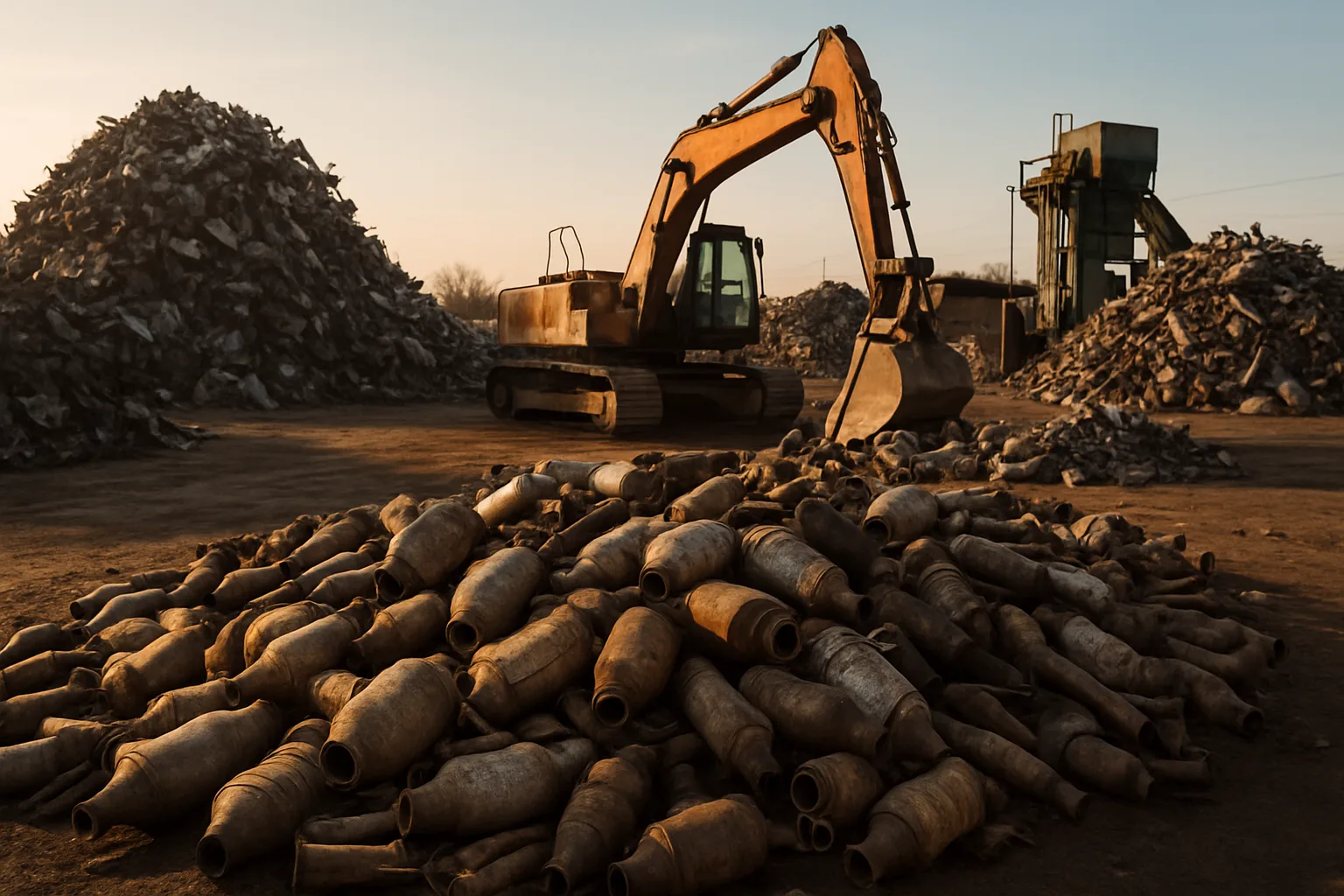
Most people selling a used catalytic converter are thinking about one thing: what's it worth? That's fair. But there's a bigger picture here — one that connects your scrap cat value directly to a global recycling chain that keeps millions of tons of toxic waste out of landfills every year. Understanding that chain doesn't just make you a more informed seller. It can actually help you get better prices.
If you're in Memphis or anywhere across Tennessee, the converters sitting in your yard or shop represent both real money and real environmental value. The two aren't separate. Knowing why proper recycling matters — and how the pricing system works — puts you in a stronger position when it's time to sell.
Why Catalytic Converters Are One of the Most Valuable Scrap Items on the Planet
A catalytic converter doesn't look like much from the outside. But inside that steel shell sits a ceramic or metallic substrate coated with platinum group metals — platinum, palladium, and rhodium. These are among the rarest and most expensive materials on Earth. Rhodium alone has traded at prices that dwarf gold. Even at more moderate market levels, a single converter can carry meaningful scrap value depending on the vehicle it came from.
That precious metal content is exactly why catalytic converter scrap value fluctuates with the commodities market. When palladium prices spike, so do payouts for certain converter types. When rhodium pulls back, grades that are heavy in rhodium see softer pricing. This is why a catalytic converter price list with pictures is only useful as a general reference — actual payouts depend on live metal prices and the specific assay of your units.
Here's what this means practically:
- Converters from diesel vehicles tend to carry different PGM profiles than those from gas engines.
- High-end vehicles — certain trucks, performance cars, and SUVs — often contain significantly more precious metal than economy cars.
- Aftermarket converters are almost always worth less than OEM units.
- Damaged or hollowed-out cats lose most of their scrap value immediately.
Understanding these variables is step one. Step two is finding a buyer who prices your load accurately and competitively — not just conveniently.
The Environmental Case for Proper Catalytic Converter Recycling
This is where the story gets bigger than just the sale. Catalytic converters serve a critical emissions-control function while they're on the vehicle. Once removed, they still carry environmental significance — just in a different direction.
The platinum group metals inside converters are not renewable. Mining them is energy-intensive, disruptive to local ecosystems, and concentrated in a handful of countries globally. South Africa alone accounts for roughly 70% of global platinum production. Every converter that gets properly recycled reduces the demand pressure on primary mining. That's not a marketing claim — it's basic supply chain logic.
Improper disposal creates a separate set of problems. Converters that end up in general waste streams can leach heavy metals into soil and groundwater. The ceramic substrate, if crushed and left exposed, poses particulate hazards. Smelting operations that aren't equipped to handle these materials can release harmful byproducts. Proper recycling channels route converters to licensed processors who handle the material safely and extract PGMs with minimal waste.
In Tennessee and across the broader U.S., environmental standards for scrap processing have tightened in recent years. Reputable buyers and processors operate within those standards — and they tend to pay better because they're working with clean, documented material that integrates smoothly into the downstream supply chain.
Cat Converter Prices in Memphis: What Affects Your Payout
If you're looking for cat converter prices Memphis sellers can actually count on, the answer starts with knowing what drives the number. Memphis is a major logistics and industrial hub. There's real buyer activity here, and sellers who know their material have leverage.
Several factors directly affect what you'll receive:
- PGM content: The amount of platinum, palladium, and rhodium in your specific unit. This varies by make, model, year, and engine type.
- Physical condition: Intact substrate, no damage, no hollow core. Buyers discount heavily for compromised units.
- Quantity: Larger loads attract more serious buyers. A single cat gets you one call. A pallet of sorted units gets you competition.
- Documentation: Serial numbers, photos, vehicle source info. Documented inventory moves faster and sometimes at better prices.
- Buyer pool: If you're calling one buyer, you're getting one price. That's not a market — that's a take-it-or-leave-it.
That last point matters more than most sellers realize. Memphis has scrap buyers, but the question is whether you're reaching all of them — or just the most convenient one. Platforms like North America's B2B scrap metal auction platform exist specifically to solve this problem by putting your inventory in front of vetted buyers who compete for the load.
For Memphis sellers ready to stop guessing, you can find the best scrap cat prices today by using a service built around price discovery rather than price-taking.
How Documented Inventory Supports Both Better Prices and Environmental Compliance
There's a direct connection between proper documentation and better environmental outcomes — and it also happens to help your bottom line. When you document your converters with photos, serial numbers, and sourcing information, you're building a chain of custody. That matters to buyers. It also matters to regulators.
Several U.S. states have tightened record-keeping requirements for catalytic converter purchases in recent years, largely in response to theft concerns. Tennessee has not been immune to those legislative conversations. Sellers who come to the table with clean documentation are easier to work with, create less legal exposure for buyers, and often get better terms as a result.
From an environmental standpoint, documented material flows more smoothly through licensed recycling channels. When a processor knows the source and condition of a load, they can route it more efficiently to the right smelter or refiner. That reduces handling errors, minimizes waste, and keeps the recycling chain intact.
SMASH builds this documentation into the process. Photo uploads, serial tracking, VIN lookup where applicable — these aren't just administrative features. They're what separates a credible load from a question mark. If you want to get a fair price for your scrap catalytic converters, showing up with documented inventory is one of the most straightforward ways to support that outcome.
Want to go deeper on how the documentation and selling process works? Read scrap catalytic converter guides that walk through the specifics.
What the Scrap Industry Is Getting Right — and Where Gaps Remain
The scrap metal recycling industry handles hundreds of millions of tons of material annually across North America. Catalytic converters represent a small slice by volume but a significant slice by value and environmental complexity. The industry has improved substantially in how it processes and accounts for PGM-bearing material.
Legitimate processors now use assay-based pricing rather than flat-rate guessing, which means your payout reflects actual metal content rather than a buyer's margin assumption. Smelting and refining operations for PGMs are highly specialized and generally operate under strict environmental controls. The recycled PGMs that come out of that process re-enter the manufacturing supply chain — ending up in new catalysts, electronics, and industrial applications.
Where gaps remain is at the front end of the chain: sellers who don't know their material, buyers who take advantage of that, and informal channels that bypass proper documentation and processing entirely. That's where environmental and economic harm happens together.
For sellers in Memphis accessing Memphis scrap metal services, the best protection against both problems is working with platforms and buyers who operate transparently. SMASH connects sellers to vetted buyers — not anonymous cash buyers with no accountability, but buyers who operate within documented, competitive market structures.
Selling Smart: What Memphis Sellers Should Do Before Their Next Load
If you're sitting on converters — whether it's a handful from a shop or a sorted load from a yard — here's a practical approach before you sell:
- Sort by type. Separate domestic from foreign, diesel from gas, OEM from aftermarket. Sorted loads get better pricing than mixed loads.
- Document everything. Photos, serial numbers, vehicle source if you have it. Takes 20 minutes. Can make a real difference in what you're offered.
- Don't call one buyer. One call gives you one number. That number is almost never the best available. Create competition.
- Check current metal prices. PGM prices shift. A load that seemed average last week might be worth more this week depending on market moves.
- Work with platforms that verify buyers. Not every buyer who calls themselves a buyer is legitimate. Vetted networks protect you.
Tennessee sellers have real options. Memphis has the logistics infrastructure and buyer activity to support competitive pricing — but only if you're reaching the right buyers with a well-documented load.
Disclaimer: Catalytic converter prices fluctuate with precious metal markets. Always check current rates before finalizing any transaction. The information in this article reflects general market dynamics as of July 2026 and is not a guarantee of specific pricing outcomes.
If you're ready to stop leaving money on the table, the next step is simple. Get your load sorted, get it documented, and get a free quote at best-scrap-cat-prices.com. The market is moving — and documented, sorted loads in Memphis have real buyers waiting.
Frequently Asked Questions
Q: What makes catalytic converter recycling environmentally important?
Catalytic converters contain platinum group metals — platinum, palladium, and rhodium — that are extremely rare and energy-intensive to mine. Recycling them reduces pressure on primary mining operations and keeps hazardous materials out of landfills. Every properly recycled converter puts recovered PGMs back into the manufacturing supply chain, reducing the need for new extraction.
Q: How are cat converter prices in Memphis determined?
Prices are driven by the precious metal content of each specific unit, current PGM commodity prices, the physical condition of the converter, and the competitiveness of the buyer pool you're reaching. A single buyer gives you one price. Multiple vetted buyers competing for your load gives you a market price.
Q: Does documentation really affect what I get paid for my scrap cats?
Yes, in two ways. First, documented loads are easier for buyers to evaluate and move through their own compliance processes, which can translate to better offers. Second, in states including Tennessee, record-keeping requirements for converter purchases have become more stringent — buyers prefer sellers who come prepared with sourcing information and photos.
Q: What's the difference between OEM and aftermarket catalytic converter scrap value?
OEM (original equipment manufacturer) converters typically contain more precious metal than aftermarket replacements, which are engineered to meet minimum emissions standards rather than maximize PGM loading. As a result, aftermarket units almost always carry lower scrap value. Sorting OEM from aftermarket before selling helps ensure you're not getting an averaged-down price on your better units.
Q: How often do cat converter prices change?
Prices can shift weekly or even daily, driven by movements in platinum, palladium, and rhodium spot prices on global commodity markets. This is why any static catalytic converter price list with pictures is only a general reference point — always check current rates before committing to a sale, and use platforms that price based on live market data rather than fixed schedules.
Stay current on scrap metal market movements and industry updates by following SMASH on LinkedIn — practical insights for yards and sellers who want to stay ahead of the market.