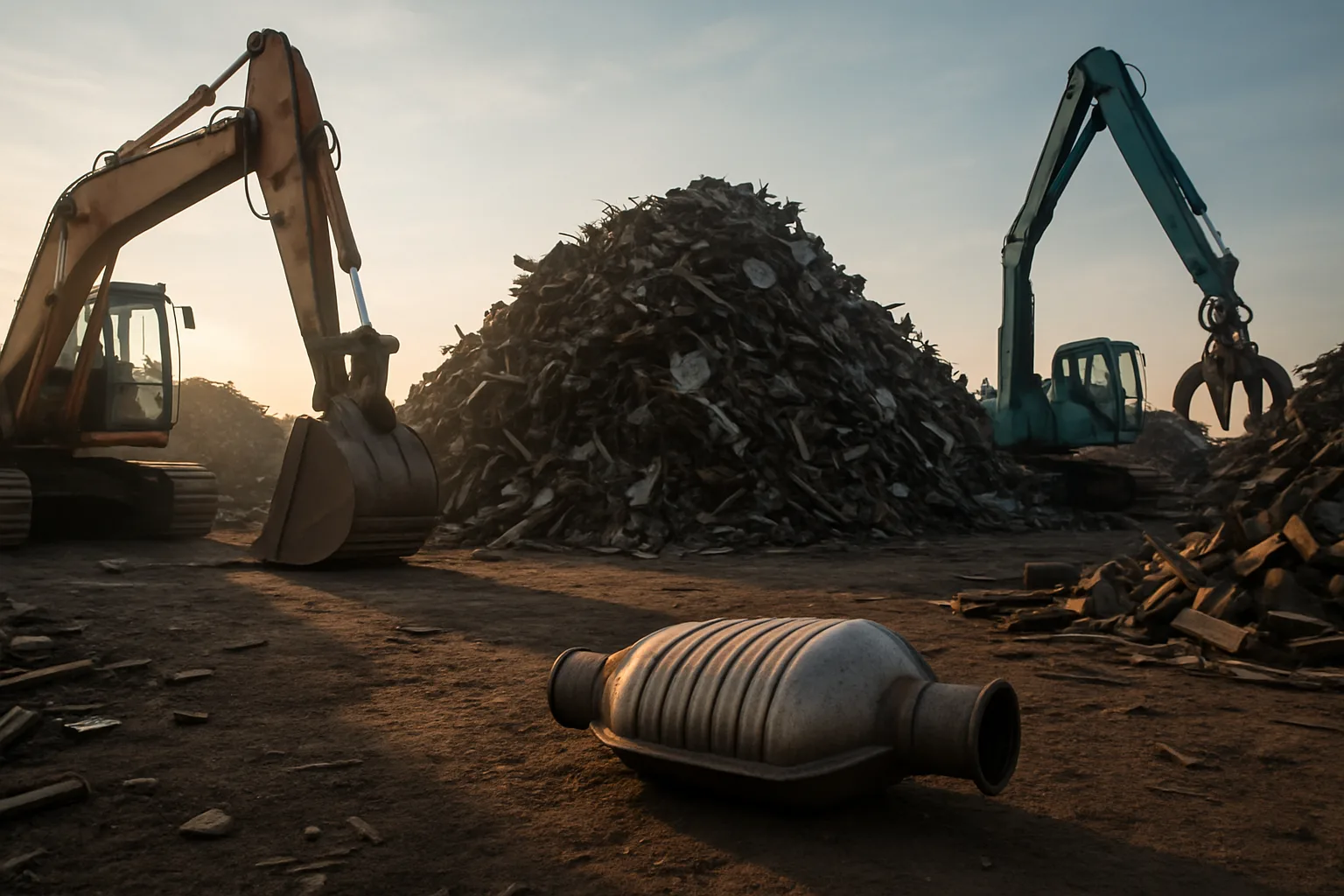
Why Tighter Emissions Rules Are Pushing Catalytic Converter Scrap Value Higher in 2026
Most scrap yards talk about precious metal spot prices. Fewer talk about the force quietly driving long-term demand for those metals — government emissions regulations. If you're sitting on a pile of spent converters in Gary, Indiana, and wondering why cat converter prices Gary keep getting more attention from buyers, here's the real story.
Platinum, palladium, and rhodium — the three precious metals packed inside every catalytic converter — exist in your scrap pile because regulators worldwide keep raising the bar on vehicle exhaust standards. That pressure hasn't eased in 2026. It's intensified. And that has a direct effect on your catalytic converter scrap value when it's time to sell.
This isn't a story about luck. It's about understanding the market forces that put money in your pocket — and how to position yourself to capture that value instead of leaving it on the table. If you want to find the best scrap cat prices today, understanding why demand exists is the first step.
How Emissions Regulations Drive Platinum Group Metal Demand
Every time a government tightens vehicle emissions standards, automakers face a choice: reduce engine-out pollutants mechanically, or clean them up chemically. In nearly every case, the chemistry wins. That means a more sophisticated catalytic converter — and more platinum group metals (PGMs) per unit.
In the United States, federal and state-level tailpipe standards have continued tightening through 2026. The EPA's current light-duty emissions framework demands lower thresholds for nitrogen oxides (NOx) and hydrocarbons than standards even five years ago. Heavy-duty truck regulations have followed suit. Each of those vehicles requires a converter loaded with PGMs to meet compliance.
Here's what that means for scrap:
- Newer vehicles contain more PGM loading per converter than older models built to less demanding standards.
- High-demand PGMs like rhodium have seen volatile but elevated pricing tied directly to emissions compliance demand from automakers.
- Electric vehicle growth hasn't killed converter demand yet — the ICE fleet still dominates the road, and those vehicles all need functional catalysts.
- Recycling is the primary secondary source of PGMs — mines can't ramp up fast enough to meet demand alone, which keeps scrap value strong.
For yards in Gary and across Indiana, this is directly relevant. The industrial and transportation mix in Northwest Indiana — including freight corridors and commercial fleets — means a steady pipeline of high-mileage, high-PGM-content converters cycling through the market.
Gary, Indiana: A Real-World Look at Scrap Cat Market Conditions
Gary sits in the middle of one of the most active scrap corridors in the Midwest. Steel heritage, dense transportation infrastructure, and proximity to Chicago create conditions where scrap metal recycling — including catalytic converters — moves at serious volume. Yards here aren't processing a converter or two a week. They're processing loads.
That volume creates both opportunity and risk. Opportunity because buyers pay attention to consistent, documented supply. Risk because selling through a single buyer with no competitive pressure means you have no idea whether the number they quoted is the market or just their margin.
Sellers in Gary who have moved from informal, call-around pricing to structured competitive processes describe a consistent pattern: they had been accepting prices they thought were fair because they had no reference point. When multiple buyers compete for the same documented load, the market price becomes visible in a way it never was on a single phone call.
That's not a guarantee of any specific outcome. But competition reveals the market. That's exactly what SMASH is built to do — bring multiple vetted buyers to your load so the price discovery happens in front of you, not behind closed doors. If you're already getting a fair price for your scrap catalytic converters, structured competition confirms it. If you're not, it fixes it.
Catalytic Converter Scrap Value: What PGM Loading Actually Means for Your Payout
Not every converter is worth the same. That's the most important thing a first-time seller needs to understand. The difference between a domestic unit from a compact car and a large-format converter from a diesel pickup or commercial vehicle can be significant — sometimes by multiples.
PGM loading — the actual grams of platinum, palladium, and rhodium inside the substrate — varies by:
- Vehicle make and model — certain manufacturers use higher loadings to meet stricter standards or as an engineering choice
- Engine size and type — larger displacement engines and diesel applications often carry more precious metal
- Emissions standard era — converters built to meet tighter regulations (post-2010, post-2018) tend to carry more PGM content
- Converter position — front or "direct fit" cats that sit closer to the engine often carry higher loadings than downstream units
- Condition of the substrate — a cracked or destroyed substrate reduces recoverable PGM content, which affects buyer bids
This is why photo documentation and serial number tracking matter so much when you're selling. A buyer looking at a photo of an intact, identifiable converter bids with more confidence than one guessing at what's inside a crate of mixed units. More confidence from the buyer means better pricing for you. Platforms like SMASH use serial tracking, VIN lookup, and photo documentation specifically to close that gap — for both sides of the transaction.
If you want to dig deeper into how these factors affect your bottom line, read scrap catalytic converter guides that break down the specifics by converter type and condition.
The Connection Between Regulations, Mining Supply, and Why Your Scrap Matters
Here's a fact that doesn't get enough attention in yard-level conversations: South Africa produces the vast majority of the world's platinum and rhodium. Russia dominates palladium supply. Both sources carry geopolitical and logistical risk. When supply from primary mining gets constrained — by labor action, sanctions, infrastructure issues, or export policy — secondary supply (your scrap) becomes more strategically important to refiners and processors.
This isn't hypothetical. The PGM recycling sector has grown significantly as a share of overall supply over the past decade, driven partly by that primary supply uncertainty and partly by emissions regulations expanding the installed base of PGM-bearing converters on the road.
What this means practically for a yard in Gary or anywhere in Indiana:
- Your scrap converters are feeding a global supply chain that refiners depend on.
- Buyers who pay well for your material aren't doing you a favor — they need your volume.
- Price discovery through competitive bidding gives you the leverage your position in that supply chain actually warrants.
You're not a small player begging for scraps from the top of the market. You're a supplier. Operate like one.
How to Get Competitive Bids for Your Scrap Cats in 2026
The old process — call your one buyer, take their number, load the truck — hasn't disappeared. Plenty of yards still operate that way. But the information gap that made that process the default is closing fast.
Structured auction platforms have made it possible for scrap cat sellers to reach multiple vetted buyers without building their own national buyer network. You document your inventory, upload photos and serials, and buyers compete. Auto-invoicing handles the paperwork. You see every bid. The process is transparent in a way the phone call never was.
For sellers in Gary looking for catalytic converter buyers near me open now, the answer increasingly isn't about geography — it's about reach. A buyer in Dallas or Detroit can bid on your Gary inventory if the platform connects you. Vetted buyers, competitive format, no subscription fee. That's the structure that reveals real market value.
To get competitive bids for your scrap metal, the process starts with documentation. Know what you have. Photograph it. Track serials where you can. Then let the market do the rest.
Disclaimer: Catalytic converter prices fluctuate based on precious metal spot prices, converter type, and market conditions. Always check current rates before selling.
Frequently Asked Questions
Q: What drives catalytic converter scrap value in Gary, Indiana?
PGM content — platinum, palladium, and rhodium — is the primary driver of catalytic converter scrap value everywhere, including Gary. Local market conditions also play a role: buyer competition, load volume, and how well the inventory is documented. More documented, more competitive the bid process, better the price discovery.
Q: How do emissions regulations affect cat converter prices in Gary and across Indiana?
Tighter emissions standards require automakers to load more precious metals into converters to meet compliance thresholds. That increases the PGM content in newer converters on the road, which eventually cycles into the scrap market. Higher PGM loading per unit means more recoverable value per converter when it reaches end of life.
Q: How do I know if I'm getting a fair scrap cat price?
The most reliable way to verify fair pricing is competitive bidding. A single buyer quote gives you one data point with no reference. Multiple vetted buyers bidding on the same documented load reveals the actual market price. If the bids cluster together, you know where the market sits. If one outlier is significantly lower, you know why you don't take it.
Q: Does converter condition affect what I get paid?
Yes, significantly. An intact substrate with identifiable serials allows buyers to bid with confidence, which typically supports stronger pricing. A cracked, melted, or destroyed substrate reduces recoverable PGM content and buyer confidence — both of which impact the offer. Proper handling and storage between removal and sale protects your value.
Q: Are catalytic converter buyers near me open now the best option, or should I look at broader platforms?
Local buyers offer convenience, but geography limits your buyer pool. Broader platforms that connect you to vetted buyers across North America expand competition without expanding your workload. For higher-volume sellers in Gary or anywhere in Indiana, that expanded reach typically results in better price discovery — regardless of where the winning buyer is located.
Emissions regulations aren't slowing down. That means demand for the precious metals in your spent converters isn't either. If you're processing cats in Gary or anywhere in Indiana, the market is working in your favor — but only if you're capturing that value through a process that creates real competition. Find the best scrap cat prices today and get a free quote at best-scrap-cat-prices.com.
Follow SMASH on LinkedIn for market updates, scrap metal insights, and news that actually matters to people who move metal for a living.