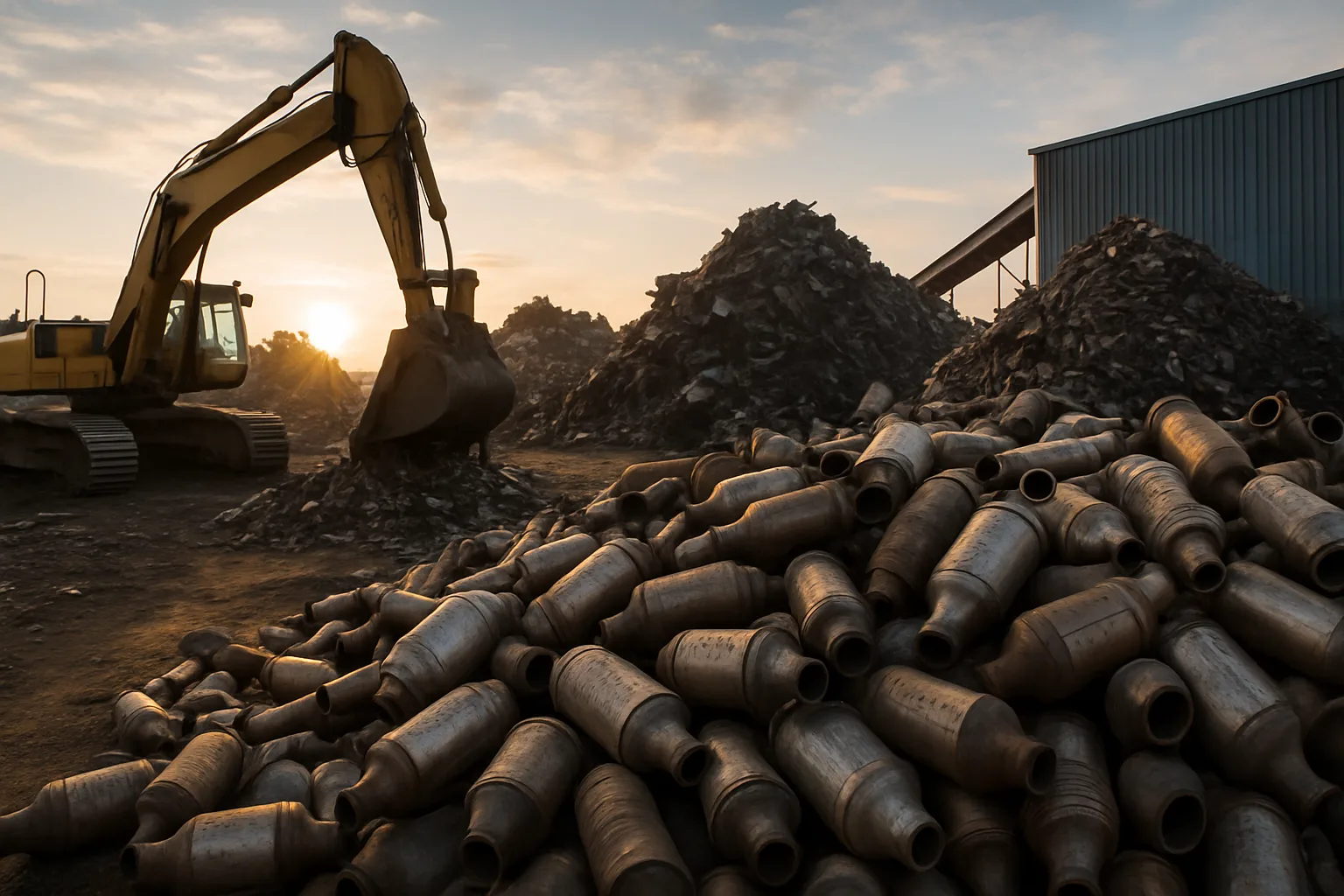
Stricter emissions rules aren't going away — and that's exactly why your old catalytic converter is worth more than you think. Every time regulators tighten vehicle exhaust standards, they're indirectly driving up demand for the platinum group metals (PGMs) locked inside those converters. For scrap yards, fleet operators, and everyday sellers across Fort Wayne and the rest of Indiana, that regulatory pressure translates directly into real money sitting in your parts bin.
Understanding why those PGMs are valuable — and how emissions policy shapes their demand — helps you make smarter decisions when it's time to sell. Let's break it down.
What Emissions Regulations Actually Do to PGM Demand
Catalytic converters exist for one reason: to reduce toxic exhaust emissions before they exit the tailpipe. Inside every converter is a ceramic or metallic substrate coated with platinum, palladium, and rhodium — the three primary PGMs. These metals trigger chemical reactions that convert carbon monoxide, hydrocarbons, and nitrogen oxides into less harmful compounds.
When governments raise emissions thresholds — requiring vehicles to emit fewer pollutants per mile — automakers respond by loading more PGMs into their converter designs. Tighter standards mean more surface area, higher loading densities, and more sophisticated catalyst formulations. That means more platinum, more palladium, more rhodium per unit. The regulatory tightening that's been accelerating across North America through the mid-2020s has kept PGM demand structurally elevated, even as electric vehicle adoption grows.
- Platinum: Primarily used in diesel catalytic converters; also plays a role in hydrogen fuel cell technology
- Palladium: Dominant in gasoline-engine converters; the tighter the gasoline emissions standard, the higher the palladium loading required
- Rhodium: The rarest and most expensive of the three; essential for reducing nitrogen oxide emissions, which face intense regulatory scrutiny
Rhodium in particular has seen dramatic price volatility driven almost entirely by tightening NOx standards. When regulators in major markets ratchet up requirements, rhodium demand spikes — and recycled rhodium from scrap cats becomes one of the few ways the market can respond quickly. That's why finding the best scrap cat prices today matters more than ever for sellers who understand what's inside their converters.
How Tightening Standards Create a Scrap Cat Opportunity in Indiana
Indiana's industrial base — manufacturing, agriculture, logistics — puts a lot of diesel and gasoline-powered equipment on the road. Heavy trucks, fleet vehicles, older model cars: all of them carry catalytic converters loaded with PGMs. As federal and state emissions standards push older, non-compliant vehicles off the road and into scrap cycles, the supply of recyclable converters increases. That's a direct opportunity for sellers across Fort Wayne and surrounding counties.
The key insight here is timing. When compliance deadlines hit, fleets retire vehicles faster. Salvage yards see volume surges. Sellers who move quickly and understand their converter's value — by model, by PGM content — capture better prices before the market adjusts. Waiting too long means you're selling into a saturated local market rather than a competitive one.
In Fort Wayne specifically, the density of manufacturing and distribution operations means there's consistent turnover in commercial vehicle fleets. That translates to a steady stream of high-value converters from trucks and vans — often the most PGM-rich units on the market. If you've got a stockpile sitting in your yard, now is the time to understand what you actually have.
Scrap Catalytic Converter Price by Model: Why It Varies So Much
Not all cats are created equal. The scrap catalytic converter price by model can swing dramatically — sometimes by hundreds of dollars — based on the original vehicle application and the PGM loading the manufacturer specified. A domestic half-ton truck converter looks nothing like a luxury import or a diesel emissions control unit in terms of precious metal content.
Here's what drives per-unit value:
- Engine displacement and fuel type: Larger engines and diesel applications typically require heavier catalyst loading
- Regulatory market of origin: Vehicles built for stricter emissions markets carry more PGMs by design
- Converter age and condition: Newer converters — especially from stricter-compliance model years — often carry higher PGM concentrations
- Serial number and VIN traceability: Platforms with serial tracking and VIN lookup tools can match converters to accurate assay data, giving buyers more confidence and sellers better price discovery
- Physical condition: Crushed, cracked, or tampered converters lose value fast; intact units with clean substrates command better prices
This is exactly where sellers often leave money on the table. If you're calling one local buyer and accepting their number without knowing the model-specific value, you're guessing. Platforms like SMASH solve this by connecting your documented inventory to a pool of vetted buyers who compete on price — which is how you actually find out what your load is worth. You can also read scrap catalytic converter guides to learn more about how model identification affects your final payout.
Sell Catalytic Converters Online: The Case for Competition Over a Single Buyer
The old playbook — one phone call, one buyer, accept the number — made sense when information was scarce. It doesn't anymore. When you sell catalytic converters online, you expose your inventory to multiple buyers simultaneously. That competition reveals the actual market price rather than the price one buyer decides to offer you today.
Think about it from a buyer's perspective. If they know they're the only bidder, there's no incentive to sharpen their number. If they know four other vetted buyers are looking at the same load, they bid competitively. More buyers means better price discovery — that's not a sales pitch, it's basic market mechanics.
SMASH is built around exactly this dynamic. The platform connects sellers — including yards and individuals across Indiana — with vetted cat converter buyers through an auction format. No subscription fees. No cold calls to buyers who may or may not be in the market today. Just documented inventory, competitive bids, and transparent results. When you get competitive bids for your scrap metal, you're letting the market work for you instead of against you.
Photo documentation, serial tracking, and clean inventory records give buyers the confidence to bid higher. That's not a coincidence — it's the direct result of reducing uncertainty in the transaction. A buyer who can see exactly what they're purchasing doesn't need to pad their lowball offer to account for the unknown.
What Your Converter Is Actually Worth at the Scrap Yard vs. Online
Understanding catalytic converter worth at scrap yard versus what it might fetch through a competitive online platform is an important distinction. Local scrap yards provide convenience and immediacy — you can drop off a converter and walk out with cash. But that convenience comes at a cost. A single buyer operating a physical yard has overhead, margin requirements, and no competitive pressure on your specific load.
The difference between a walk-in scrap yard price and a competitive online auction price can be significant — especially on high-value units like large diesel converters or late-model luxury vehicle cats. For common, lower-value units, the gap may be smaller. But for any seller moving volume — multiple units, recurring loads, or specialty converters — the math favors competition every time.
If you're in Fort Wayne and you're regularly pulling converters from vehicles — whether through an auto recycling operation, a fleet maintenance business, or a salvage yard — building a relationship with an online auction platform like SMASH is worth the setup time. Document your inventory properly, photograph each unit, track serials, and let buyers compete. That process pays dividends over time, especially as PGM markets continue to react to regulatory changes.
Prices fluctuate based on PGM spot markets, which move daily. Always check current rates before committing to a sale — a converter priced on Monday might be worth more or less by Friday depending on palladium or rhodium movement. To get a fair price for your scrap catalytic converters, you need current market data, not last week's quote.
Disclaimer: Catalytic converter scrap prices fluctuate based on precious metal spot markets. Always verify current pricing before finalizing any sale.
How to Sell Scrap Catalytic Converters in Indiana the Right Way
Whether you're a first-time seller or a yard operator moving loads regularly, the process matters. Sloppy documentation, unidentified units, and rushed transactions all reduce your final number. Here's how to approach it correctly:
- Identify your converters by serial number or VIN where possible. This matches each unit to verified assay data and removes ambiguity for buyers.
- Photograph every unit — top, bottom, and substrate face. Clear photos let buyers assess condition without holding the unit. Better information leads to more confident bids.
- Sort by type and application. Don't mix diesel and gasoline units in the same lot without clear labeling. Buyers value organized, well-documented loads.
- Understand state regulations around catalytic converter sales in Indiana. Know the documentation requirements that apply to your situation before you sell.
- Use a platform that connects you to multiple vetted buyers. SMASH handles the auction process, auto-invoicing, and buyer vetting — so you're not managing relationships with a dozen individual buyers on your own.
- Check current PGM spot prices. Platinum, palladium, and rhodium markets move daily. Timing your sale during periods of elevated PGM prices can meaningfully affect your return.
The sellers who consistently get the best prices aren't the ones with the most converters. They're the ones with the best process. If you're ready to sell catalytic converters Indiana and want your load to reach real buyers competing for it, the starting point is documentation and the right platform.
When you're ready to move your converters and want real competition working in your favor, find the best scrap cat prices and get a free quote at best-scrap-cat-prices.com.
Frequently Asked Questions
Q: Why are catalytic converters valuable for scrap recycling in Fort Wayne?
Catalytic converters contain platinum, palladium, and rhodium — precious metals with significant market value driven by industrial demand and emissions regulations. Fort Wayne's concentration of manufacturing and fleet vehicles means there's a steady supply of converters available for recycling, and their PGM content makes them among the most valuable single components in a scrapped vehicle.
Q: How do emissions regulations affect scrap catalytic converter prices?
Tighter emissions standards require automakers to use more PGMs per converter — which increases the value of each unit when it reaches end-of-life. As regulatory requirements have intensified through the mid-2020s, PGM loading in new converters has increased, pushing up the scrap value of later-model units. Recycled PGMs are a critical supply source for the catalyst manufacturing industry precisely because mining supply can't respond quickly to regulatory-driven demand spikes.
Q: What's the difference between selling at a local scrap yard vs. selling catalytic converters online?
A local scrap yard offers convenience but typically represents a single buyer with no competitive pressure on your load. Selling catalytic converters online through an auction platform exposes your inventory to multiple vetted buyers simultaneously, which can reveal higher market prices — especially for specialty or high-value converter types. The trade-off is some additional documentation effort upfront, which pays off on higher-value or higher-volume loads.
Q: How do I find out the scrap catalytic converter price by model for my units?
The most reliable method is to match your converter to its serial number or the original vehicle's VIN, then cross-reference that with current assay data for that converter type. Platforms like SMASH use serial tracking and VIN lookup tools to help identify units accurately. PGM spot prices fluctuate daily, so always confirm current rates — not last week's quote — before agreeing to a sale price.
Q: Are there any regulations I need to know about when selling catalytic converters in Indiana?
Yes. Indiana, like most U.S. states, has regulations governing the sale of catalytic converters to scrap dealers, primarily aimed at reducing theft. Sellers typically need to provide identification and documentation of lawful ownership or acquisition. Always verify current state and local requirements before completing a sale — requirements can change, and compliance protects both the seller and the buyer.
Stay ahead of PGM market moves and scrap industry trends — follow SMASH on LinkedIn for regular updates: linkedin.com/company/scrap-metal-auction-sales-hub.
```