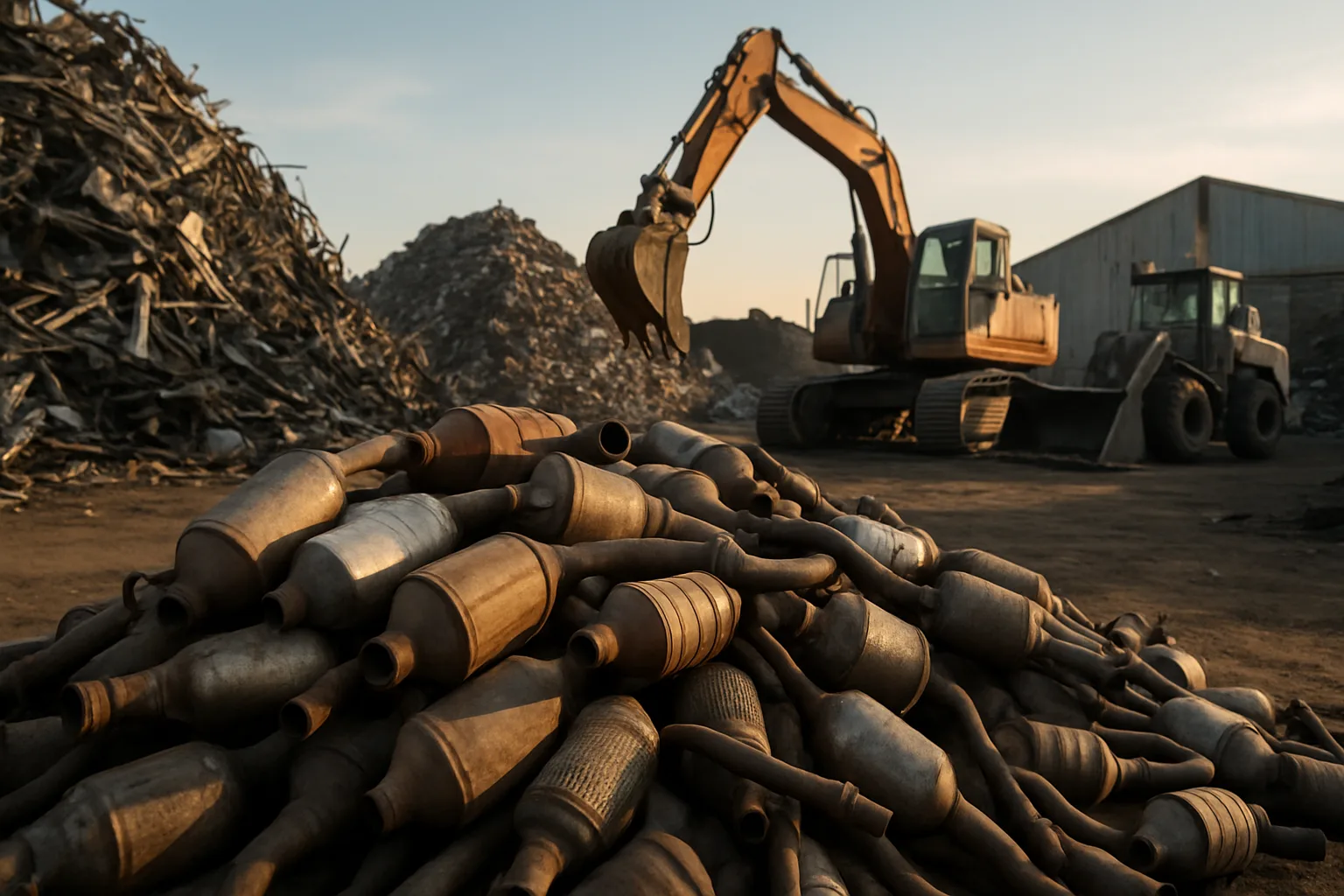
Most sellers treat all scrap cats the same. That's a mistake that costs real money. The internal structure of your catalytic converter — foil or bead — directly affects its precious metal content, and understanding that difference is the fastest way to stop leaving value on the table. With the rhodium price today still commanding serious attention from buyers, knowing what you've got before you sell matters more than ever.
This guide breaks down both converter types, explains what drives their scrap value, and shows you how sellers in Denver and across Colorado are using competitive platforms to get better price discovery on every load.
---What Is a Foil-Style Catalytic Converter?
A foil-style catalytic converter uses a thin, corrugated metallic substrate — typically a honeycomb structure made from an alloy of iron, chromium, and aluminum — as the carrier for the washcoat. That washcoat contains the precious metals: platinum, palladium, and rhodium. The foil substrate is wound tightly into a cylindrical form, creating an extremely high surface area for exhaust gas contact.
Foil cats are common in high-performance, diesel, and heavy-duty applications. They handle higher exhaust temperatures than ceramic alternatives, which is why you'll find them in trucks, performance vehicles, and certain European imports. Their construction also makes them more physically durable — they're less likely to crack or shatter compared to ceramic cores.
Key characteristics of foil catalytic converters:
- Metallic, corrugated internal substrate — visibly shiny if cracked open
- Heavier than ceramic converters of similar size
- Common in diesel, heavy-duty, and European performance vehicles
- More resistant to physical damage and thermal shock
- Generally contain a different precious metal loading profile than ceramic cats
When you're sorting a load for a buyer, foil cats should be pulled and identified separately. Lumping them in with standard ceramic units is how sellers shortchange themselves. A qualified cat converter buyer will price them differently — and should.
---What Is a Bead-Style Catalytic Converter?
Bead-style catalytic converters use small ceramic or alumina beads as the substrate instead of a structured honeycomb. The beads are coated with the precious metal washcoat and packed loosely inside the converter housing. This design was more common in older domestic vehicles from the 1970s through the early 1990s, before ceramic honeycomb technology became the industry standard.
If you're running a yard in Denver or elsewhere in Colorado that handles older domestic inventory, you've likely seen bead cats — even if you didn't know exactly what you were looking at. They have a distinctive rattle when you shake them. That loose-bead sound is the tell.
Key characteristics of bead-style catalytic converters:
- Loose alumina or ceramic beads inside the housing — audible rattle when shaken
- More common in pre-1990s domestic vehicles
- Beads can spill or degrade with physical damage — handle carefully
- Precious metal loading varies significantly by manufacturer and vintage
- Some older bead cats carry higher platinum content than their ceramic successors
Don't write off bead cats as low value just because they're old. Certain vintage units carry surprisingly strong OEM catalytic converter value based on their original precious metal loading. If you're not sure what you've got, photograph it, document it, and get it in front of multiple buyers before you commit to a price.
---How the Rhodium Price Today Affects Both Converter Types
Precious metal content — specifically platinum, palladium, and rhodium — is what makes catalytic converters valuable as scrap. Of the three, rhodium has historically been the most volatile and often the most valuable per troy ounce. The rhodium price today influences the scrap value of virtually every cat on your lot, but the degree of impact depends on how much rhodium a given converter actually contains.
Foil cats used in diesel and heavy-duty applications often carry higher palladium and platinum loading relative to rhodium. Gasoline-engine ceramic cats tend to have a more balanced three-metal profile. Bead cats from older vehicles lean more heavily on platinum. This is why a flat per-pound price from a single buyer rarely reflects true market value — the precious metal mix inside each unit type is different, and buyers who bid competitively account for that.
When rhodium prices spike, high-rhodium converters — typically those from gasoline passenger cars — see outsized value increases. When rhodium softens, the relative weight of platinum and palladium becomes more important. Understanding this dynamic helps you time your sales decisions and identify which loads to prioritize. Platforms like find the best price for your scrap on SMASH connect you with vetted buyers who understand these nuances and price accordingly.
Disclaimer: Precious metal prices fluctuate daily. Always check current rates before making a sell decision.
---Foil vs. Bead: Scrap Cat Value Comparison
Comparing foil and bead converter values isn't a simple exercise. There's no universal answer because scrap cat prices depend on the specific unit, its condition, the current precious metal market, and who's buying. That said, there are consistent patterns worth knowing.
Here's a general breakdown of how the two types compare across key factors:
- Precious metal density: Foil cats can have high precious metal surface area due to their dense wound structure. Bead cats vary widely — some old domestic units carry substantial platinum loads.
- Processing complexity: Bead cats can be harder to process due to loose material. Some buyers discount for this. Others specialize in it.
- Market demand: Both types have active buyers, but foil cats from commercial vehicles often attract industrial recyclers who pay a premium for consistent loads.
- Condition sensitivity: Damaged bead cats lose value fast — spilled or degraded beads mean lost precious metal. Foil cats are more forgiving physically.
- Sorting value: Mixing foil and bead cats in an unsorted load typically means both get priced at the lower rate. Sort them. Always.
The bottom line: both converter types have real scrap cat value. Neither should be treated as generic "misc cat" unless you're comfortable leaving money on the floor. If you're in Denver or anywhere else in Colorado processing mixed loads, proper identification and documentation pays off every time.
---How to Sell Catalytic Converters Online and Get a Fair Price
The old way to sell cats was one call, one buyer, one price — take it or leave it. That single-buyer model means the buyer captures the spread between what they offer and what the metal is actually worth. The more you know about your inventory, the harder that is to accept.
Competitive platforms change the math. When multiple vetted buyers compete on your documented load, you get actual market pricing instead of one buyer's margin play. That's the core of how SMASH operates — structured auctions, documented inventory, vetted buyers, no subscription fees. You only pay when you sell.
Whether you're looking to sell catalytic converters online from a Denver yard or running loads from across Colorado, the process works the same way:
- Document your inventory. Use photos, serial numbers where available, and converter type (foil, bead, ceramic). More information means more buyer confidence and stronger bids.
- Separate your types. Don't lump foil cats with ceramic or bead units. Sorted loads get better pricing because buyers can assess accurately.
- Use a platform with real buyer competition. A single offer is a ceiling, not a market price. Multiple bids reveal the actual value.
- Know the precious metal context. Check where rhodium, platinum, and palladium are trading before you list. Timing matters.
- Get paid with clear documentation. Auto-invoicing and proper records protect you and create a paper trail for your business.
Denver scrap yards have access to strong regional buyer networks, but that doesn't mean you're automatically getting the best number. Use Denver scrap metal services that bring real competition to your listings — not just the closest buyer willing to answer the phone.
If you're ready to stop guessing and start getting real market feedback on your cats, get a fair price for your scrap catalytic converters through a competitive process that works in your favor.
---Why Documented Inventory Gets Better Offers on Both Converter Types
Buyers price uncertainty into their offers. If they don't know exactly what they're bidding on, they assume the worst and protect their margin accordingly. That uncertainty discount comes straight out of your pocket.
When you document your load — converter type (foil vs. bead), condition, approximate quantity, photos of the substrate where possible — buyers compete with real information. That documentation eliminates the guessing tax. It also creates a traceable record that supports compliance and helps you read scrap catalytic converter guides and track your own pricing trends over time.
SMASH builds documentation into the selling workflow. Inventory tools, photo uploads, and serial tracking aren't optional extras — they're how the platform creates the conditions for genuine price discovery. More buyer confidence means tighter, more competitive bids. That's better for you every time. To find the best scrap cat prices today, documentation is your starting point.
---Frequently Asked Questions
Q: How does the rhodium price today affect what I get for my scrap catalytic converters?
Rhodium is one of three precious metals recovered from catalytic converters, alongside platinum and palladium. When the rhodium price today is elevated, converters with higher rhodium content — typically gasoline passenger car units — see the biggest value increases. Foil and bead cats have different precious metal profiles, so the rhodium market affects each type differently. Always check current spot prices before listing a load.
Q: Are bead-style catalytic converters worth scrapping in 2026?
Yes — don't write them off based on age alone. Some older bead cats from domestic vehicles carry strong platinum content that holds real value. The key is getting them in front of buyers who specialize in vintage and mixed converter types, rather than selling them as generic scrap to a single buyer who may undervalue them.
Q: Where can I sell catalytic converters in Denver, Colorado?
Denver has active scrap metal infrastructure, but local options don't always mean competitive pricing. Using an online auction platform that brings vetted national buyers to your load gives you more price discovery than a single local offer. Check out Denver scrap metal services to explore competitive options in your area.
Q: What's the difference between OEM catalytic converter value and aftermarket value?
OEM (original equipment manufacturer) catalytic converters carry higher precious metal loading than aftermarket replacements, which are designed to meet emissions standards at lower cost. This means OEM units typically yield higher scrap cat prices per unit. Always identify whether a converter is OEM or aftermarket before pricing a load — mixing them without distinction costs you.
Q: How do I know if my converter is foil or bead style?
Shake it. A bead-style converter produces a distinct rattling sound from the loose internal beads. A foil or ceramic converter will be silent or produce a different, more solid sound. Visually, a damaged foil cat will show shiny, corrugated metallic material inside. When in doubt, photograph it and describe what you see — buyers who work with documented inventory can identify types accurately and bid accordingly.
---If you're sitting on a mixed load of foil, bead, and ceramic cats and you're not sure what any of it is worth, that uncertainty is costing you. Get your inventory documented, sorted, and in front of real buyers who compete for it. Whether you're operating in Denver, across Colorado, or anywhere in the U.S., the process is the same: more buyers, better information, real price discovery.
Stop settling for one number from one buyer. Head to best-scrap-cat-prices.com for a free quote — and find out what your cats are actually worth in today's market.
Follow SMASH on LinkedIn for ongoing scrap metal market insights, precious metal updates, and industry news that keeps you ahead of the next price move.