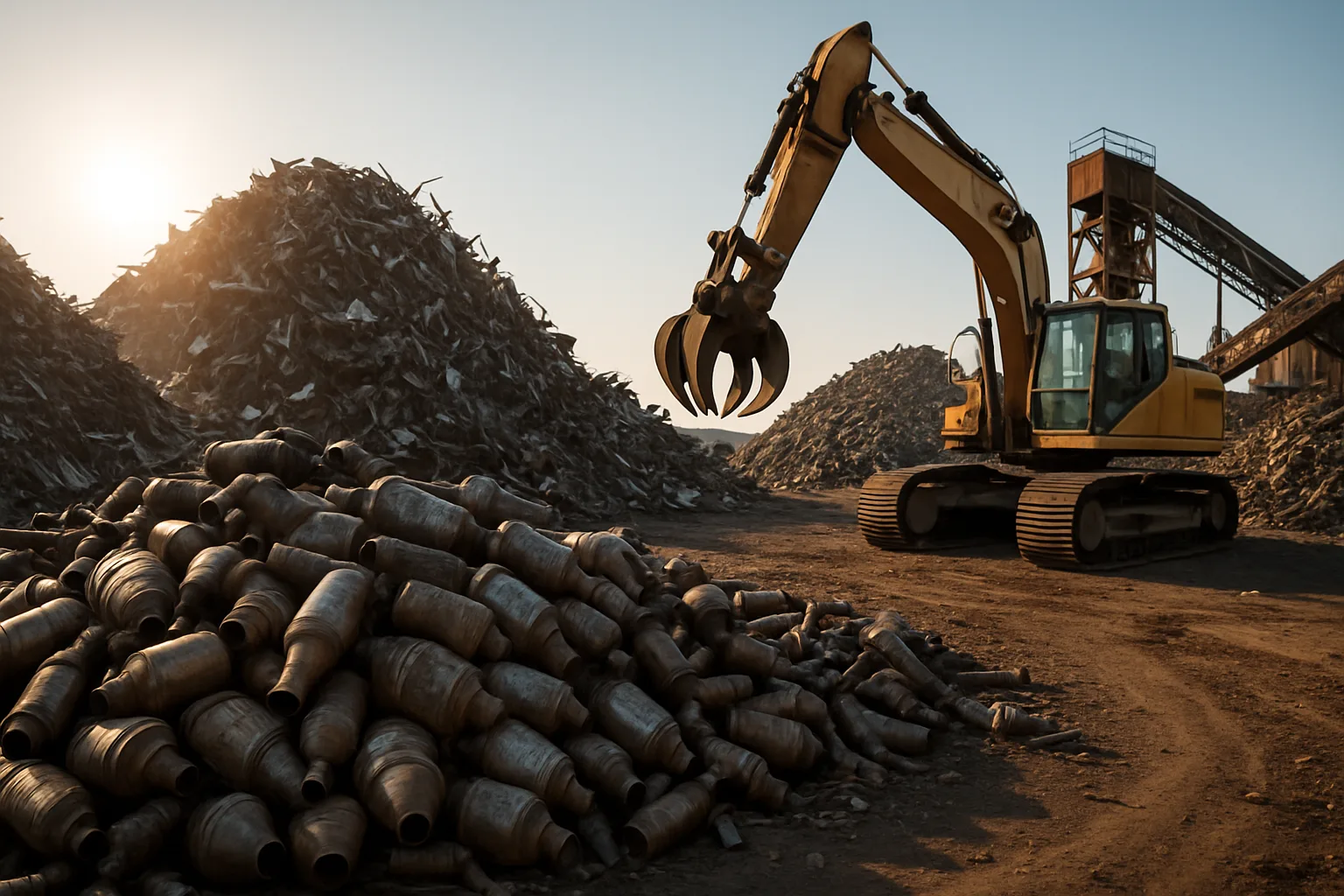
Diesel vs. Gasoline Catalytic Converters: What Scrap Cat Sellers Need to Know in 2026
Most scrap yards treat all catalytic converters the same. That's a mistake — and it's costing sellers money. If you're pulling cats off diesel trucks, vans, or heavy equipment, you're dealing with a completely different product than a gasoline converter. Understanding the difference is the first step to knowing what your cat is actually worth and where to sell it for the best return.
The rhodium price today sits at the center of almost every conversation about scrap cat value. Rhodium is the precious metal that drives the highest returns in gasoline three-way catalytic converters. But diesel converters — specifically Diesel Particulate Filters (DPFs) and Diesel Oxidation Catalysts (DOCs) — operate on a different chemistry and carry different metals. Knowing which type you have changes everything about how you price it and where you sell it.
If you're in Los Angeles trying to figure out what your pile of diesel cats is worth, you're in the right place. Let's break it down.
How Gasoline and Diesel Converters Actually Work
Gasoline catalytic converters use what's called a three-way catalyst. They reduce three pollutants simultaneously: hydrocarbons, carbon monoxide, and nitrogen oxides. To do that, they rely heavily on platinum, palladium, and rhodium — the platinum group metals (PGMs) that make scrap cats valuable in the first place.
Diesel systems work differently. They deal with different combustion byproducts, including soot and particulate matter. The two main diesel aftertreatment components are:
- DOC (Diesel Oxidation Catalyst): Handles carbon monoxide and unburned hydrocarbons. Contains platinum and palladium, but typically no rhodium.
- DPF (Diesel Particulate Filter): Traps and burns off soot. May contain small amounts of platinum as a catalyst, but often far less PGM loading than a gasoline converter.
This distinction matters enormously for scrap value. Gasoline three-way converters — especially OEM units from late-model vehicles — often carry meaningful rhodium content. Diesel DPFs and DOCs typically do not. That doesn't make them worthless, but it means you need a buyer who specializes in assaying diesel units correctly, not one who uses a gasoline cat pricing model and lowballs you.
Why Rhodium Price Today Still Matters — Even for Diesel Cat Sellers
If you're selling any mix of gasoline and diesel cats, the rhodium price today is still a number you need to watch. Rhodium is one of the most volatile commodities on the planet. It has swung from under $1,000 per troy ounce to over $20,000 and back again within a few years. In 2026, markets remain sensitive to South African mining output, automotive production volumes, and emissions regulation shifts globally.
Why does this affect diesel sellers? Two reasons:
- Mixed loads. Most yards accumulate a combination of gasoline and diesel converters. The overall market price for your load depends heavily on the gasoline cats in the mix — and rhodium drives that number.
- Buyer behavior. When rhodium prices spike, buyers get aggressive across all cat types. When they drop, buyers tighten margins everywhere. Understanding the rhodium market helps you time your sale.
The safest approach is to sort your diesel cats separately from your gasoline units before you sell. A good buyer — or a platform built for OEM catalytic converter value accuracy — will assess them independently rather than blending them into one average that shortchanges you.
For up-to-date pricing insights and to find the best scrap cat prices today, don't rely on a single buyer's quote. Get multiple eyes on your load.
OEM Catalytic Converter Value: Why DPFs from Heavy Equipment Are a Different Game
Here's something a lot of first-time diesel cat sellers don't know: OEM diesel converters from heavy trucks, construction equipment, and agricultural machinery can carry significant value — but only if you find a buyer who knows how to process them.
OEM catalytic converter value for diesel units depends on:
- Substrate type: Ceramic vs. metal foil substrates behave differently in smelting and assay. Metal foil DOCs, common in European trucks, often carry denser PGM loading.
- Brand and application: Cummins, Detroit, Navistar, and Caterpillar all spec their aftertreatment differently. Some OEM diesel cats from fleet applications are worth significantly more than off-brand aftermarket units.
- Condition: A DPF clogged with ash and soot versus a clean, well-regenerated unit can vary in recoverable metal content.
- Volume: Diesel cats are physically larger and heavier than most gasoline units. A single large DPF from a Class 8 truck can weigh 30–60 lbs or more. Weight matters when you're pricing by the unit.
If you're handling fleet vehicles or commercial trucks in Los Angeles — a city with an enormous logistics and freight sector — you're likely seeing a steady stream of diesel aftertreatment parts. Don't let a generalist buyer set the price for material that requires specialist knowledge.
To understand what your specific units are worth, read scrap catalytic converter guides that break down pricing by type and help you compare what different buyers offer.
How to Sell Scrap Catalytic Converters Online in California Without Getting Lowballed
Selling cats the old way — one buyer, one phone call, take it or leave it — is a dead end. That's especially true for diesel units where the pricing is less standardized and buyers know that most sellers don't know what they have. The solution is competition. When multiple vetted buyers bid on your load, the market price becomes visible. You stop guessing and start comparing.
That's exactly what platforms like North America's B2B scrap metal auction platform are built for. SMASH connects sellers with vetted buyers across the country, creates a competitive auction environment, and gives you documentation tools — photo uploads, serial tracking, weight records — that help buyers price with confidence. More confidence from buyers means stronger bids on your load.
For sellers in California, this matters because the state has strict vehicle emissions standards and a large commercial vehicle fleet. That means more diesel cats entering the scrap stream — and more reason to get the pricing right. Los Angeles scrap metal services through best-scrap-cat-prices.com are specifically built to help local sellers access competitive pricing rather than defaulting to whatever a single local yard offers.
When you sell scrap metal online, you're not just saving time. You're opening your load to a national market of buyers who may specialize in exactly the material you have. A DOC-heavy diesel load that one local buyer shrugs at might be exactly what a specialist processor is looking for.
Practical Tips for Sorting and Documenting Diesel Cats Before You Sell
Preparation pays off. Before you ship a load or request a quote, take 20 minutes to sort and document what you have. Buyers bid higher on loads they understand. Here's how to set yourself up for the best return:
- Separate diesel from gasoline. DPFs, DOCs, and SCR systems go in one pile. Three-way gasoline converters go in another. Never mix them.
- Identify OEM vs. aftermarket. OEM units almost always carry higher PGM loading. Check for manufacturer markings, part numbers, or VIN-traceable components. SMASH's VIN lookup tool helps match units to vehicle records.
- Photograph everything. Both ends of each unit. Any visible damage, serial numbers, or brand markings. This documentation gives remote buyers confidence to bid competitively.
- Note condition and cleanliness. A DPF that has been properly regenerated vs. one packed with ash will often appraise differently. Be honest about condition — it builds trust with buyers.
- Record weights. Especially for large diesel units, weight is a key pricing variable. Have a scale available and log each unit or group of units before you quote.
If you're asking yourself how much is my catalytic converter worth scrap, the honest answer is: it depends on the type, the PGM content, and who's buying it. The only way to find out is to get competitive quotes from multiple buyers — not accept the first number that comes across your phone.
SMASH makes that process straightforward. List your load, document it properly, and let the auction do the work. No subscription fees. No guessing. The platform only wins when you do.
Ready to get a fair price for your scrap catalytic converters? Stop leaving money on the table by dealing with a single buyer who has no incentive to pay you market rate.
Frequently Asked Questions
Q: Are diesel catalytic converters (DPFs/DOCs) worth more or less than gasoline converters?
It depends on the unit. Gasoline three-way converters typically contain rhodium, which is one of the most valuable precious metals in scrap cats. Most DPFs and DOCs do not contain rhodium, which can make them less valuable per unit — but heavy-duty OEM diesel units can still carry meaningful platinum and palladium content. Get a specialist assay rather than relying on a generalist buyer's estimate.
Q: What is the rhodium price today and how does it affect my scrap cat value?
Rhodium prices fluctuate based on mining supply, automotive demand, and global economic conditions. In 2026, markets remain volatile. The rhodium price today directly impacts the value of gasoline catalytic converters, and indirectly affects the overall market sentiment for all scrap cats. Check current live pricing through a reliable commodity source before deciding when to sell your load.
Q: Where can I sell catalytic converters in Los Angeles for the best price?
Los Angeles has a strong scrap metal market, but local yard pricing varies significantly. Rather than calling one buyer, use a competitive platform to get multiple quotes on your load. SMASH connects sellers with vetted buyers across North America, and best-scrap-cat-prices.com offers local Los Angeles services specifically for converter sellers who want competitive pricing without the guesswork.
Q: How do I know if I have an OEM or aftermarket diesel catalytic converter?
OEM units typically have manufacturer part numbers stamped on the housing, match the original vehicle spec, and often have VIN-traceable records. Aftermarket units may have generic markings or third-party brand names. OEM diesel cats generally carry higher PGM loading and command stronger prices. If you're unsure, document the unit with photos and use a platform that supports serial tracking and VIN lookup — SMASH includes both.
Q: Is it legal to sell scrap catalytic converters in California?
Yes, selling scrap catalytic converters is legal in California, but the state has documentation requirements in place to combat theft. Sellers typically need to provide proof of ownership or a valid bill of sale, along with identification. Make sure your documentation is in order before you sell, and work with licensed, vetted buyers who follow state compliance requirements.
If you're sitting on a load of diesel cats and aren't sure what they're worth, now is the time to find out. The market moves fast, and a single uninformed transaction can cost you hundreds or more. Get competitive quotes, document your load properly, and use a platform that puts buyers in competition for your material. Find the best scrap cat prices — get a free quote at best-scrap-cat-prices.com.
Disclaimer: Scrap catalytic converter prices fluctuate daily based on precious metal markets. Always check current rates before selling. The information in this article reflects general market conditions as of June 2026 and is not a guarantee of specific pricing.
Stay ahead of the scrap metal market — follow SMASH on LinkedIn for regular updates on precious metal prices, industry trends, and scrap cat market insights.