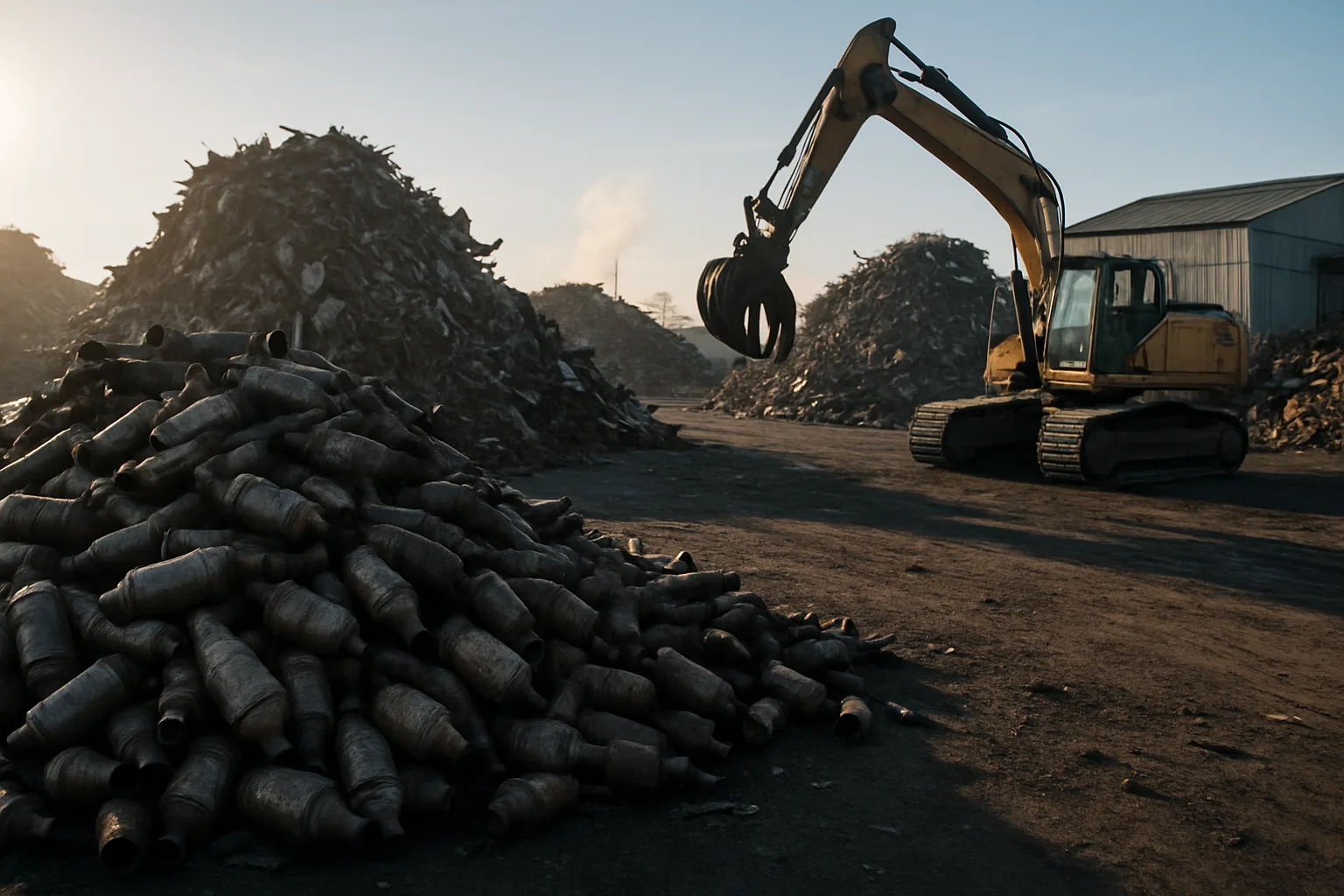
Before You Touch That Converter: What Dearborn Sellers Need to Know First
Most people leave serious money on the table when they scrap a catalytic converter — not because they got a bad price, but because they damaged the unit before it ever got quoted. A cracked substrate, a crushed housing, or a converter pulled without proper documentation can drop your scrap cat value fast. If you're in Dearborn or anywhere across Michigan, this guide walks you through the right way to remove a catalytic converter for recycling — so you get paid what it's actually worth.
The platinum group metals (PGMs) inside a converter — platinum, palladium, and rhodium — are what buyers are actually paying for. Those metals sit on a ceramic or metallic substrate inside the shell. Damage that substrate, and you've just reduced the recoverable content. Buyers notice. Pricing reflects it. So let's do this right from the start.
Tools You Need Before You Start
Don't improvise. The right tools make the job safer and protect the converter's value. Here's what you actually need on hand before you get under a vehicle:
- Angle grinder or reciprocating saw — for cutting the pipe on either side of the converter
- Pipe wrench or breaker bar — for bolted flange connections
- Penetrating oil (PB Blaster or equivalent) — exhaust bolts corrode, especially in Michigan winters
- Floor jack and jackstands — never work under a vehicle on a jack alone
- Safety glasses and heat-resistant gloves — non-negotiable
- Marker or paint pen — for marking the converter with the vehicle VIN or your own tracking number
- Phone or camera — you'll want photos before, during, and after removal
That last two items aren't just good habits — they're how you protect yourself legally and maximize your price. More on that in a moment. If you're processing multiple units in a yard environment, a parts washer and wire brush are also worth having nearby to clean up flanges without touching the converter body itself.
Step-by-Step: How to Remove a Catalytic Converter Without Killing Its Value
Follow these steps in order. Skipping steps costs you money or puts you at risk. Take your time — a properly removed converter is worth more than one yanked off in five minutes.
- Let the vehicle cool completely. Exhaust systems hold heat for a long time. Working on a hot converter risks burns and makes metal more brittle. Wait at least two hours after engine shutoff.
- Document the vehicle. Photograph the VIN plate and write it down. In Michigan and across the U.S., documentation requirements for scrap converters have tightened considerably. Buyers want proof of lawful possession. Platforms like the SMASH scrap metal auction marketplace support serial tracking and photo documentation — this is exactly the kind of paperwork that protects sellers and builds buyer confidence.
- Spray penetrating oil on all bolts and pipe connections. Do this 20–30 minutes before you start cutting. Michigan road salt accelerates corrosion on exhaust hardware — bolts that look fine often aren't. Give the oil time to work.
- Safely raise and support the vehicle. Use jackstands rated for the vehicle's weight. Never rely on a hydraulic jack alone. Position stands on frame rails, not suspension components.
- Identify the converter location. On most passenger vehicles, the cat sits between the exhaust manifold and the muffler. On newer vehicles, there may be multiple converters — a pre-cat close to the engine and a main converter further downstream. Know what you're removing and where it sits.
- Choose your removal method — cut or unbolt. If the converter has flanged connections with accessible bolts, try unbolting first. Clean cuts from an angle grinder or reciprocating saw work fine if bolts won't budge. Cut the pipe 2–3 inches away from the converter body on each side. Don't cut into the converter housing itself.
- Lower the converter carefully. It may still be attached to heat shields or O2 sensor bungs. Disconnect O2 sensors before removing if possible — damaged sensor threads can cause headaches if the vehicle is being repaired afterward.
- Mark and photograph the removed unit. Write your tracking number or the VIN on the shell with a paint marker. Photograph all four sides, including any visible serial numbers stamped on the housing.
That documentation step matters more than most sellers realize. When you find the best scrap cat prices today, buyers who can verify what they're buying — make, model, converter type, documented origin — have more confidence in the bid. More confidence means stronger offers.
Understanding What Drives Scrap Catalytic Converter Prices in Dearborn
This is where a lot of sellers get frustrated — prices seem to jump around with no explanation. The reality is that scrap catalytic converter prices Dearborn sellers see are directly tied to the global spot prices for platinum, palladium, and rhodium. Those prices move daily based on mining output, industrial demand, currency shifts, and supply chain factors. A converter worth one amount on Monday might be quoted differently by Thursday.
Beyond PGM spot prices, what else affects your quote?
- Converter type and OEM: Domestic full-size truck cats, foreign pre-cats, and high-grade exotic-vehicle units all sit in different price tiers. A converter from a late-model foreign vehicle often contains higher PGM loadings than a domestic economy car unit.
- Physical condition: Cracked substrates, melted cores, or units that have been rattled loose inside the shell all reduce recoverable metal. An intact converter pays more — always.
- Documentation: In today's scrap market, buyers who can verify origin and chain of custody will often outbid those who can't. Documented units move faster and at better prices.
- How many buyers see your lot: This is the big one. One buyer quoting your cats gives you one data point. Ten vetted buyers competing for your load gives you a real market price. That's not a theory — it's how price discovery works.
Sellers across Michigan who treat their converter inventory like a commodity they simply hand off to whoever calls first are routinely leaving money on the table. You do the work of removing the unit correctly — don't give up the value at the finish line.
Why a Scrap Metal Auction Platform Changes the Math for Michigan Sellers
The old model: strip the cat, call your one buyer, take whatever they offer. No leverage. No comparison. No idea if the price is fair or not. That model still works fine for the buyer — not so much for you.
A scrap metal auction platform flips that dynamic. Instead of one buyer setting the price, multiple vetted buyers compete. Competition can help reveal the market. More buyers means better price discovery. For Dearborn yards and individual sellers in Michigan processing regular converter volume, that difference compounds fast over dozens of loads per month.
SMASH operates exactly this way. No subscriptions. No guessing. The platform connects sellers with vetted catalytic converter buyers in Michigan and across North America — buyers who know what they're bidding on and compete accordingly. SMASH also supports the documentation workflows that modern converter sales require: photo uploads, VIN lookup, serial tracking, and auto-invoicing. Everything you documented during removal feeds directly into a cleaner transaction.
If you regularly process cats and want to get a fair price for your scrap catalytic converters, running your inventory through a competitive auction format is the most straightforward way to stop guessing and start knowing what your material is actually worth.
Staying Legal: Michigan Regulations and Documentation Requirements for Cat Converter Sales
This section isn't optional reading. Catalytic converter theft enforcement has driven significant regulatory tightening across the U.S., and Michigan is no exception. Sellers who can't document their converters face real risk — rejected loads, delayed payments, or worse.
Here's what you need to have in order before selling in 2026:
- Proof of vehicle ownership or authorization for converters removed from vehicles (title, bill of sale, or shop documentation)
- Photo documentation of the converter and the vehicle it came from
- Government-issued ID — most buyers are required to record seller identification
- Transaction records — maintain a log of what you sold, when, to whom, and for how much
Individual requirements vary by municipality and buyer, so confirm specifics with your buyer before the transaction. But the principle is consistent: documented inventory moves faster, satisfies buyer compliance requirements, and positions you as a professional seller rather than a problem to manage. If you're a Dearborn yard or shop processing vehicle inventory regularly, building these habits now protects your operation long-term.
To stay current on scrap metal market movements and regulatory updates that affect cat converter buyers near you, read scrap catalytic converter guides that break down the market in plain language.
Frequently Asked Questions
Q: How do I know if my catalytic converter is worth scrapping?
Almost every functional catalytic converter contains recoverable platinum group metals and carries scrap value. The amount varies by vehicle make, model, and converter type. Exotic or high-load units from certain foreign vehicles can be worth significantly more than a basic domestic economy car cat. Get it quoted before assuming it's low value.
Q: What are scrap catalytic converter prices in Dearborn right now?
Prices fluctuate daily based on PGM spot markets — platinum, palladium, and rhodium prices all affect your quote. There's no single static price for Dearborn or anywhere else in Michigan. The best way to know your current value is to get competitive quotes from multiple buyers rather than relying on a single offer. Always check current rates — prices can shift significantly week to week.
Q: Can I sell a catalytic converter in Dearborn without the vehicle title?
Requirements vary by buyer and local regulations. For converters removed from vehicles you own or are legally authorized to work on, documentation of that authorization (shop work orders, title, bill of sale) is generally expected. Check with your specific buyer and confirm local ordinances — requirements in Michigan have become more detailed in recent years.
Q: How do I find catalytic converter buyers near me in Michigan?
Beyond local yards, a scrap metal auction platform like SMASH connects Michigan sellers with vetted buyers across North America who compete for your inventory. This is particularly useful if you have volume or want to compare offers rather than taking the first quote you get from a buyer within 20 miles.
Q: Does it matter how I remove the converter — will buyers pay less for a damaged one?
Yes, significantly. Converters with cracked substrates, damaged housings, or loose internal material are graded lower because the recoverable PGM content is reduced. A properly removed, intact converter with a clean substrate consistently quotes higher than a unit that was cut into or handled roughly. Take the time to do the removal correctly — it pays off directly in your quote.
You put in the work to remove the converter properly. Make sure the sale matches that effort. If you're processing cats in Dearborn, Michigan, or anywhere across the region, getting competitive quotes from multiple buyers is how you stop leaving money behind. When you're ready, find the best scrap cat prices — get a free quote at best-scrap-cat-prices.com.
Follow SMASH on LinkedIn for ongoing scrap metal market insights, PGM price updates, and news that affects what your cats are worth.
```