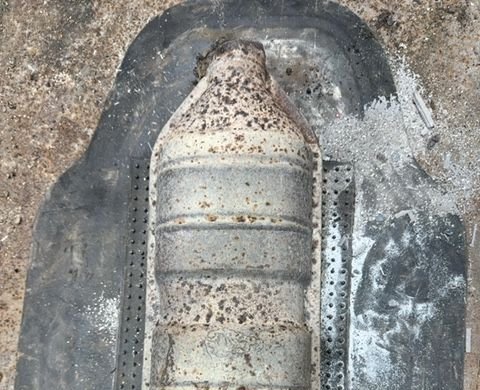
Why That Serial Number on Your Cat Is Worth More Than You Think
Most scrap yards will buy your catalytic converter without ever explaining how they priced it. They glance at it, punch something into their system, and hand you a number. What they're actually doing — whether you know it or not — is reading the serial number stamped on your cat. That number tells them exactly what's inside: how much platinum, palladium, and rhodium your converter is carrying. If you can read it yourself, you stop guessing and start negotiating.
This is one of the fastest ways to improve your catalytic converter scrap value. Not by finding a shinier buyer or driving across town — by understanding what you're actually selling before you walk in the door. This guide breaks down how serial numbers work, what they mean for pricing, and how platforms like the SMASH scrap metal auction marketplace help sellers turn that knowledge into real money.
What Is a Catalytic Converter Serial Number and Where Do You Find It?
A catalytic converter serial number is a stamped or engraved alphanumeric code on the outer shell of the unit. It's typically located on the body of the converter itself — not on the vehicle. You'll often find it on a flat stamped surface, a welded plate, or pressed directly into the metal housing. Some converters carry the number on both sides. Others only stamp it once, so check the entire shell if you're not seeing it right away.
The format varies by manufacturer and vehicle type. OEM (original equipment manufacturer) converters — the ones that came with the vehicle from the factory — almost always carry a clear serial or part number. Aftermarket converters often carry a different coding system, and critically, they tend to have significantly lower precious metal content. That distinction matters when a buyer is pricing your load.
- OEM converters: Stamped part number, often matching the vehicle manufacturer's part catalog
- Aftermarket converters: May have a generic code or the aftermarket manufacturer's identifier
- High-grade converters: Often from larger displacement or luxury vehicles — these carry higher PGM (platinum group metal) content
- Foreign/exotic grades: A category of high-value OEM cats from European and Japanese vehicles
If the serial number is worn, corroded, or damaged — which happens often on older units pulled from high-mileage vehicles — don't assume the converter is worthless. A good buyer will look at secondary identifiers like the converter's physical size, shape, and inlet/outlet pipe diameter to help establish a grade. Some buyers also use VIN data from the vehicle the cat came from to confirm what unit it should be.
How Serial Numbers Connect to Catalytic Converter Scrap Value
Here's the direct link: the serial number maps to a specific converter model, and that converter model has a known precious metal loading. Buyers and pricing databases cross-reference these numbers against assay data — real lab results from processed batches — to assign a per-unit value. That value fluctuates based on palladium price today, platinum spot price, and rhodium spot price, all of which move independently and sometimes dramatically.
Palladium, for context, has been one of the more volatile PGMs over the past several years. Gasoline engines lean heavily on palladium in their catalysts, while diesel converters use more platinum. When you sell a high-palladium unit during a spike in palladium pricing, your return can be substantially higher than the same unit sold during a trough. Knowing your serial number means you can at least look up the general grade of your converter — and understand whether now is a reasonable time to sell or whether you're leaving money on the table.
For sellers in Bakersfield and throughout California, this matters more than in many other markets. California's strict emissions regulations mean a higher density of OEM converters on the road, and OEM units almost always outperform aftermarket in scrap value. If you're pulling cats in Bakersfield from vehicles that ran California emissions equipment their whole lives, you're more likely to be working with original equipment — which grades better.
Reading the Number: A Practical Breakdown by Manufacturer
You don't need to memorize every numbering system, but knowing the major patterns helps you have an informed conversation with your buyer. Here's how the major categories break down:
Ford, GM, and Chrysler (Domestic OEM)
Domestic converters often carry a part number that includes a plant code, a base part number, and a revision suffix. Ford part numbers, for example, follow a four-character alphanumeric format identifying model year, part classification, and sequence. These match directly into most U.S. buyer databases. When a buyer says they're looking up your cat "by reg" — meaning by registration or part number lookup — this is the system they're using.
Toyota, Honda, Nissan (Japanese OEM)
Japanese OEM converters are typically among the more valuable units in the scrap stream. They carry precise part numbers that correspond to documented precious metal content. Many buyers pay a premium for clean, readable Toyota and Honda cats specifically because the assay history on those units is well-established. In Bakersfield, where the vehicle population skews heavily toward Japanese makes, this category comes up frequently.
BMW, Mercedes, Volkswagen (European OEM)
European units — often called "foreign cats" or "exotics" in the trade — frequently carry the highest precious metal loading per unit. The serial numbers on these converters are often longer and include country-of-manufacture codes. These fetch the top end of the market when precious metal prices support it. If you're unsure whether a unit qualifies as a foreign grade, your buyer should be able to run the number.
Aftermarket Units
If you see a brand name like Bosal, Walker, or MagnaFlow stamped alongside a part number, you're likely looking at aftermarket. These converters meet emissions requirements but carry less precious metal — sometimes a fraction of what an OEM unit holds. Don't be surprised when a buyer quotes these significantly lower. That's not the buyer being difficult; it's the actual precious metal content driving the price.
Why Documentation Makes You a Better Seller — Online and Off
Whether you're selling to a local yard in Bakersfield or using a platform to sell scrap metal online, documentation changes your position as a seller. A photo of the serial number, a note of the vehicle it came from (make, model, year), and a clean visual of the converter body gives a remote buyer enough to price your unit accurately and confidently. Guessing costs everyone money — usually yours.
This is exactly where SMASH adds real value for scrap cat sellers. The platform supports photo documentation and serial tracking, which means the information you've already gathered about your converters becomes part of a documented listing that vetted buyers can bid on competitively. More buyer confidence means more competitive pricing — and that's how finding the best scrap cat prices today actually works in practice. Not luck. Not relationships. Documented inventory and real competition.
California sellers especially benefit from this approach. The state's regulatory environment — including evolving tracking and documentation requirements around converter sales — makes having your paperwork clean a practical necessity, not just a negotiating edge. Bakersfield yards and California buyers operating under state compliance requirements will move faster on documented loads. If you want to sell catalytic converters California buyers will actually pay full market value for, documentation is the starting point.
You can also read scrap catalytic converter guides to go deeper on grading, pricing strategy, and what today's precious metal market means for your specific inventory.
How to Use Serial Numbers to Get a Better Price — A Practical Checklist
Here's a repeatable process you can use on every load before you sell:
- Photograph every serial number before cleaning or moving the unit. Handling and stacking can damage readability.
- Note the vehicle source if you have it. Make, model, year, and engine size all help confirm the grade.
- Separate OEM from aftermarket before you price. Mixing them into one quote almost always means the whole load gets priced at the lower tier.
- Look up current PGM prices. Palladium, platinum, and rhodium move daily. A load that's worth holding for two weeks sometimes is — but only if you know what's driving the market.
- Get multiple quotes. One buyer, one price is the old way. Competitive bidding through a marketplace reflects actual market conditions.
- Ask your buyer how they're grading your units. A buyer who can't explain it probably isn't paying you full value.
Sellers who follow this process consistently report better outcomes — not because they got lucky, but because they stopped walking into pricing conversations blind. If you want to get a fair price for your scrap catalytic converters, this is the groundwork that makes it possible.
Disclaimer: Catalytic converter prices fluctuate daily based on precious metal spot prices and market conditions. Always check current rates before selling. The information in this article reflects general market dynamics as of September 2026 and should not be treated as a guaranteed price reference.
Frequently Asked Questions
Q: How do I find the serial number on my catalytic converter?
Look for a stamped or engraved alphanumeric code on the outer shell of the converter body — typically on a flat section or welded identification plate. Check both sides of the unit, as some manufacturers stamp it in less obvious locations. If it's worn or corroded, a buyer may use secondary identifiers like unit size and vehicle source to help establish a grade.
Q: How does the serial number affect my catalytic converter scrap value?
The serial number maps to a specific converter model with documented precious metal content — platinum, palladium, and rhodium. Buyers cross-reference this data against current spot prices to price your unit. OEM converters consistently carry higher precious metal loading than aftermarket units, which is why the same-looking converter from two different vehicles can fetch very different prices.
Q: How much is my catalytic converter worth scrap — can I look it up by reg?
Yes. Many scrap buyers and pricing databases allow you to look up catalytic converter scrap value by part number or vehicle registration. The result gives you a grade or price tier, which is then adjusted for current precious metal prices. For the most accurate quote, have the serial number and vehicle details (make, model, year) ready before you contact a buyer.
Q: Are catalytic converter prices different in Bakersfield compared to other California cities?
Precious metal prices are global — your cat's base value doesn't change city to city. What can vary is buyer competition, processing fees, and local regulations affecting who can legally purchase converters in California. Bakersfield sellers have access to both local yards and online platforms, which means comparison shopping is practical and worth doing before you commit to a sale.
Q: Can I sell catalytic converters online, and is it worth it?
Yes — platforms built for the scrap market let you list documented inventory, reach vetted buyers across a wider geography, and benefit from competitive bidding rather than a single quoted price. For higher-grade or higher-volume loads, the additional buyer competition can make a meaningful difference in your final return. Platforms like SMASH are built specifically for this kind of transaction.
If you're sitting on a load of cats and still not sure what they're worth, the serial number is your starting point — and competitive bidding is how you find out what the market will actually pay. The SMASH scrap metal auction marketplace connects documented sellers with vetted buyers across North America, so your price reflects real market demand. Start with what you have, document it, and let competition do the rest. Get a free quote at best-scrap-cat-prices.com and find out what your load is actually worth today.
Follow SMASH on LinkedIn for ongoing scrap metal market updates, precious metal pricing trends, and practical industry insights.
```